When a seven-year-old thinks animals live only in thick green jungles or grassy village paddocks, they miss out on how tough life on our planet really gets. Look up at the barren grey ridges of the high Himalayas or the Nilgiri crags. Freezing gales strip the slopes bare, winter drops the temperature far below zero, and the air has barely enough oxygen to fill the lungs. It looks completely dead from far away. Teaching your child about a real animal found in mountain heights changes that narrow picture completely. It shows how fur, bones, and blood change to survive on raw stone, turning an ordinary homework hour into a genuine lesson in resilience.
Common Mountain Animals
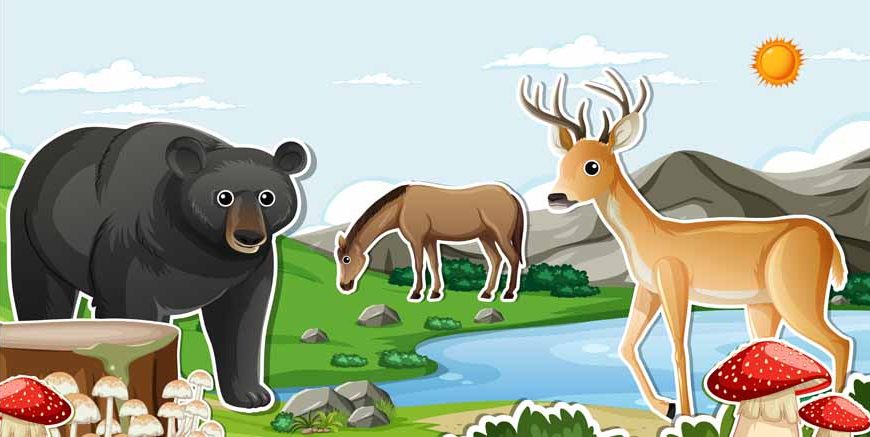
- Elk: A large deer with a light brown body and darker neck patches on its neck. Only males grow antlers.
- Mountain Goat: Covered in shaggy white fleece with black horns, able to jump twelve feet between steep rock ledges.
- Grizzly Bear: A heavy brown bear with a distinct shoulder hump made of solid muscle for digging.
- Sierra Nevada Red Fox: A small, slender fox with a bushy tail that makes up over half its body length.
- Yak: A sturdy grazer with long, matted hair hanging past its knees and a multi-chambered stomach to digest tough scrub.
- Snow Leopard: A solitary Asian cat with smoky, spotted fur and vocal cords that chuff and hiss rather than roar.
- Cougar: Also called a mountain lion, it can leap up to eighteen feet from a standstill to hunt deer.
- Red Panda: A small, rusty-red Himalayan climber with an extra wrist bone that acts like a false thumb for gripping bamboo.
- Wolf: A thick-coated pack predator whose pups are born blind and deaf with bright blue eyes.
- Mountain Gorilla: A massive black ape living in cold cloud forests, identified by nose wrinkles unique to each individual.
- Llama: A long-necked South American pack animal with coarse fleece that spits half-digested grass when agitated.
Read More – Names of Animals That Are Endangered For Kids
Other Animals Found in Mountains
- Falcon: A swift raptor nesting on sheer ledges to hunt in mid-air.
- Mountain Ibex: A wild goat famous for massive, ribbed horns.
- Marmot: A chubby, whistling ground squirrel living under rock piles.
- Gazelle: A nimble runner grazing on high, dry plateaus.
- Himalayan Tahr: A wild goat relative with a thick mane and rubbery hooves.
- Chiru: A Tibetan antelope that grows the world’s finest under-wool.
- Hyrax: A small mammal that hides in rocks and shares skeletal traits with elephants.
- Chamois: A swift European antelope skipping across steep crags.
- Mountain Iguana: A dark lizard that warms itself on sunny granite slabs.
- Chinchilla: A small rodent with extremely dense fur to beat freezing nights.
- Mountain Jackal: A lean scavenger trailing big predators along high ridges.
- Vicuna: The delicate wild ancestor of the alpaca living above the tree line.
- Wood Bison: A shaggy, heavy grazer built to push through snowdrifts.
- Blue Sheep: A slate-grey grazer that freezes in place to blend with rocks.
- Mountain Civet: A spotted nocturnal hunter tracking rodents in upland brush.
- Klipspringer: A tiny African antelope walking on the tips of peg-like hooves.
- Mountain Weasel: A slender predator squeezing into rock cracks after mice.
- Clouded Leopard: An agile forest cat prowling along high wooded ridges.
- Markhor: A northern wild goat carrying long, corkscrew-shaped horns.
- Wolverine: A squat, fearless beast strong enough to drive bears off kills.
- Mountain Hare: A rabbit that turns pure white in winter.
- American Black Bear: A nimble climber foraging for nuts and berries up steep slopes.
- Mountain Galaxias: A small, scaleless fish surviving in icy alpine streams.
Read More – List of Animals That Live On Land And Water
How EuroKids Sparks a Genuine Love for Nature
EuroKids designs its early classrooms around this active discovery approach. Instead of keeping science locked inside dry textbooks, educators bring ecosystems to life using sensory trays, textured animal models, interactive globes and maps, and group storytelling. Little learners build cardboard mountain slopes, touch different wool and fabric textures, and work through games that show how living things adapt to cold, heat, and rain. By treating every child’s questions with patience and encouraging them to explore with their own hands, EuroKids helps young learners develop sharp observation habits, empathy for living things, and the quiet confidence they need for big school.
Conclusion
Learning about a sure-footed animal found in mountain country teaches your child something far deeper than biology facts for a school test: it shows them that life finds a way through the hardest terrain. These animals do not have easy lives; food is scarce, winds are brutal, and every step requires focus. Yet they thrive because their bodies fit their world.
To find more practical parenting guides and early education resources, explore the EuroKids Blog, and stop by your local branch to speak with our staff about EuroKids Preschool Admission for your child today.
Frequently Asked Questions
Which mountain animal is known as the ghost of the Himalayas?
The snow leopard carries that nickname because its pale, spotted coat blends into grey rocks and snowfields, making it almost invisible to human eyes.
How do wild goats stay on sheer cliff faces without slipping?
They have split hooves with hard outer rims that grip tiny rock cracks, paired with soft, rubbery pads in the centre that stick to smooth stone like suction cups.
Why can yaks breathe easily in thin high-altitude air?
Yaks have unusually large hearts and lungs, along with blood that carries high levels of haemoglobin, allowing them to absorb enough oxygen even on high plateaus.