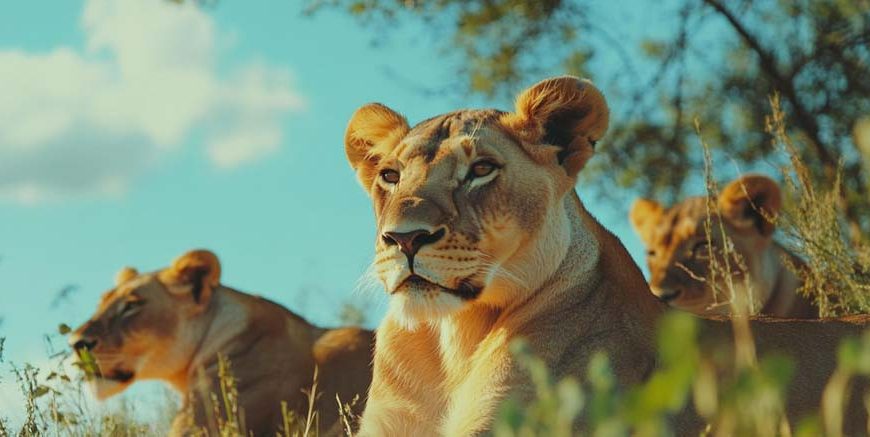
Imagine standing in a massive, open field just as the sun begins to dip below the horizon. Suddenly, a sound so loud and incredibly deep vibrates right through the soles of your shoes and into your chest. That is the legendary roar of a lion, a sound that can travel up to five miles across the plains! Children absolutely love learning about the ‘King of the Beasts’.
However, there is so much more to these majestic animals than just a booming voice and a fluffy mane. From their highly coordinated hunting tactics to the surprising landscapes they actually call home, let us take a wild, imaginary safari right from the living room to discover what makes these giant cats so deeply fascinating.
Discovering the True Lions’ Habitat
Forget the dense, dark jungles you usually see in animated cartoons. If you want to find a wild lion today, you need to look in vast, open spaces. A natural lion’s habitat consists primarily of sweeping grassy plains, open savannahs, and scattered scrub woodlands. These expansive landscapes are absolutely perfect for them. Why? Because the tall, sun-baked grass provides brilliant natural camouflage, allowing them to sneak up on unsuspecting prey without being spotted.
Interestingly, where lions live is called a pride’s territory. A pride is essentially a large, extended family group, and their specific territory can stretch across dozens of miles depending on how much food and water is available. While the vast majority of wild lions roam across the plains of sub-Saharan Africa, there is also a tiny, fiercely protected population of Asiatic lions living entirely within the dry scrublands of the Gir Forest in India.
Read More – Names of Animals That Are Endangered For Kids
The Physical Characteristics of a Lion
You can easily spot a lion from a massive distance, and not just because of their sheer size. The physical characteristics of a lion are perfectly engineered for a tough life of survival in the wild. Adult males are instantly recognisable by their magnificent manes, thick, heavy collars of hair that grow around their heads and necks. This mane is not just for showing off to the ladies; it acts as a thick, protective shield to guard their throats during fierce battles with rival males.
Females, known as lionesses, completely lack this heavy mane. This is actually a brilliant evolutionary advantage. Without a massive ring of hot fur around their necks, they stay much cooler and are far more aerodynamic when sprinting after fast-moving prey. Looking at general lion characteristics, both males and females boast incredibly muscular, barrel-shaped bodies.
They have powerful, thick front legs specifically designed to grapple and pull down heavy animals. Their sandy, golden coats blend seamlessly into the dry dirt and grass, making them the ultimate hide-and-seek champions of the animal kingdom.
Exploring Amazing Lion Special Features
Being an apex predator requires some serious biological upgrades. One of the most fascinating lion special features is their incredible night vision. A lion’s eyes are heavily adapted to the dark, featuring a special reflective layer behind the retina. This allows them to see roughly six times better than a human can in low-light conditions. This biological superpower is exactly why they choose to do the vast majority of their hunting after the sun goes down!
Another brilliant adaptation is their rough, sandpaper-like tongue. It is completely covered in tiny, backwards-facing hooks called papillae. These rigid hooks are so incredibly tough that a lion can literally use its tongue to scrape meat directly off a bone. Furthermore, they possess very loose belly skin. This might sound a bit strange, but it protects their internal organs from getting seriously injured if a struggling, panicking animal tries to kick them during a hunt.
Read More – Lion Myths and Truths for Kids
Figuring Out What Lions Eat
It takes a massive amount of energy to fuel a muscular body that can weigh up to 190 kilograms. So, what do lions eat to stay so incredibly strong and powerful? They are strict, obligate carnivores, meaning meat is the absolute only thing on their menu. The primary food of lion prides includes large, plant-eating mammals that share their grassy habitat.
These include herds of wildebeests, zebras, African buffaloes, and various types of antelopes. Hunting is the ultimate team sport for these big cats. The lionesses do almost all the hard, exhausting work. They fan out in a highly strategic, silent circle to trap their prey. While they are unbelievably fast over very short distances, they lack the stamina to run for long periods before getting exhausted.
Therefore, they have to use extreme stealth and teamwork to get as close as physically possible before launching a sudden, surprise attack. Sometimes, if a pride is feeling particularly lazy or hungry, they will even use their massive size to steal a freshly caught meal away from other predators like hyenas or wild dogs!
Read More – GK Questions On Animals & Their Babies for Kids
Conclusion
Lions are far more than just angry, roaring beasts; they are highly social, perfectly adapted survivors. From the golden, sun-drenched grass of their territory to their incredibly cooperative hunting strategies, every single detail about their biology is designed for success in a harsh environment. Do we truly appreciate how fragile their grassy kingdoms are, or do we simply take it for granted that the King of the Beasts will always be there to rule the plains?
Learning about these magnificent creatures teaches children vital lessons about teamwork, physical adaptation, and the delicate, beautiful balance of the natural world. To keep nurturing your child’s wild curiosity about the planet, dive into the EuroKids Blog and start their next big learning adventure through EuroKids Preschool Admission.
FAQs
1. Do male lions ever hunt for themselves?
Yes, they certainly do. While the female lionesses do the vast majority of the hunting to feed the pride, adult males are highly capable hunters. They often hunt for themselves when patrolling the far edges of their territory alone.
2. How much sleep does a wild lion actually need?
They are incredibly lazy during the daytime! A lion can easily sleep, nap, or rest for up to 20 hours a day just to conserve their energy for intense nighttime hunting.
3. Are baby lions born with spots on their fur?
Yes, newborn cubs are born with a coat covered in dark, rosette-like spots. This provides excellent natural camouflage in the tall grass while they are small and vulnerable, but the spots gradually fade away as they grow into adults.