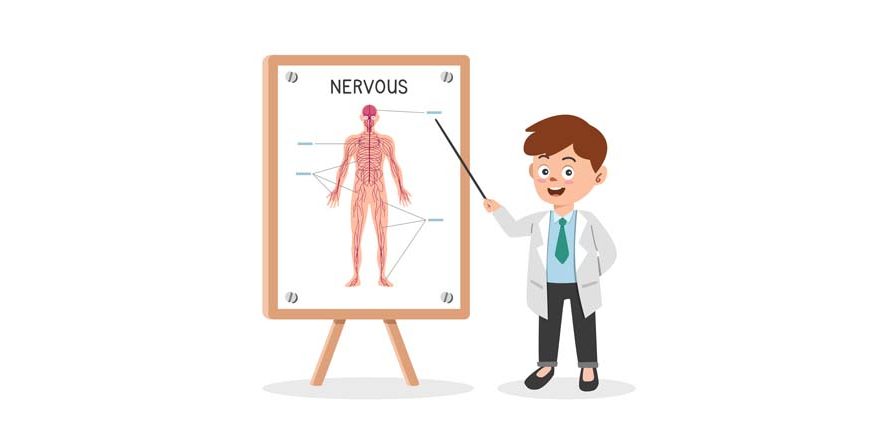
Every single second of the day, your body is doing a million different things simultaneously. You are breathing in fresh air, blinking your eyes, digesting your morning porridge, and reading this very sentence. But who is the ultimate boss telling your internal organs and muscles to do all of this? It is not magic; it is a highly complex, biological communication network running through your entire body.
Today, we are going to dive deep into the fascinating command centre of our anatomy. We will explore exactly how our internal electrical wiring works, using proper scientific terms to understand the ultimate supercomputer hidden right inside our heads.
Defining the Human Nervous System
To put it in the simplest scientific terms, the human nervous system is the body’s internal electrical wiring and command centre. It is an incredibly vast, intricate network of specialised cells, known as neurons, that carry messages back and forth between the brain and absolutely every other part of the body.
When we study the human body nervous system, we are essentially looking at a master control room. It dictates how we move our limbs, how we feel physical pain when we scrape a knee, how we taste our favourite meals, and even how we store memories of our summer holidays. Without this rapid communication network, our hearts would not know when to beat, and our lungs would not know when to expand.
Read More – Teaching Human Body Systems to Students
Name the Two Parts of Human Nervous System
If a biology teacher ever asks you to name the two parts of human nervous system, you can confidently tell them that this massive network is divided into two main categories: the Central Nervous System (CNS) and the Peripheral Nervous System (PNS).
- The Central Nervous System (CNS): This is the absolute headquarters of the operation. It consists of your brain and your spinal cord. The brain sits safely protected inside the hard bones of your skull and processes all the incoming sensory information. The spinal cord is a thick, vital bundle of nerves running straight down your back inside your spine, acting like a main motorway for messages travelling up to the brain and back down to the body.
- The Peripheral Nervous System (PNS): The word ‘peripheral’ simply means on the edge or outside. This part is made up of millions of branching nerves that spread out from the spinal cord to reach your fingertips, toes, skin, and internal organs. They are the tiny, dedicated messenger pathways reporting back to the central headquarters.
Breaking Down the Nervous System for Kids
When explaining the nervous system for kids, it helps to think of it like a highly efficient, high-speed postal service. Let us say you decide to kick a football. Your brain, acting as the boss, writes a strict biological command saying, “Kick the ball!” It sends this electrical letter down the spinal cord. The spinal cord passes it onto the motor nerves in the peripheral system. These motor nerves deliver the message right into the heavy muscles of your leg. Instantly, your leg swings forward and strikes the ball. This entire, complex postal delivery happens in a tiny fraction of a single second!
Read More – Facts About Human Body for Preschoolers
Brilliant Nervous System Examples in Daily Life
To truly understand how automatic and clever this biological network is, let us look at a few real-life nervous system examples.
- Reflex Actions: If you accidentally touch a boiling hot radiator in the hallway, you do not stand there thinking about it. Your peripheral sensory nerves scream a warning and send a lightning-fast electrical pulse to your spinal cord. Before the message even has time to reach your brain to register the pain, the spinal cord sends a rapid ‘reflex’ command back to your arm muscles, forcing you to pull your hand away. It protects you from bad burns completely automatically.
- Sensory Processing: When you walk into a kitchen and smell fresh biscuits baking in the oven, invisible scent particles enter your nose. The olfactory nerves in your nasal passage send a quick pulse up to your brain. Your brain translates that signal, identifies it as your favourite biscuit, and instantly tells your salivary glands to start working because it is time for a tasty snack!
Mind-Blowing Nervous System Facts
Human biology is full of wonderful surprises. Here are some astonishing nervous system facts to share in your next science class:
- Your brain alone contains roughly 86 billion neurons (nerve cells). To put that into perspective, that is significantly more than the number of bright stars you can see in the night sky!
- The electrical messages travelling along your neural pathways can zoom around your body at speeds of up to 268 miles per hour. That is vastly faster than most high-speed racing cars.
- Unlike a laptop that needs to be plugged into a wall socket, your brain generates its own electricity. While you are awake, your brain produces enough electrical power to light up a small LED bulb.
- The right side of your brain actually controls the muscles on the left side of your body, and the left side of your brain controls the right side of your body. It is a brilliant, criss-crossed design.
Read More – Body Organs for Kids
Summary
When you take a step back and look at how flawlessly our biological wiring operates, you quickly realise that the human body is the most advanced piece of technology on the planet. From pulling your hand away from a hot stove to solving a complicated maths puzzle, these invisible electrical pathways dictate our entire physical existence. It is truly humbling to realise that our profound thoughts, athletic movements, and precious memories are all governed by tiny, pulsing cells working together in perfect harmony. It makes you wonder: with a built-in supercomputer this incredibly powerful, what amazing things is your child truly capable of achieving as they grow and learn? To discover more fascinating scientific topics and secure a brilliant, foundational learning environment for your child, explore the EuroKids Blog and find out all the essential details regarding EuroKids Preschool Admission today.
FAQs
Can nerve cells repair themselves if they get damaged?
Nerves in the peripheral system, like those in your arms or legs, can slowly repair themselves over time. However, cells in the central system, specifically the brain and spinal cord, generally cannot regenerate if they are heavily damaged.
What is the best way to keep this system healthy?
Eating a balanced diet rich in vitamins, getting plenty of uninterrupted sleep, and always wearing a protective helmet while riding a bicycle are the absolute best ways to protect your neural health.
How do neurons actually talk to each other?
They do not actually touch! They leave a microscopic gap between one another called a synapse, and they use special chemical messengers called neurotransmitters to fire the signal across the gap to the next cell.