The human body is full of amazing systems that work together every second to keep us alive and active. One of the most important systems is the nervous system, which helps us think, feel, move, and respond to the world around us. At the heart of this system lies a special type of cell called the nerve cell, also known as a neuron. Whether we touch something hot or hear a sound, nerve cells play a key role in sending messages throughout the body. In this blog, we will explore the structure, function, and types of nerve cells.
What is a Nerve Cell?
A nerve cell or neuron is the basic unit of the nervous system. It is responsible for carrying messages between different parts of the body and the brain. For example:
- When you touch something hot, nerve cells quickly send a message to your brain.
- Your brain then tells your hand to move away.
This fast communication is possible because of nerve cells.
Read More – How do you make science interesting for kids?
Where Are Nerve Cells Found?
Nerve cells are found throughout the body, mainly in the brain, the spinal cord, and the nerves that spread across the body. Together, these parts form the nervous system, which controls everything from breathing to thinking.
Structure of a Nerve Cell
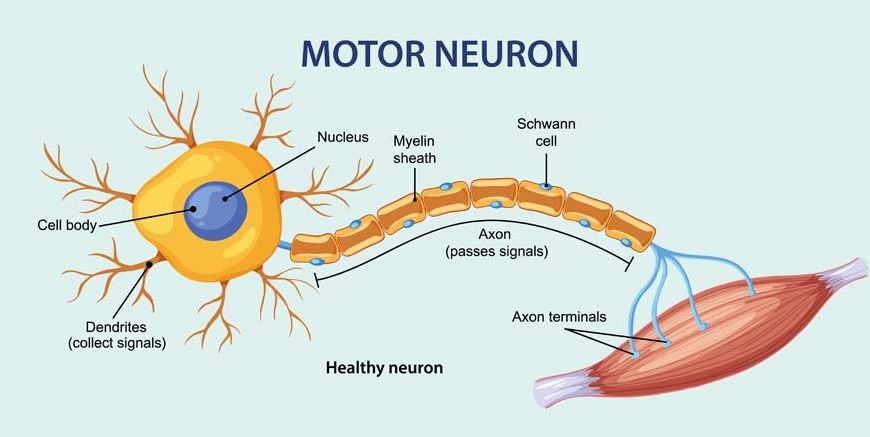
A nerve cell has a unique structure that helps it send and receive messages efficiently. It has three main parts:
1. Cell Body (Soma)
The cell body is the central part of the neuron. It contains the nucleus and controls the cell’s activities.
Function:
- Maintains the health of the cell
- Processes incoming information
2. Dendrites
Dendrites are short, branch-like structures attached to the cell body.
Function:
- Receive signals from other nerve cells
- Carry messages toward the cell body
3. Axon
The axon is a long, thin extension of the neuron.
Function:
- Carries messages away from the cell body
- Sends signals to other neurons, muscles, or glands
Additional Parts
- Myelin Sheath: A protective covering around the axon that speeds up message transmission.
- Axon Terminals: The ends of the axon that pass signals to the next cell.
Read More – What Constitutes a Cell?
How Does a Nerve Cell Work?
Nerve cells communicate through electrical and chemical signals. Here’s how it works in simple steps:
- A stimulus (like heat, light, or touch) is detected.
- Dendrites receive the signal.
- The signal passes through the cell body.
- It travels along the axon as an electrical impulse.
- At the axon terminals, the signal is passed to another cell.
What is a Nerve Impulse?
A nerve impulse is a message that travels through a neuron. It is an electrical signal that carries information from one part of the body to another.
For example:
- Feeling pain
- Moving your hand
- Seeing an object
Types of Nerve Cells
There are three main types of nerve cells, based on their function:
1. Sensory Neurons
Function:
- Carry information from sense organs (like eyes, skin, ears) to the brain and spinal cord.
Example:
- When you touch something hot, sensory neurons send that information to your brain.
2. Motor Neurons
Function:
- Carry messages from the brain and spinal cord to muscles or glands.
Example:
- Your brain tells your muscles to move your hand away from a hot object.
3. Interneurons
Function:
- Connect sensory and motor neurons
- Found in the brain and spinal cord
They act as messengers between different neurons and help process information.
Read More – Sense Organs for Kids with Easy Guide
Importance of Nerve Cells
Nerve cells play a vital role in our daily lives. Without them, the body cannot function properly.
Key Roles:
- Help us think, learn, and remember
- Control body movements
- Allow us to feel sensations like pain, heat, and touch
- Regulate body functions like breathing and heartbeat
Fun Facts About Nerve Cells
- The human brain has about 86 billion neurons.
- Some nerve impulses travel as fast as 120 meters per second.
- Neurons are among the longest cells in the body.
- Unlike many other cells, most neurons do not easily regenerate.
- The brain and nervous system work together like a super-fast communication network.
Nerve Cells and Reflex Action
Sometimes, the body reacts quickly without waiting for the brain to think. This is called a reflex action.
Example:
- Pulling your hand away quickly after touching something hot.
In this case:
- The spinal cord sends a quick response through motor neurons
- This saves time and protects the body from harm
How EuroKids Helps Children Learn Science
At EuroKids, science concepts like the nerve cell are introduced through simple, interactive, and child-friendly methods. Instead of rote learning, children explore ideas using visual aids, storytelling, and hands-on activities. Concepts such as what a neuron is and basic body functions are explained using real-life examples that children can easily relate to. The curriculum encourages curiosity, observation, and questioning, helping young learners develop a natural interest in science. By making learning engaging and meaningful, EuroKids builds a strong foundation for understanding topics like the parts of a neuron and how the human body works.
Conclusion
Nerve cells are one of the most important parts of the human body. They help us think, feel, move, and react to our surroundings. With their unique structure and fast communication system, neurons make it possible for the nervous system to work efficiently. Understanding the structure, function, and types of nerve cells is an essential part of EVS learning. It not only builds your knowledge of science but also helps you appreciate how amazing your body truly is.
Parents looking to give their child a strong foundation in early learning can explore EuroKids Preschool Admission to begin this enriching journey.
For more insightful articles that support early learning, awareness, and child development, parents and educators can explore the wide range of resources available on EuroKids Blogs.
For those interested in being part of this impactful learning ecosystem and contributing to quality early education across communities, EuroKids Preschool Franchise opportunities offer a meaningful path forward.
Frequently Asked Questions (FAQs)
1. What is a nerve cell?
A nerve cell is a special cell that carries messages between the brain and different parts of the body.
2. What are the main parts of a neuron?
The three main parts are the cell body, dendrites, and axon.
3. What is the function of dendrites?
Dendrites receive signals from other nerve cells and carry them to the cell body.
4. What does the axon do?
The axon carries messages away from the cell body to other cells.
5. What are the types of nerve cells?
The three types are sensory neurons, motor neurons, and interneurons.