The spinal cord is one of the most essential parts of the human nervous system. It plays a crucial role in carrying messages between the brain and the rest of the body. In Indian school biology textbooks, students learn about the structure, functions, and protective mechanisms of the human body as part of human physiology.
Here, we provide complete information on the spinal cord, including its definition, structure, functions, diagrams, and importance.
Introduction of the Spinal Cord
The spinal cord is a long, tube-like structure made of nervous tissue that runs inside the backbone. It forms a significant part of the central nervous system, along with the brain.
In the human body, the spinal cord acts as a communication highway. It receives sensory information from different parts of the body and sends motor commands from the brain. Without the spinal cord, basic actions like walking, touching, or reflex movements would not be possible. Read More – The Human Skeleton and Bones
Spinal Cord Meaning and Definition
The spinal cord is a long, thin bundle of nerves that extends from the medulla oblongata of the brain and runs through the vertebral column, transmitting messages between the brain and the body.
To define the spinal cord simply, it is the main pathway for nerve signals in the body.
The spinal cord is an extension of
The spinal cord is an extension of the medulla oblongata, which is a part of the hindbrain. This connection ensures continuous communication between the brain and spinal nerves.
Spinal Cord in the Human Body
The spinal cord in the human body is located inside the vertebral column (backbone). It starts from the base of the skull and ends near the lower back.
The spinal cord starts from…
The spinal cord starts from the foramen magnum of the skull and continues downwards.
How many spinal cords are in the human body?
There is only one spinal cord in the human body, but it gives rise to 31 pairs of spinal nerves, which supply different body parts.
What Protects the Spinal Cord?
The spinal cord is protected by:
- Vertebral column (backbone)
- Meninges (three protective membranes)
- Cerebrospinal fluid
These structures prevent injury and shock.
Gross Structure of the Spinal Cord
The gross structure of the spinal cord refers to its external features.
Key points:
- Long and cylindrical
- Slightly flattened front to back
- Has two enlargements: cervical and lumbar
- Ends in a tapered structure called conus medullaris
This structure helps in efficient nerve transmission.
Internal Structure of the Spinal Cord
The internal structure of the spinal cord can be understood with a cross-sectional view.
Key Features:
- Grey matter in the centre (butterfly-shaped)
- White matter on the outside
- The central canal is filled with cerebrospinal fluid
The grey matter controls reflex actions, while the white matter carries nerve impulses.
Spinal Cord Structure
Spinal Cord Structure Includes:
- Grey matter
- White matter
- Central canal
- Dorsal and ventral roots
The spinal cord structure supports both sensory and motor functions.
Simple Diagram of the Spinal Cord
A simple diagram of the spinal cord usually shows:
- Central grey matter
- Surrounding white matter
- Spinal nerves branching out
Teachers often use an easy diagram of the spinal cord for better understanding in classrooms.
(Students are advised to practise drawing a simple spinal cord diagram for exams.)
Spinal Cord Parts Name
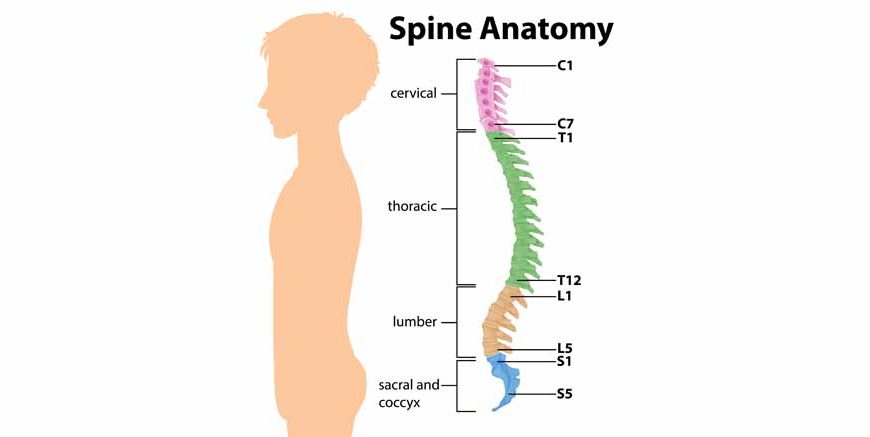
The main spinal cord parts include:
- Cervical region
- Thoracic region
- Lumbar region
- Sacral region
Each part supplies nerves to different areas of the body.
Read More – What are the 78 organs in the human body?
Spinal Cord Function and Structure
The spinal cord function and structure are closely related.
Functions of the Spinal Cord
The work of the spinal cord includes:
- Carrying sensory impulses to the brain
- Carrying motor commands from the brain
- Controlling reflex actions
- Coordinating movements
These functions make the spinal cord essential for daily life.
Physiology of the Spinal Cord
The physiology of the spinal cord deals with how it works.
It involves:
- Transmission of nerve impulses
- Reflex action control
- Coordination with brain signals
Reflex actions, such as pulling your hand away from a hot object, are controlled directly by the spinal cord.
Spinal Nerves and Their Functions
There are 31 pairs of spinal nerves, which include:
- 8 cervical
- 12 thoracic
- 5 lumbar
- 5 sacral
- 1 coccygeal
Spinal Nerves and Their Functions:
- Sensory nerves carry information to the spinal cord
- Motor nerves carry instructions to muscles
- Mixed nerves perform both functions
What Transforms the Spinal Cord in Vertebrates?
In vertebrates, the spinal cord transforms sensory input into motor output. It acts as a control centre for reflexes, enabling quick responses without brain involvement.
The spinal cord is a vital part of the central nervous system. It extends from the brainstem and runs inside the vertebral column. It helps transmit nerve impulses and controls reflex actions. Damage to the spinal cord can cause paralysis.
To explain the spinal cord simply:
- It connects the brain and body
- It controls reflex actions
- It helps us move and feel sensations
Importance of the Spinal Cord
The spinal cord is essential because:
- It enables movement
- It controls reflexes
- It maintains coordination
- It supports sensory perception
Any damage to any part of it can seriously affect the quality of life.
Read More – Teaching Human Body Systems to Students
How EuroKids Builds Strong EVS Foundations
When Environmental Studies (EVS) is introduced through observation, storytelling, nature walks, and hands-on exploration, young learners begin to understand their surroundings in a meaningful and lasting way. Instead of memorising facts about plants, animals, or seasons, children learn by experiencing and questioning the world around them. This is why structured early education programs focus on experiential and inquiry-based learning rather than rote memorisation.
At EuroKids, foundational EVS concepts are nurtured through the HEUREKA – Visible Thinking Curriculum. This approach encourages children to explore themes such as “My Family,” “My Community,” “Plants and Animals,” “Seasons and Weather,” and “Good Habits” through interactive discussions, thematic projects, role play, outdoor exploration, and guided observation.
The Visible Thinking framework helps children observe carefully, think deeply, and express their ideas confidently. Through activities like nature-based learning, environmental awareness projects, sensory exploration, and group conversations, children develop curiosity about how things grow, how communities function, and how they can care for the environment.
With a child-centric and play-based methodology refined over 20+ years and implemented across 1600+ preschools, EuroKids focuses on building awareness, responsibility, and curiosity first, allowing knowledge, empathy, and critical thinking skills to develop naturally over time.
Spinal Cord Information Summary
To summarise:
- The spinal cord is part of the central nervous system
- It is protected by the vertebral column
- It controls reflexes and nerve transmission
- It is essential for survival
To explore more learning ideas, simple explanations, and early childhood resources, parents
can visit the EuroKids Blog. Those who wish to understand the preschool journey better or
explore enrolment options can find complete information on the EuroKids Preschool Admission
Page, where learning is designed to be joyful, engaging, and child-friendly.