A dusty old textbook from the school library flies open, and your child stops dead on a page displaying ancient stone carvings. They try to figure out the dates of an old empire, but their eyes glaze over when they see a long string of letters instead of clean, modern numbers. This specific problem crops up constantly during primary school years. Children feel perfectly stable counting up to a large number like 499, but the moment they need to translate that exact amount into an ancient alphabetic code, their confidence drops to zero. Many kids try to guess the patterns by lazily looking at the first letter, which turns their math homework into a confusing chore. Parents face a real uphill task trying to explain these historical systems without making the kitchen study hour feel like a tiring classroom lecture.
When you show your child that ancient numbers operate like a highly logical building game, math transforms into a satisfying puzzle. Gaining a firm grasp of how to write complex values, such as 499, in Roman numerals teaches young minds to break down large numbers systematically. This detailed guide offers straightforward methods, clear subtraction laws, and everyday examples to help your child master this topic with total ease.
The Base Letters of Ancient Roman Mathematics
The foundational pillars include:
- I for one
- V for five
- X for ten
- L for fifty
- C for one hundred
- D for five hundred
- M for one thousand.
In Indian primary schools, the curriculum moves quickly from basic arithmetic to alternative counting systems to expand analytical thinking. You can teach your child to treat these letters like physical blocks that you stack up to increase a total or subtract a value. Getting comfortable with these seven key values helps children avoid spelling errors when they face long exam questions.
Read More – Teaching Kids About Roman Numerals
The Law of Subtraction in Compound Numbers
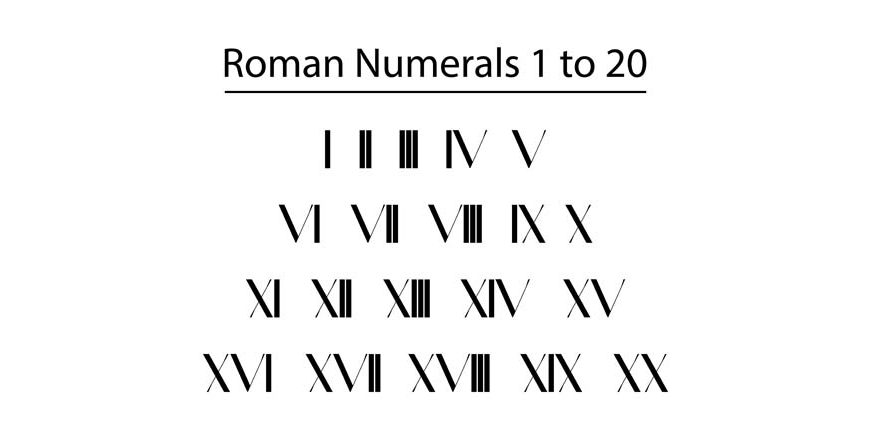
You need to teach your child two absolute rules of this ancient script before they attempt to translate larger numbers. The first law is the rule of addition, which states that when a smaller letter follows a larger letter, you add the values. For example, writing VI means adding 1 to 5, which gives you 6.
The second law is the rule of subtraction, which states that when a smaller letter precedes a larger one, you must subtract the smaller value from the larger. This specific rule trips up almost every young student when they look at a number like 400 or 90. The ancient Romans had a strict rule that you can never repeat the same letter four times in a row.
Therefore, you cannot write four hundred by line-linking four C blocks together. Instead, you must write four hundred by placing a C right before a D, which tells the reader to subtract one hundred from five hundred.
How to Convert 499 into the Correct Letter Sequence
You can make the translation of 499 highly logical for your child by breaking the total figure down into its separate place values. Separating hundreds, tens, and ones prevents confusion and shows the exact step-by-step mechanics of the system.
First, take the total number and break it down into a simple addition sentence: four hundred plus ninety plus nine. Now, translate each individual block using the subtraction laws your child just learned. To write four hundred without repeating letters, place a C before a D, which gives you a CD.
Next, look at ninety and write it by placing an X before a C, which gives you XC. Finally, write the remaining value of nine by placing an I before an X, which gives you IX. When you join these three separate letter sets together in a single line, you get the final correct sequence of CDXCIX.
Read More – Roman Numerals 1 to 1000
Real World Examples of Ancient Numbers Today
You can easily show your youngster that these symbols remain highly useful in today’s times. Pointing out real-world examples around your neighbourhood helps children see the practical value of their math lessons.
You can look closely at the large dials of classic wall clocks in old buildings, where designers frequently use these symbols to mark the hours. Authors also use these letter sequences to structure the long chapters of reference books and encyclopedia sets. You can even find them stamped onto the foundation stones of historic libraries, museums, and monuments to show the exact calendar year a building opened. These everyday observations prove to your child that learning ancient math helps them decode interesting signs around their city.
How EuroKids Builds a Strong Logical Base
Long before young children step into a primary school classroom to decode advanced historical number systems, their core cognitive pathways are forming in preschool. EuroKids designs early childhood spaces to ensure that toddlers interact with numbers through sensory blocks, pattern tracking, and fun counting games. By providing a beautifully balanced curriculum that turns abstract symbols into tangible objects, the learning setup builds strong mathematical confidence. This early mental training ensures that your child’s brain handles complex numerical rules and systems with absolute ease when they enter higher classes.
Read More – Importance of Math in Everyday Life
Conclusion
Mastering the translation of complex numbers into ancient alphabetic symbols is a wonderful milestone that sharpens visual tracking and analytical logic in primary students. From breaking down a large figure into its hundreds, tens, and ones to applying the strict laws of subtraction, this journey teaches children that mathematics is a beautifully structured language. Real cognitive growth happens when you take these number lessons out of school notebooks and spot them naturally on old clock faces, book pages, and historical monuments during weekend family strolls. Encouraging your youngster to untangle these puzzles today ensures they face tough classroom challenges tomorrow with a bright, fearless mind.
To discover more down-to-earth tips on early childhood math milestones and cognitive growth, feel free to visit the EuroKids Blog and find out how to secure your child’s early education today with EuroKids Preschool Admission.
Frequently Asked Questions
1. Why can we not write four hundred as CCCC in the Roman system?
The ancient Romans followed a strict mathematical rule that forbade placing four identical symbols in a row to create a single number. To keep the written text short and readable, they used the rule of subtraction instead, writing four hundred as CD.
2. How does learning alternative number systems benefit a Class 3 student?
Learning systems like Roman numerals expands a child’s mental flexibility and deepens their understanding of our modern place-value concept. It teaches them to view numbers as collections of logical values rather than just static symbols on a page.
3. What is the simplest way to remember the value of the letters L, C, and D?
You can create a simple, memorable phrase with your child to help them track the values from smallest to largest. For example, use a fun sentence like “Lucky Cows Drink Milk” to recall that L stands for fifty, C for one hundred, D for five hundred, and M for one thousand.
4. Should I correct my child immediately if they write a letter in the wrong position?
It is always better to let them finish writing their entire line first so you do not interrupt their focus. Once they set the pencil down, point to the specific letters together, review the left- and right-position rules, and let them fix the mistake on their own.