Let us try a quick, physical experiment right where you are reading this. Stand up straight and jump as high as you possibly can into the air. What happened? Unless you have suddenly developed superhero powers, you come right back down to the floor. You did not float away into the clouds or drift off into outer space. That invisible, powerful string pulling your feet safely back to the ground is the key to understanding one of the most fascinating and misunderstood concepts in the entire physical world.
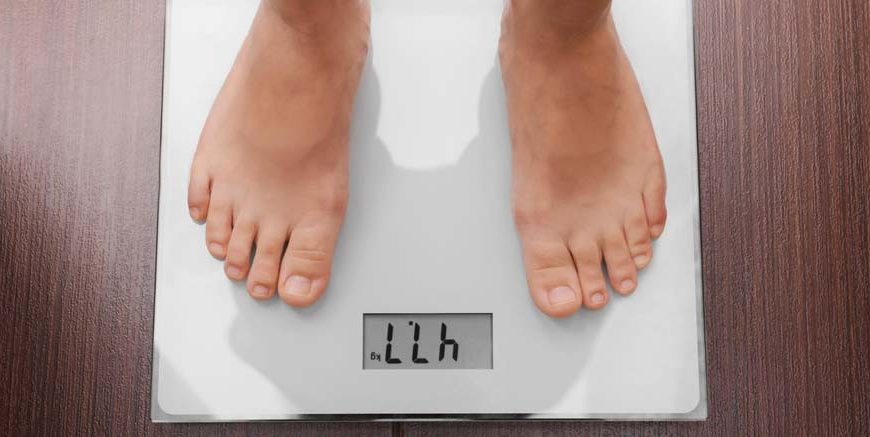
When you step onto a scale in your bathroom, you probably look at the number and think, “That is how heavy I am.” However, in the realm of physics, that number is telling a much deeper, more complex story about your relationship with the Earth. Today, we are going to dive into the brilliant science behind why things drop, how we measure heaviness, and why your bathroom scale would give you a completely different number if you took it on a rocket ship.
Weight Definition Science
If a curious young student asks for the true weight definition science provides, the answer is remarkably simple but completely changes how you view the world. Weight is not the amount of “stuff” inside your body. Instead, it is the measurable force of gravity actively pulling downwards on your body.
To understand this properly, we have to look at the massive difference between ‘mass’ and ‘weight’. Your mass is the actual physical amount of matter that makes up your bones, muscles, and skin. Whether you are standing in your bedroom, floating in a swimming pool, or visiting the moon, your mass never changes. You are always made of the exact same amount of stuff.
Your weight, however, changes depending entirely on how strongly a planet is pulling on that stuff. Our massive planet Earth has a very strong gravitational pull. It tugs on your mass, and that downward tug is what we call your weight. If you travelled to a much smaller planet with weaker gravity, the planet would not pull on your mass as hard, meaning you would physically weigh much less, even though your body has not changed in size at all! Scientists even have a specific unit to measure this gravitational pull; while we often use kilograms in everyday life, the true scientific unit of weight is called a Newton.
Read More – Measurement for Kids
Equivalent Weight Definition
As you move through science classes, you will eventually step out of the physics laboratory and into the chemistry laboratory. Here, you will encounter a slightly more complicated term. To help you prepare, let us decode the equivalent weight definition.
Imagine you are baking a massive batch of your favourite chocolate chip cookies. The recipe clearly states that for every single cup of flour you use, you must use exactly half a cup of chocolate chips. If you use too much flour, the cookies will be dry and powdery. If you use too many chips, they will melt into a messy puddle. You need the exact, perfect ratio to make the reaction work without leaving any leftover ingredients.
In chemistry, scientists do not bake cookies; they mix different chemicals together to create new substances. The equivalent weight is simply the exact, magical amount of one chemical needed to perfectly react with a standard amount of another chemical, without leaving any unused leftovers floating around in the test tube. It is nature’s perfect recipe matching system, ensuring that atoms combine in exactly the right proportions.
Read More – Facts About Matter
Fun Questions About Gravity and Mass
Now that we know the basic definitions, let us solve a few fun, everyday mysteries regarding how heavy things feel.
Do things weigh the same underwater?
If you have ever tried to lift a friend while playing in a swimming pool, you probably noticed they felt incredibly light, almost as if you had super strength! Your friend has not actually lost any mass. The water is simply helping you out. Water pushes upwards against objects in a process called buoyancy. This upward push physically fights against the downward pull of gravity, making objects feel significantly lighter when they are completely submerged.
Does your weight change on Earth?
Yes, it actually does! Because the Earth is not a perfectly round ball (it slightly bulges around the middle), gravity is not exactly the same everywhere. If you stand right on the equator, you are slightly further away from the absolute centre of the Earth than if you were standing at the freezing North Pole. Because you are further away from the centre, the gravitational pull is just a tiny bit weaker. You would technically weigh a tiny fraction less on a sunny beach in Ecuador than you would standing in the snow at the North Pole!
Read More – Fascinating Science Facts for Students
Summary
Understanding the invisible forces that govern our physical bodies completely changes how we interact with the universe. The numbers we see on our scales are not just arbitrary values; they are a direct measurement of the deep, invisible connection between our bodies and the massive, spinning rock we call home.
Every time you drop a pencil, jump over a puddle, or struggle to carry a heavy school bag, you are actively experiencing the majestic, silent pull of gravity. It is the brilliant force that literally keeps our feet firmly planted on the ground. To discover more fascinating science concepts and explore a world of joyful learning, read through the EuroKids Blog and find out all the vital details regarding EuroKids Preschool Admission today.
FAQs
What is the main difference between mass and weight?
Mass is the actual amount of physical matter an object contains, whereas weight is the downward force of gravity pulling on that specific matter.
What is the scientific unit used to measure weight?
While we commonly use kilograms or pounds in our daily lives, scientists officially measure weight and gravitational force using a unit called the Newton.
What does equivalent weight mean in simple terms?
It is a chemistry term that describes the exact amount of a substance needed to perfectly react with another substance without leaving any leftover particles.