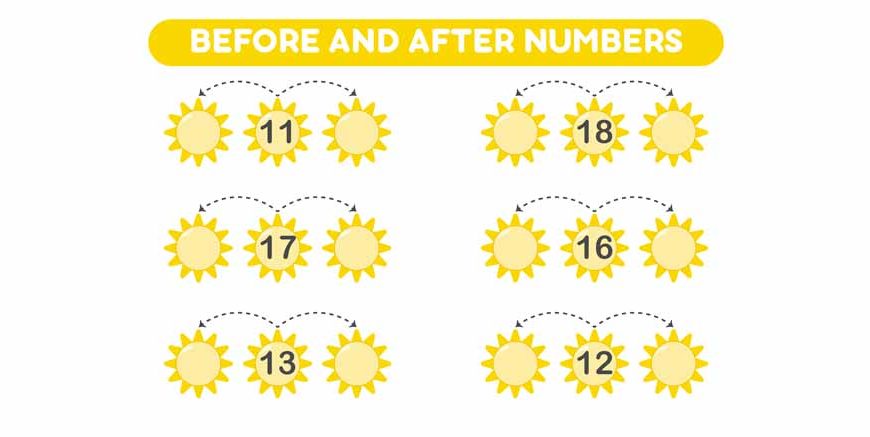
Your little one can count to 10; amazing! But do they know what comes before 5? What comes after 8? Or which number sits right in between 3 and 5? These “in between, before, and after” numbers are the building blocks of number sense. They help children understand that numbers aren’t just words to memorise.
The best part? Teaching before, after, and in between numbers can be playful and hands-on. Think number line hopscotch, missing number games, or simple “what comes next?” challenges during snack time.
In this blog, we will share fun, practical activities to help your preschooler master these important number skills.
What is a Before Number?
A before number is the number that appears just before a given number when counting. Simply put, the before number is one less than the given number.
For instance: What comes before 5? Count the numbers: 1, 2, 3, 4, 5. The number 4 comes before 5.
Another example of a before number is what comes before 10? The answer is 9.
Understanding what comes before helps children learn how numbers move backwards in a sequence.
Read More – Why Counting 1–10 Builds Early Math Confidence in Kids
What is an After Number?
An after number is the number that appears immediately after a given number. For example, what comes after 4? Count the numbers: 1, 2, 3, 4, 5. The number 5 comes after 4. Knowing what comes after a number helps children understand forward counting.
What is a Between Number?
An in-between number is the number that lies between two numbers. This number is greater than the first but smaller than the second. So, when someone asks, “What comes between 3 and 5?” The number between 3 and 5 is 4. Learning what comes in between helps children see the relationship between numbers.
Read More – Number Recognition Games for Preschoolers
Why Before, After and Between Numbers Matter? Especially Young Kids
Once children learn basic counting, the next step is understanding how numbers are connected to each other. This is where the concept of before, after, and in between numbers becomes important.
When children understand what comes before and after a number, they begin to recognise number order and patterns. This helps improve:
- Counting skills
- Logical thinking
- Problem-solving abilities
- Early math confidence
Fun Activities to Teach Before, After and Between Numbers
Preschoolers learn best through play. Here are some fun ways to practice before, after, and between numbers at home.
Toy Line-Up Game
Take three toys and place them in a line. Ask questions like:
- Which toy comes before the teddy bear?
- Which toy is between the car and the doll?
- Which toy comes after the puppy?
Children quickly understand positions when they see them physically.
Fruit Order Game
Line up fruits on the table. For instance, you can line up apples, bananas, oranges, mangoes, and watermelons. Then ask your little one:
- Which fruit comes before the banana?
- Which fruit comes after the apple?
- Which fruit is in between?
This turns a simple snack time into a learning moment.
Wall Clock Learning
A wall clock is another great teaching tool. Ask questions like:
- What comes before 3 on the clock?
- What comes after 9?
- What number sits between 4 and 6?
Children enjoy spotting numbers on familiar objects.
Hopscotch Number Game
Draw numbers on the floor using chalk. Ask your child:
- Hop to the number before 8
- Hop to the number after 6
- Stand on the number between 2 and 4
Number Card Game
Create small number cards from 1 to 20 and place them in order. Pick one given number and ask your little one questions like:
- What comes before 9?
- What comes after 9?
- What number is between 8 and 10?
You can also remove a card and ask your child to write the between number or guess the missing number. This simple activity improves number recognition and sequencing skills.
Staircase Counting Game
Use stairs at home as a learning tool. Write numbers on small sticky notes and place them on the steps. Ask questions such as:
- What comes before 6?
- What number follows 7?
- What comes in between 3 and 5?
Children enjoy climbing while learning, making math feel like a fun movement game.
Missing Number Story Game
Turn math into a storytelling game. Say something like: “Three little ducks were walking in a line: 4, __, 6. Can you tell me the number between them?”
Or:
“Seven apples are on the table. One apple came before 7. Which number is that?” Children love solving these little puzzles, and it strengthens their understanding of before and after numbers.
Read More – Fun Number Activities for Kids
Here are Some Practice Questions for Preschoolers
Parents or teachers can try these questions to teach preschoolers about before, after, and in between numbers.
Identify the Before Number
___ ← 10
___ ← 6
___ ← 15
Answers: 9, 5, 14
Identify the After Number
7 → ___
12 → ___
19 → ___
Answers: 8, 13, 20
Write the Between Numbers
4 ___ 6
10 ___ 12
17 ___ 19
Answers: 5, 11, 18
Tips for Parents and Teachers
Helping children learn before, after, and in between numbers does not require worksheets alone. Small daily activities can make a big difference. Try these simple tips:
- Ask questions during daily counting games
- Use toys, fruits, or blocks for visual learning
- Practice counting forward and backwards
- Encourage children to spot number patterns
Final Thoughts
Understanding before, after, and in between numbers is an important step in your child’s early math journey. It helps them recognise number order, build logical thinking skills, and develop confidence with numbers.
The best way to teach these concepts is through playful activities, everyday objects, and simple number games. With a little practice and encouragement, your preschooler will soon master before and after numbers and enjoy exploring the wonderful world of math.
You can visit the EuroKids blog for more insightful and fun articles on your baby’s growth, health, and learning. Don’t forget to check out EuroKids Preschool Admission for the perfect foundation to kickstart your little one’s learning journey.
Frequently Asked Questions (FAQs)
At what age should children learn before and after numbers?
Most children begin understanding before, after, and between numbers after the age of 5 years, once they are comfortable with basic counting.
Why are before and after numbers important in early math?
Learning before and after numbers helps children understand:
- Number order
- Counting patterns
- Early problem-solving skills
- Basic math concepts are used later in addition and subtraction
How can parents practice before and after numbers at home?
Parents can practice using everyday objects such as toys, fruits, clocks, or number games.
How does learning before, after and between numbers help with counting?
When children understand what comes before and after numbers, they learn how numbers move in sequence. This makes counting easier and prepares them for more advanced math skills.