Imagine standing barefoot on a warm beach on a sunny afternoon. You reach down, scoop up a handful of the ground beneath your feet, and watch as the tiny, rough grains quickly slip right through your fingers. It feels dry, gritty, and completely different from the sticky mud you might find in your back garden after a heavy rainstorm.
The earth beneath our feet is a fascinating, living tapestry, and it changes dramatically depending on where you travel. Today, we are going to dive into the rough and tumbling world of sandy soil. We will decode some tricky geographical vocabulary, uncover why certain plants love it while others despise it, and discover why this specific type of earth is incredibly useful to human beings.
Sandy Soil Information
To truly understand the ground we walk on, we have to look at it through a microscopic lens. All earth is made up of tiny rock particles that have been broken down by wind and water over millions of years.
When gathering basic sandy soil information, the most important fact to remember is particle size. Out of all the different types of earth, sandy particles are the absolute largest. Because these rocky grains are so big and chunky, they cannot pack tightly together. Think of it like filling a glass jar with marbles. No matter how many marbles you push into the jar, there will always be lots of empty air pockets sitting between them. This unique, chunky structure is what gives this earth its famous gritty texture.
Read More – Different Types of Soil and Their Characteristics For Kids
Difference Between Sand and Soil
A question that often confuses young learners is the actual difference between sand and soil. People tend to use these words as if they mean the exact same thing, but they are entirely different concepts!
The easiest way to understand this is to think about baking a delicious Victoria sponge cake. When you bake a cake, you need flour as your base ingredient. Sand is exactly like that flour. It is just a raw ingredient, tiny pieces of broken rock.
Soil, on the other hand, is the fully baked cake! It is a complex mixture of sand, water, air, decaying leaves, tiny living bugs, and essential minerals. So, when we talk about this specific ground type, we are talking about a living ecosystem where the main ‘ingredient’ just happens to be large, gritty rock particles.
Silty Soil Meaning
To truly appreciate the chunky nature of sand, we need to introduce its quieter sibling. You might have heard teachers mention silt, but what is the actual silty soil meaning?
If sand is the largest particle size, and clay is the microscopic, sticky smallest size, silt sits perfectly in the middle. It is created by rocks wearing down in flowing rivers. If you rub silt between your fingers, it does not feel gritty like a beach; instead, it feels smooth and powdery, very much like dry baking flour. Knowing the difference helps children understand that the earth is a sliding scale of different textures!
Read More – Types of Landforms of the Earth
The Rough and Ready Characteristics of Sandy Soil
If you are trying to identify what kind of dirt you have in your garden, you need to look out for a few specific clues. The characteristics of sandy soil are incredibly easy to spot once you know what you are looking for.
Firstly, it is incredibly free-draining. Because of those large ‘marble-like’ air pockets we mentioned earlier, water rushes straight through it. It also warms up much faster in the spring sunshine than heavy, wet clay does. Furthermore, the colour of sandy soil is usually quite distinctive. Lacking the dark, rich compost found in deep forests, it often appears pale. You will typically see shades of light yellow, pale grey, or a light, dusty brown.
Sandy Soil is Not Suitable for Cultivation Give Reason
Here is a brilliant puzzle for young scientists. If a school quiz throws a tricky statement at you like: sandy soil is not suitable for cultivation give reason, how would you answer?
“Cultivation” is simply a fancy word for growing healthy crops. The reason most farmers struggle with this type of earth comes back to those massive air pockets. Imagine trying to carry water in a kitchen colander. The water pours straight out the bottom! Sandy ground acts exactly like a colander.
When it rains, the water drains away far too quickly, carrying all the vital, healthy plant food (nutrients) down deep into the earth where plant roots cannot reach them. Because it cannot hold onto water or food, most delicate plants simply dry up and starve.
Amazing Uses of Sandy Soil
Despite being a tough environment for a delicate rose bush, this gritty earth is far from useless. In fact, it has some brilliant applications!
1. Growing Root Vegetables
While it might not hold water well, the loose, crumbly texture is an absolute paradise for specific vegetables. Carrots, parsnips, and potatoes struggle to grow in heavy, hard mud because they have to push hard to grow downwards. In loose, gritty earth, they can easily push deep into the ground, growing long, straight, and perfectly crunchy!
2. The Construction World
Look at the brick houses on your street or the concrete pavements you walk on. None of those would exist without sand. Builders mix this gritty earth with cement and water to create strong concrete and mortar. The rough edges of the sand particles lock together tightly as the mixture dries, providing immense structural strength to our buildings.
3. Playgrounds and Sports
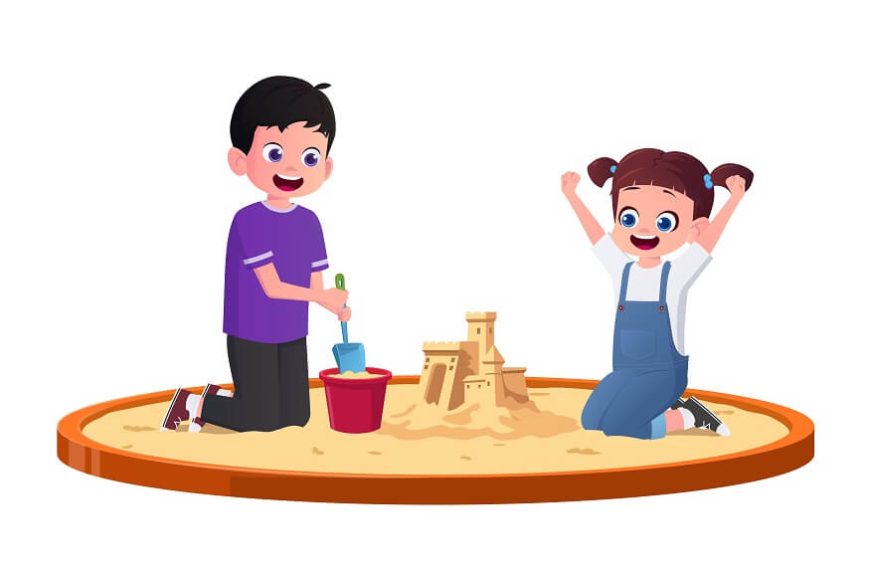
Because it drains water so efficiently, it is the perfect surface for children’s play areas and sports pitches. Even after a heavy UK rain shower, a sandy playground will dry out much faster than a muddy grass field, allowing kids to get back to playing without slipping around in puddles.
Read More – Teach Children About Soil: Fun & Hands-On Activities
Conclusion
When we take the time to really look at the ground, we realise that nature does not make mistakes. A patch of dry, gritty earth might seem useless if you are trying to grow a lush green lawn, but it is the perfect home for a crunchy carrot and the essential building block for the walls that keep us warm at night.
Everything in the natural world, right down to the tiniest, palest grain of sand, has a specific and wonderful purpose. It teaches us a beautiful lesson: just because something does not fit into a traditional mould does not mean it lacks value. The next time you find yourself kicking up dust on a dry path, remember that you are walking on the very foundation of human construction and natural resilience.
To explore more engaging educational topics and nurture your child’s curiosity, head over to the EuroKids Blog and discover the exciting pathways available through EuroKids Preschool Admission.
FAQs
1. Can you improve sandy soil for gardening?
Yes, absolutely! Gardeners can make it much better by mixing in lots of thick, dark organic matter like compost or well-rotted manure. This acts like a sponge, helping the ground hold onto water and nutrients.
2. Why does sand feel warm on my feet at the beach?
Because the large particles have lots of air between them, they do not hold onto cold water very well. This allows the sun’s rays to heat up the dry rock particles incredibly fast during the day!
3. Are there any specific flowers that like this type of ground?
Yes! Plants that originate from dry climates absolutely love it. Beautiful flowers like lavender, poppies, and certain types of hardy geraniums thrive in this loose, fast-draining environment.