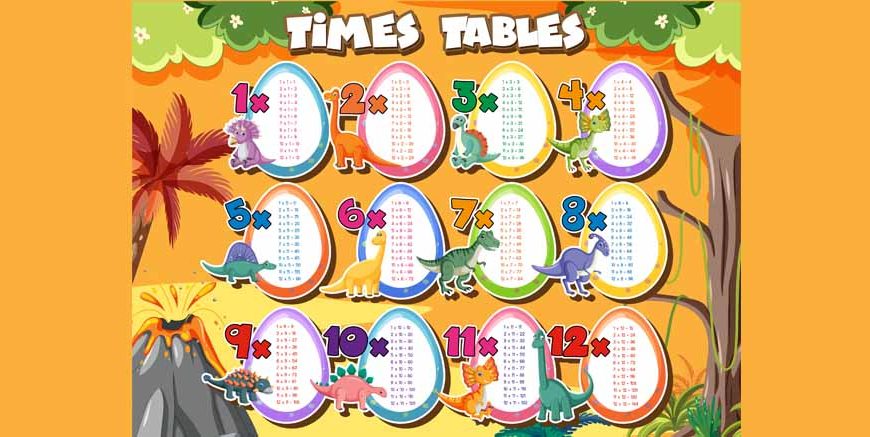
Mathematics is an important part of a child’s learning journey, and multiplication tables form the foundation for many advanced concepts. Among these, the table of 8 is especially useful because it helps children solve problems faster and improve their mental calculation skills. Whether it’s schoolwork, daily calculations, or competitive exams, knowing the 8 times table can make a big difference. In this blog, we will explore the multiplication table of eight, understand how to learn it easily, practice it with examples, and discover simple tricks that make memorising fun and effective.
What is the Table of 8?
The table of 8 is a list of multiples of the number 8. When we multiply 8 by different numbers, we get the results that form the table.
Here is the 8 times table from 1 to 10:
- 8 × 1 = 8
- 8 × 2 = 16
- 8 × 3 = 24
- 8 × 4 = 32
- 8 × 5 = 40
- 8 × 6 = 48
- 8 × 7 = 56
- 8 × 8 = 64
- 8 × 9 = 72
- 8 × 10 = 80
Read More – Maths Table 1 to 10
Why is the Table of 8 Important?
- Solve multiplication problems faster
- Improve mental maths skills
- Understand patterns in numbers
- Build a strong foundation for division and algebra
Tips to Learn the 8 Times Table Easily
1. Practice Repeated Addition
Multiplication is repeated addition. For example:
8 + 8 = 16
16 + 8 = 24
24 + 8 = 32
2. Learn in Patterns
The multiplication table of eight follows a clear pattern. Each number increases by 8.
- 8, 16, 24, 32, 40…
3. Use Rhymes and Songs
Children learn better when concepts are taught in a fun way. Creating rhymes or singing the table of 8 helps in quick memorisation.
4. Practice Daily
Consistency is key. Practising the 8 times table daily helps reinforce memory and improve speed.
5. Use Visual Aids
Charts, flashcards, and number grids make learning interactive and engaging. Visual learning helps children remember the table of 8 more effectively.
Read More – Fun Ways to Learn Times Tables
Tricks to Remember the Table of 8
Trick 1: Double the Table of 4
If you already know the table of 4, you can easily learn the table of 8 by doubling it.
For example:
4 × 3 = 12
Double it → 12 × 2 = 24
So, 8 × 3 = 24
Trick 2: Skip Counting by 8
Skip counting is another effective method:
8, 16, 24, 32, 40…
Trick 3: Use Fingers
Children can use their fingers to count multiples of 8, making learning more interactive and fun.
Examples Using the Table of 8
- If one box contains 8 chocolates, how many chocolates are there in 5 boxes?
8 × 5 = 40 chocolates
- A classroom has 8 benches in each row. If there are 6 rows, how many benches are there?
8 × 6 = 48 benches
- If a person walks 8 steps in one minute, how many steps will they walk in 10 minutes?
8 × 10 = 80 steps
Practice Questions
- 8 × 7 = ___
Answer: 56
- 8 × 9 = ___
Answer: 72
- 8 × 4 = ___
Answer: 32
- Fill in the blank: 8 × 6 = ___
Answer: 48
- What is 8 × 10?
Answer: 80
Common Mistakes to Avoid
- Skipping numbers while counting
- Confusing the table of 8 with other tables like 6 or 7
- Not practising regularly
Fun Activities to Learn the Table of 8
- Flashcard Games: Write multiplication questions on cards and quiz each other
- Math Bingo: Use multiples of 8 in a bingo game
- Timed Challenges: Solve as many questions as possible in a minute
- Group Activities: Practice the table of 8 with friends or classmates
Read More – Easy Ways to Teach Multiplication to Kids
Benefits of Learning Multiplication Tables Early
- Improves calculation speed
- Builds confidence in math
- Helps in solving complex problems
- Strengthens logical thinking
A strong understanding of the 8 times table prepares children for advanced topics like division, fractions, and algebra.
How EuroKids Helps Children Learn the Table of 8
At EuroKids, learning is designed to be fun, interactive, and meaningful. Children are introduced to concepts like the table of 8 through engaging activities rather than rote memorisation. The curriculum focuses on experiential learning, where children learn by doing. Teachers use storytelling, games, visual aids, and hands-on activities to explain the 8 times table. For example, children may learn multiplication through counting objects, grouping items, or participating in fun classroom activities. This helps them understand the concept of multiplication instead of just memorising it.
The supportive environment at EuroKids encourages children to ask questions, practice regularly, and build confidence in their abilities. By connecting maths to real-life situations, children find it easier to remember and apply the multiplication table of eight in everyday life.
Conclusion
The table of 8 is an essential part of a child’s mathematical learning. It helps improve calculation speed, strengthens problem-solving skills, and builds confidence in handling numbers. By practising regularly, recognising patterns, and using simple tricks, children can easily master the 8 times table.
Learning the multiplication table of eight does not have to be difficult. With the right approach, fun activities, and consistent practice, it can become an enjoyable experience. Educational approaches that focus on understanding rather than memorisation make learning more effective and long-lasting. Encourage children to practice daily, use creative learning methods, and apply their knowledge in real-life situations. With time and effort, mastering the table of 8 will become simple and natural.
Parents who wish to give their child a strong learning foundation can explore EuroKids Preschool Admission. For more helpful resources, visit EuroKids Blogs. Those interested in contributing to early education can also explore EuroKids Franchise opportunities.
Frequently Asked Questions (FAQs)
1. What is the table of 8?
The table of 8 is a list of multiples of 8 obtained by multiplying 8 by numbers like 1, 2, 3, and so on.
2. Why is the 8 times table important?
The 8 times table helps in faster calculations, improves mental maths skills, and builds a strong foundation for advanced mathematics.
3. How can I learn the multiplication table of eight easily?
You can learn the multiplication table of eight by practising daily, using patterns, skip counting, and fun activities like games and songs.
4. What is the easiest trick to learn the table of 8?
One of the easiest tricks is to double the table of 4 or use skip counting by 8.
5. How can parents help children learn the 8 times table?
Parents can use flashcards, quizzes, games, and real-life examples to help children practice and understand the table of 8 effectively.