Watching a child discover language is like watching them unlock a secret code. Suddenly, the sounds they hear every day transform into meaningful ideas, requests, and stories. Of all the letters in the alphabet, the letter M holds a particularly special place in a child’s heart. After all, “Mama” is very often the very first word a baby ever speaks!
At EuroKids, we believe that vocabulary building shouldn’t be confined to sitting at a desk and repeating flashcards. Learning should be messy, musical, and above all, magnificent. When children connect letters to their real-world environment, they absorb information naturally and joyfully.
If you are looking to expand your kid’s vocabulary, you have come to the right place. We have put together a comprehensive, parent-friendly guide to words that start with m, complete with fun meanings, engaging activities, and practical tips to make learning stick. Let’s explore the marvelous letter M together!
Why the Letter M is a Milestone
Before we jump into our giant m words list, let’s talk about why this specific letter is such a fantastic starting point for early learners.
Phonetically, the letter M is a nasal consonant. To make the sound, you simply press your lips lightly together and let the air escape through your nose while using your vocal cords. It creates a gentle, humming vibration. Try it right now: Mmmmm. Because it requires very little complex tongue movement, toddlers can mimic it almost instantly. It is the sound we make when we taste something delicious, and it is a sound that feels inherently comforting to a child. To help your preschooler grasp the concept, try rubbing your tummy and saying, “Mmmmm, that is yummy!” when they eat their favorite snack. This physical association is a powerful tool for locking m letter words into their growing memory.
Read More – How Many Letters Are in the English Alphabet?
The Ultimate M Words List: Meanings Made for Kids
To make learning m words in english intuitive, it helps to categorize them. Children’s brains love grouping similar items together. Here is a curated list of m words for kids, broken down by category, with simple, kid-friendly definitions you can read right to them.
1. Animal Friends That Start With M
Kids are fascinated by creatures big and small. These animal names are perfect for practicing words that start with the letter m.
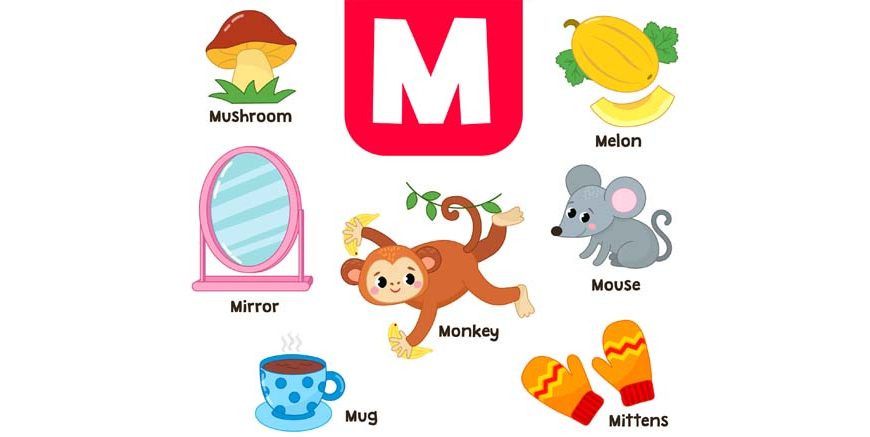
- Monkey: A clever, playful animal with a long tail that loves to swing from high tree branches and eat yellow bananas.
- Mouse: A tiny, quiet animal with a long tail and round ears that loves to nibble on cheese. (Play idea: Have your child practice being “quiet as a mouse”.)
- Moose: A very large animal that lives in the cold forest and has giant, flat antlers on its head.
- Macaw: A brightly colored parrot that lives in the jungle and can sometimes learn to say hello!
- Moth: A flying insect that looks a lot like a butterfly, but prefers to fly around at night when the moon is out.
2. Everyday Things That Start With the Letter M
The best vocabulary lessons happen right in your living room or kitchen. Point to these objects as you go about your day.
- Milk: A white, healthy drink that comes from cows and makes our bones strong and tall.
- Mug: A heavy cup with a handle that grown-ups use for hot coffee and kids use for warm cocoa.
- Mirror: A shiny glass on the wall where you can look and see your own smiling face looking back at you.
- Mat: A small rug we keep by the front door to wipe our muddy shoes on before we come inside.
- Map: A special drawing of a place that helps us find our way when we are going on a fun adventure.
- Magnet: A cool piece of metal that magically sticks to the refrigerator door so we can hang up your artwork.
3. Moving and Doing: Action M Words
Action words (verbs) are the engine of a sentence. Encourage your child to act these out to burn off some energy while learning!
- March: To walk with high steps like a proud soldier in a big parade.
- Melt: When something cold gets warm and turns into liquid, like an ice cream cone on a hot summer afternoon.
- Mix: To stir different things together in a bowl, like when we bake a yummy chocolate cake.
- Make: To build or create something brand new using our hands and our imagination.
- Mop: To clean up a wet spill on the floor using a sponge on a long stick.
4. The World Around Us: Nature and Space
Take a step outside and look at the sky or the ground to find these wonderful m words.
- Moon: The big, bright circle that lights up the dark sky while we are sleeping at night.
- Mountain: A giant, rocky hill that reaches way up high into the fluffy clouds.
- Mud: Wet, squishy dirt that is super fun to stomp in after a rainy day.
- Morning: The start of a brand new day when the sun comes up and the birds begin to sing.
Read More – Opposite Words List for Kids
Stepping It Up: 5 Letter Words Starting With M
As your child’s language skills mature, you can begin introducing slightly longer vocabulary words. This helps prepare older preschoolers for the reading and writing tasks they will face in kindergarten. Here are some fantastic 5 letter words starting with m to add to their daily conversations:
- Magic: Wonderful, surprising tricks that make impossible things seem to happen right before your eyes.
- Melon: A large, sweet, and juicy fruit, like a watermelon, that is perfect for a summer picnic.
- Music: Beautiful sounds made by singing or playing instruments like a guitar or a drum.
- Mouth: The part of our face we use to talk, sing, smile, and eat our dinner.
- Money: Coins and paper bills we use at the store to buy things like toys or groceries.
- Model: A small copy of something much bigger, like a little toy airplane or a clay dinosaur.
- Motor: The loud machine inside a car or a boat that makes it move fast.
How to Practice M Words Through Play
At EuroKids, we know that forced memorization quickly turns learning into a chore. The secret to raising a confident speaker is to weave vocabulary right into their playtime. Here are three completely natural, human-led ways to practice these words at home:
The “Make Music” Station
Gather a few pots, pans, and wooden spoons from the kitchen. Tell your child it is time to Make Music! As they bang away, talk about the sounds. Ask them to march to the music. You are hitting multiple m words (make, music, march) while allowing them to engage in sensory play.
Mud Kitchen Madness
If you don’t mind a little mess, take them outside after a rainstorm. Let them dig in the mud, use a mug to scoop it, and try to mix it with a stick. As they play, talk about how the mud feels. Is it squishy? Is it cold? Narrating their play is one of the most effective language-building tools a parent has.
The Magic Mirror Game
Stand in front of a full-length mirror together. Tell them to copy every silly face and movement you make. Start by opening your mouth wide, then act like a swinging monkey. This interactive game builds observation skills while reinforcing the target vocabulary in a highly engaging way.
FAQs
At what age should my child start recognizing the letter M?
Most children begin recognizing distinct letters between the ages of 3 and 4. However, they can learn to say and understand m words much earlier! Even a 1-year-old can associate the word “milk” with their cup.
My child can say the words but can’t point out the letter M. Is that normal?
Absolutely. Spoken language develops long before visual letter recognition. Focus on the sounds and the meanings first. The ability to identify the physical shape of the letter will naturally follow as they get closer to preschool age.
What is the best way to teach 5 letter words starting with m?
Keep it contextual. Don’t teach “music” by writing it on a board; teach it by turning on a song and dancing. Use the words naturally in your everyday dialogue, and your child will pick up on the context clues over time.
How many new words should we focus on per week?
Children easily become overwhelmed. Aim for introducing just two to three new target words a week. Repeat them in different settings (e.g., pointing out the “moon” in a book, and then looking at the real “moon” outside before bed).