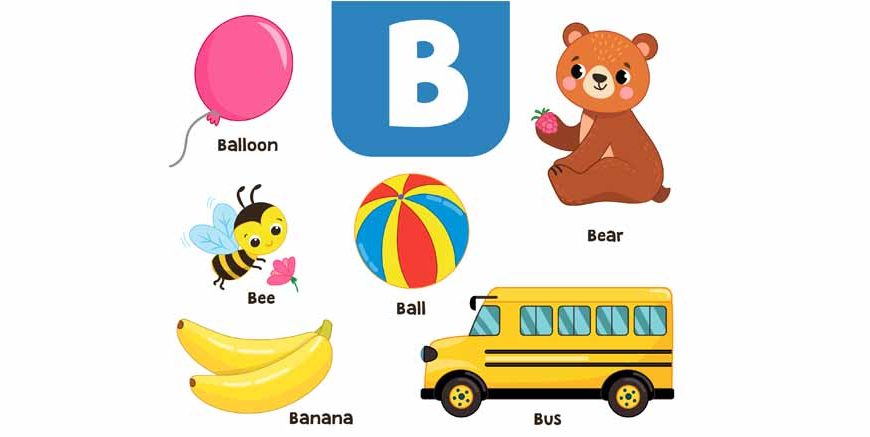
Watching your little one grasp the building blocks of language is nothing short of magical. One day they are just babbling, and the next, they are pointing out the window and confidently shouting, “Bird!” When it comes to the English alphabet, the letter b is often a massive crowd-pleaser for toddlers and preschoolers. It’s bouncy, it’s bold, and it forms the foundation for so many of the everyday objects they love.
At EuroKids, we know that children don’t learn by just staring at flashcards; they learn through play, context, and connection. Memorizing a dry list of vocabulary isn’t going to stick. Instead, tying b words to a child’s real-world experiences turns a simple phonics lesson into a grand adventure.
If you are looking to help your child expand their vocabulary, you are in the right place. Let’s dive into a comprehensive, fun, and easy-to-understand guide to words that start with b, complete with kid-friendly meanings and ideas on how to use them in everyday conversation.
The Magic Behind the “Buh” Sound
Before we jump into the vocabulary, let’s talk about why the letter b is so special in early childhood development.
Phonetically, “B” is what speech therapists call a bilabial stop. That’s just a fancy way of saying you need both lips to make the sound. You press your lips together, let the air build up slightly, and then, pop! release it to make that distinct “buh” sound. Because it relies heavily on the lips (which babies can easily see and mimic), b letter words are often among the very first words a child attempts to say. Think about classic first words like “bottle,” “baby,” “ball,” and “bye-bye.”
To help your child recognize the sound, exaggerate it during playtime. When a ball bounces, say, “B-b-b-bounce!” This kind of auditory highlighting helps wire their brains to recognize English words with b.
Read More – Ways to Teach Your Child to Spell Words
A Giant, Interactive List of B Words for Kids
To make learning feel completely natural, we’ve broken down our list of b words into categories that make sense to a child’s brain. We’ve also included simple, kid-friendly meanings for each, so you can easily explain what the word means if they ask.
1. Animal Friends: B Letter Words in Nature
Kids are naturally drawn to animals. Using creature names is a fantastic way to introduce new vocabulary.
- Bear: A big, furry animal that lives in the forest and loves to sleep through the cold winter. (Play idea: Ask your child to give you a big “bear hug!”)
- Bee: A tiny, buzzing insect with yellow and black stripes that visits flowers to make sweet honey.
- Bird: An animal with soft feathers and wings that flies high up in the sky and sings songs.
- Bunny: A soft, hopping animal with long ears and a fluffy little tail.
- Butterfly: A beautiful flying insect with large, colorful wings that flutters around gardens.
- Bat: A small animal with leathery wings that sleeps upside down during the day and flies at night.
- Beaver: A busy animal with a flat tail and strong teeth that loves to build dams in rivers.
2. Around the House: Everyday Words That Start With B
The easiest way to teach vocabulary is to point at things you already have in your home.
- Bed: The soft, cozy place where you lay your head to sleep and dream at night.
- Book: Pages filled with pictures and stories that we read together before bedtime.
- Ball: A round toy that you can throw, catch, kick, or bounce across the yard.
- Box: A square or rectangular container made of cardboard where we can hide toys or pack things.
- Blanket: A soft, warm piece of fabric we use to cover up and stay snuggly on the couch.
- Brush: A tool with bristles we use to make our hair smooth or to keep our teeth clean.
- Bottle: A container, usually made of plastic or glass, that holds water, milk, or juice.
3. Yummy Tummies: Food Words
Snack time is the perfect time for a stealthy phonics lesson!
- Banana: A long, curved yellow fruit that is sweet and comes in its own natural wrapper.
- Bread: A baked food made from flour and water that we use to make yummy sandwiches.
- Butter: A soft, creamy yellow spread made from milk that melts on warm toast.
- Broccoli: A green vegetable that looks like a tiny, crunchy tree.
- Berry: A small, juicy fruit, like a strawberry or a blueberry, that is sweet and colorful.
- Biscuit: A small, baked treat that is crunchy and perfect for dipping in milk.
4. Moving and Grooving: Action B Words
Verbs are incredibly important for helping kids build full sentences. Have your child act these out as you say them!
- Bake: To cook something delicious, like cookies or a cake, inside the hot oven.
- Bounce: To jump up and down, or to make a ball spring back up from the ground.
- Build: To put pieces together to make something new, like stacking blocks into a tall tower.
- Blow: To push air out of your mouth, like when you make bubbles or cool down hot soup.
- Bite: To use your teeth to cut into something, like a crunchy apple.
Read More – Rhyming Words for Kids
Leveling Up: Five Letter Words Starting With B
As your child grows and their vocabulary expands, they will move past simple three-letter and four-letter words. Introducing slightly longer words is great for cognitive development, especially for preschoolers getting ready for kindergarten. Here is a curated list of five letter words starting with b that are perfect for kids:
- Beach: The sandy shore right next to the big ocean where we can build sandcastles.
- Brain: The super-smart part inside your head that helps you think, learn, and dream.
- Brave: Feeling scared of something but trying to do it anyway, like a superhero!
- Brick: A heavy, hard block made of baked clay used to build strong houses and walls.
- Broom: A tool with a long handle and bristles used to sweep the floor clean.
- Boots: Strong, tall shoes that keep our feet dry when we jump in muddy puddles.
- Board: A flat piece of wood or strong material, like the one we use to play family games.
Read More – Silent Letters in English For Kids
How to Practice These Words Without It Feeling Like “Work”
At EuroKids, our philosophy is all about joyful discovery. If you sit a child down and demand they repeat words back to you, they’ll likely lose interest in three minutes flat. Here are some human, highly interactive ways to weave these english words with b into your daily routine:
1. The “B-Word” Scavenger Hunt
Grab a small basket and tell your child you are going on a “B-Hunt.” Walk around the house and see how many items you can collect that start with the letter B. Find a book, a ball, a belt, and a brush. When you gather them all, sit down and name them one by one, emphasizing the starting sound.
2. Sensory Bubble Play
Fill a basin with water and dish soap to make lots of bubbles. As your child plays, talk about the bubbles. Tell them to blow the bubbles, watch them bounce on the water, and try to catch the big ones. Sensory play cements vocabulary into a child’s memory faster than almost anything else.
3. Silly Alliteration Stories
Make up completely ridiculous, short stories using as many B words as possible. For example: “The big brown bear baked a batch of beautiful blackberry biscuits for his best bird buddy.” Kids find this hilarious, and the repetition of the sound is fantastic for their phonemic awareness.
4. Baking Together
Get into the kitchen and bake some bread or banana muffins. Cooking together allows you to use action words like beat, blend, and bake, while also talking about ingredients like butter and baking soda. Plus, you get a delicious treat at the end of the lesson!
Final Thoughts on Exploring the Alphabet
Language acquisition is a marathon, not a sprint. By surrounding your child with rich, descriptive language and pointing out the letter b in their natural environment, you are setting them up for a lifetime of confident communication. Remember to keep things lighthearted, praise their efforts, and don’t worry if they stumble over pronunciation in the early days. The goal is exposure and enthusiasm!
Frequently Asked Questions
1. What are the easiest b letter words to teach a toddler first?
When you are just starting out, stick to words that connect to things your child interacts with every single day. One-syllable or highly repetitive words are best. Start with “ball,” “boy,” “bus,” “bug,” “bed,” and “bath.” Since these are tangible objects or daily routines, your child can easily map the word to the real-world item.
2. How can I help my child remember English words with b?
Repetition and sensory play are your best friends! Instead of just pointing at a flashcard, make it a full-body experience. If you are teaching the word “bounce,” physically bounce a ball together. If you are teaching “banana,” let them peel it and taste it. The more senses involved, the faster the vocabulary will stick in their memory.
3. What are some good five letter words starting with b for older preschoolers?
Once your child has mastered the basics, you can introduce slightly more complex concepts. Great five letter words starting with b include “bread” (food), “brush” (routine), “block” (play), “brave” (emotions), and “brown” (colors). These words naturally pop up in preschool activities and storybooks.
4. Why does my child confuse the letter b with the letter d?
Don’t worry, this is incredibly common! Because lowercase ‘b’ and ‘d’ are mirror images of each other, little brains often mix them up. A helpful trick is the “bed” trick: have your child hold up their two fists with thumbs pointing up and push their knuckles together. The left hand looks like a ‘b’ and the right hand looks like a ‘d’, visually spelling out the word “bed.” Remind them that the letter b has a “belly” that points forward!
5. How many b words should we practice at once?
Keep it short and sweet. Trying to memorize a massive list of vocabulary all at once will just lead to frustration. Introduce just two or three new b words a week and focus on using them repeatedly in your natural, daily conversations.