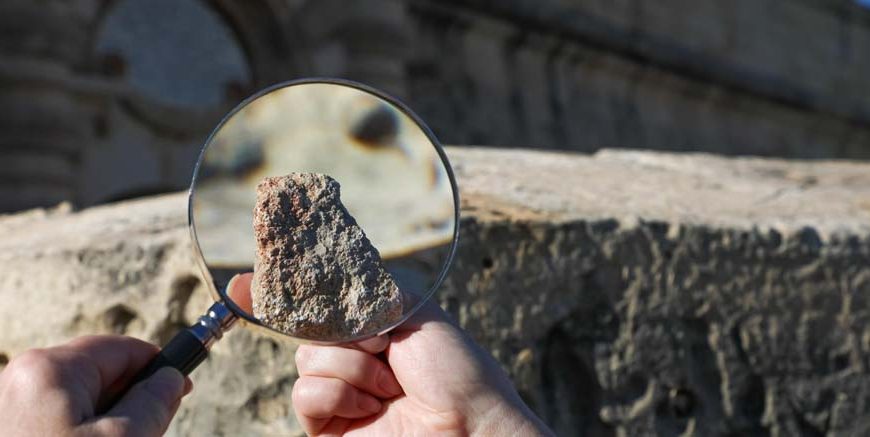
Imagine holding a rough stone in your hand that is somehow lighter than a standard piece of aluminium, but completely manages to be stronger than a heavy block of solid steel. It sounds like something pulled straight out of a science fiction film or a superhero comic book. However, this incredible material actually exists right here on Earth, buried deep beneath the dirt and soil we walk on every single day.
For young students studying Environmental Studies (EVS), learning about the hidden building blocks of our planet is a fantastic way to understand how the natural world works. Today, we are going to dig deep underground to uncover the secrets of one of the most fascinating and useful materials in the entire universe.
What is beryllium?
Before we go hunting for it in the wild, we need to establish exactly what is beryllium. In the simplest terms possible, it is a naturally occurring chemical element. You can think of elements as the absolute purest ingredients in the Earth’s kitchen. Just like you cannot break pure sugar down into anything else while baking a cake, you cannot break an element down into smaller pieces.
When it is completely pure and separated from the dirty rocks it usually hides inside, the colour of beryllium is a very distinct, pale silvery-grey. It looks quite similar to a sharp steel sword or a shiny metal spoon. Because it is so incredibly lightweight but remains stiff and tough, scientists and engineers absolutely love using it to build high-tech machinery, including fast aeroplanes, medical X-ray machines, and even massive space telescopes that look at distant galaxies.
Read More – Discovering the Periodic Table Elements for Kids
Looking at the Science Chart: Numbers and Symbols
In a school science laboratory, every single element has its own specific address on a massive chart called the periodic table. This chart keeps all the building blocks of the universe perfectly organised. To find this specific material, you have to look right at the very top of the chart.
To save time writing long words, scientists use short codes. If you ever need to know what is the symbol of beryllium, it is simply ‘Be’. Just like a house has a street number to help the postman find it, every element has a unique identifying number. The atomic number of beryllium is 4. This small number simply means that deep inside the tiny, invisible centre of this atom, there are exactly four positive particles packed tightly together. Furthermore, if you are looking for the beryllium group number, you will find it sitting proudly at the top of Group 2. This specific vertical column is reserved for a family of materials known as the alkaline earth metals.
Solving the Mystery: is beryllium a metal?
When children first look at the massive periodic table, they usually want to divide everything into two simple categories: hard, shiny metals and soft, invisible gases. A very common question on school tests is whether beryllium is metal or nonmetal.
To settle the debate of whether beryllium metal or nonmetal is the correct category, we just have to look at how it behaves in the real world. Does it conduct heat quickly? Yes. Does it carry electricity? Yes. Is it solid and shiny at room temperature? Yes. Therefore, if you are ever asked if beryllium is a metal or nonmetal, you can confidently answer that it is a true metal. So, is beryllium a metal? Absolutely, it is a hard, brittle alkaline earth metal that rings like a bell when you tap it.
Read More – Fascinating Science Facts for Kids
A Quick History Lesson: who discovered beryllium?
This tough metal did not just magically appear in modern science laboratories. It took a very clever detective to figure out it was hiding in plain sight. If you are wondering who discovered beryllium, we have to travel all the way back to the year 1798.
A brilliant French chemist named Louis-Nicolas Vauquelin was busy studying beautiful, green emerald gemstones. While he was crushing and testing the expensive jewels, he realised they contained a completely unknown, hidden ingredient that no scientist had ever recorded before. However, Vauquelin could only prove it was there; he could not physically pull the pure metal out of the stone. It actually took another thirty years before two other scientists, working completely separately in different countries, finally managed to extract a tiny, pure piece of the silvery-grey metal for the very first time.
Where Does This Treasure Actually Hide in Nature?
Now we reach the biggest EVS question of all: where exactly is this amazing stuff found? You cannot simply walk into your back garden, grab a shovel, and dig up a pure block of it. In nature, this metal is highly sociable, meaning it absolutely hates being alone. It constantly grabs onto other elements and locks itself away inside solid rock structures called minerals.
To find it, massive mining companies have to crush thousands of tonnes of heavy rocks. Here is a list showing exactly where this hidden treasure is found across our planet:
- Inside Gemstones: As the French chemist discovered, it is a key ingredient in some of the most expensive and beautiful jewellery in the world. Bright green emeralds and pale blue aquamarines actually get their solid structure from this exact metal hiding inside them.
- Beryl Rocks: The most common natural home for this metal is a hard rock called beryl. These rocks are usually found deeply buried in rough, jagged mountain ranges. Large amounts of these rocks are carefully mined out of the ground in countries like the United States, China, and Kazakhstan.
- Bertrandite Ore: In the dusty deserts of Utah in the United States, miners dig up a completely different type of dry, crumbly rock called bertrandite. Even though it looks like boring grey dirt, it contains enough of this hidden metal to supply a massive chunk of the entire world’s high-tech manufacturing needs.
Read More – How do you make science interesting for kids?
Conclusion
It is genuinely thought-provoking to realise that the exact same natural ingredient that makes a queen’s green emerald necklace sparkle is also used to build the tough, lightweight frames of modern spacecraft floating in the freezing darkness of outer space. The Earth is packed tightly with these hidden, silvery treasures, and learning how they physically work shows growing children that EVS is essentially about solving brilliant, ancient natural puzzles. By understanding where the raw materials for our technology actually come from, students gain a deep, lasting appreciation for the complicated, silent geology that makes modern human life possible. To discover more fascinating EVS concepts and to support your child’s brilliant early learning journey, explore the latest articles on the EuroKids Blog and secure their vibrant academic future today through EuroKids Preschool Admission.
FAQs
Is this metal dangerous for humans to touch?
While holding a solid piece of the pure metal is perfectly safe, breathing in the tiny dust particles created when it is crushed or cut in a factory is highly toxic and can cause severe lung sickness.
Why do spacecraft builders love using it so much?
Because it is roughly six times stiffer than solid steel but weighs significantly less, it helps massive rockets save huge amounts of fuel while surviving the violent, shaky journey up into outer space.
Can a magnet pick up a piece of this metal?
No, it is completely non-magnetic. If you hold a strong household fridge magnet against a piece of it, the magnet will just slide right off without sticking at all.