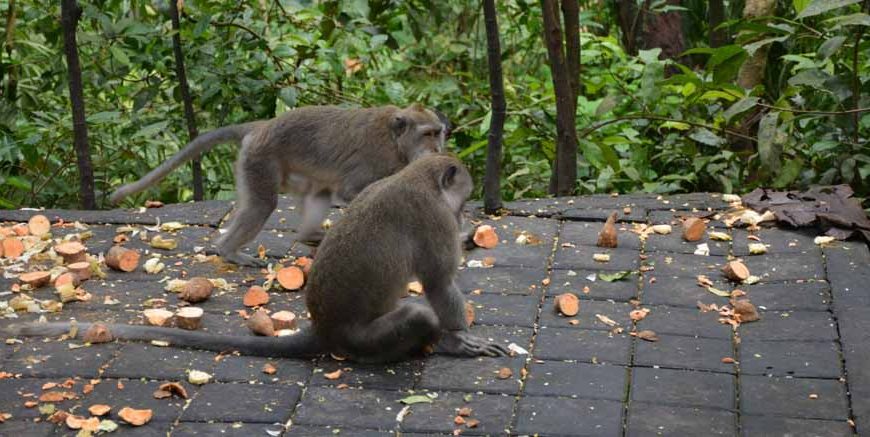
A quick trip to the local zoo usually ends up with the kids glued to the primate enclosure for hours on end. It is completely understandable. Watching these animals swing from ropes, cheekily steal food from each other, and cause absolute chaos is brilliant entertainment. But when children start asking actual questions about how these creatures survive in the wild, the standard cartoon answers simply don’t cut it.
Giving kids real, scientific facts about wildlife builds a much stronger understanding of geography and biology. Forget the silly drawings of apes slipping on banana peels. We need to look at the actual science of their daily lives, the specific places they call home, and the rather surprising things they hunt down for their dinner.
The Real monkey habitat
If you ask a classroom of primary students to draw a monkey habitat, nearly every single kid will grab a green crayon and draw a wet, sticky jungle. They aren’t wrong, but they are only telling half the story.
While millions of these animals do live high up in the dense canopy of the Amazon or the deep tropical rainforests of the Congo, they are ridiculously adaptable creatures. They refuse to be stuck in just one type of environment. Some groups live out on the dry, dusty savannas of Africa, hiding in the tall grass and dealing with massive droughts. Others prefer the freezing cold. The Japanese macaques live high up in snow-covered mountains, surviving the bitter winter by soaking themselves in hot, natural volcanic springs.
Then you have the ultimate survivors who decided the wild was too much hard work. In places like India and Southeast Asia, huge troops have completely adapted to human cities. Their preferred home is now a maze of concrete buildings, busy street markets, and telephone wires. As long as there is a safe spot to sleep at night and enough food kicking about, they can make a home out of almost anywhere.
Read More – List of Animals That Live On Land And Water
Figuring out where do monkeys live globally
To map out exactly where do monkeys live across the planet, wildlife experts split them into two very distinct families. This isn’t about how old they are. It is an easy geographical split that helps kids understand how different environments force animals to evolve in completely different ways.
- New World Monkeys: You will only find this group living in the Americas. They dominate the rainforests across Central and South America. Because they spend almost their entire lives high up in the giant forest canopy, they developed an incredible physical trick. Many of them have a prehensile tail. This tail works exactly like an extra arm. They can wrap it tightly around a thick branch and hang completely upside down leaving both hands free to grab food. If you spot a Howler monkey or a tiny Marmoset, you are looking at a New World species.
- Old World Monkeys: This group covers the rest of the map, specifically Africa and Asia. Their environments are much tougher and far more varied. Because they often travel across the hard, rocky ground or sit on rough dirt to rest, they don’t have those clever gripping tails. Instead, they evolved tough, leathery sitting pads on their bottoms. Baboons and Macaques fit right into this category, spending loads of time walking on all fours rather than swinging through the leaves.
The Science: monkey is carnivore or omnivore?
When kids learn about the animal kingdom, they usually try to put everything into neat little boxes. Cows eat grass, so they are herbivores. Lions eat meat, so they are carnivores. So, a student will eventually ask if a monkey is carnivore or omnivore.
The biological reality is that almost all of them are omnivores. This is actually their biggest survival secret. Being an omnivore means you aren’t fussy. If you only eat one specific type of green leaf and a terrible disease kills all those trees, you starve. By having a digestive system that can handle a massive, messy mix of plants, fruits, bugs, and meat, they guarantee their troop will never go hungry, even when the weather turns terrible.
Read More – Wild Animals for Kids
Looking at what do monkeys eat on a daily basis
If we want to know what do monkeys eat, we have to throw the old banana myth straight in the bin. Yes, they will eat a banana if a tourist throws it at them, but wild monkeys rarely ever see them.
Their actual daily menu changes wildly depending on the season and the specific country they live in. In the deep jungle, they spend the morning ripping thick bark off trees to drink the sweet sap inside. They pull down fresh figs, crunch through hard nuts, and chew on hundreds of different types of leaves. Some species even have massive cheek pouches.
They can stuff an incredible amount of food into their cheeks to carry it safely up a tree, saving it for later when they are hidden away from predators. They also act as the ultimate forest gardeners. When they eat fruit and travel miles across the canopy, they drop the seeds onto the soil below, planting brand new trees without even trying.
The Big Shock: Do monkeys eat meat?
This is the part that usually shocks kids the most. When learning about their diet, the question always pops up: do monkeys eat meat? They absolutely do, and some of them are incredibly aggressive hunters.
We aren’t talking about them taking down a zebra. Their meat is usually much smaller, but it is packed with protein. They will spend hours picking through each other’s fur to find ticks and fleas to eat. They rip away dead wood to find fat, juicy grubs and beetles. Larger species will actively stalk and catch frogs, small lizards, and ground birds. If a baboon finds a bird’s nest, it will happily steal the eggs or even eat the chicks.
Some of the bigger, tougher troops have even been filmed hunting small mammals in the grass. It isn’t their main source of food, but a crunchy bug or a tiny lizard is a massive, healthy treat that keeps their energy levels peaking.
Read More – GK Questions On Animals
Summary
Looking past the silly cartoon versions of wildlife and digging into the messy, clever reality of nature completely changes how a child sees the world. Finding out that a primate can survive a freezing snowstorm, hunt lizards in the dirt, and use its tail like a spare hand proves that biology is brilliant. It teaches kids that animals are problem solvers, constantly adapting to whatever crazy weather or tough environment the earth throws at them.
Bringing this level of grounded, factual discovery into early learning is exactly what shapes a bright, curious mind. The Heureka curriculum is built entirely around this idea of asking the right questions and discovering the real facts behind the world around us. To find more ways to support your child’s natural curiosity at home, read the latest guides on the EuroKids Blog and secure their brilliant academic start today through EuroKids Preschool Admission.
FAQs
Do any monkeys live naturally in the UK or Europe?
There is only one wild population in all of Europe. A group of Barbary macaques lives on the massive Rock of Gibraltar, though they were originally brought over from North Africa centuries ago.
Can they swim if they fall out of a tree?
Yes, quite a few species are surprisingly strong swimmers. Some will even dive purposefully into deep rivers to cool down on a boiling hot day or to hide from a predator chasing them.
Why do they have such loud voices?
Because they live in dense, thick jungles where it is hard to see far ahead, shouting is the only way to communicate. They use loud calls to warn the family about hidden predators or to claim a specific fruit tree as their own.