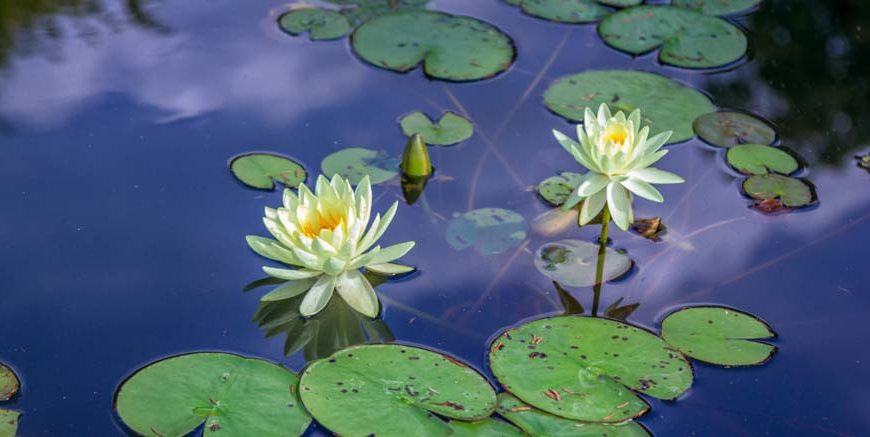
Have you ever stood by the edge of a quiet, muddy pond and spotted a bright splash of colour resting perfectly on top of the water? It feels almost like a magic trick. Plants are supposed to grow in solid, dry soil, not float around on top of a liquid, right? But the natural world is completely packed with brilliant rebels that refuse to follow the normal rules. Today, we are going to talk about one of the most famous aquatic rebels out there. Let us ditch the heavy biology textbooks for a moment and take a proper look at how these beautiful aquatic plants actually survive, breathe, and thrive in their watery homes.
Understanding the Basics
If we are looking for some solid Water Lily plant information, we have to start at the bottom of the pond. These plants belong to a freshwater family that grows all over the planet, preferring slow-moving streams or completely still lakes.
The most recognisable part of the plant is definitely the Water Lily leaves. Most people just call them lily pads. They look like massive, flat, green dinner plates floating peacefully on the surface. These leaves have a brilliant, glossy waxy coating on top. If you drop a little bit of water onto a lily pad, it does not soak into the plant at all. It just forms a tight little bead and rolls straight off the edge. This waxy shield is vital because it stops the leaf from getting waterlogged, sinking to the muddy bottom, and rotting away.
Read More – Different Types of Plants for Kids
The Clever Science of Aquatic Survival
Kids are naturally curious and usually want to know how a plant avoids drowning. If a science teacher ever asks your child exactly what kind of Water Lily plant shows which adaptation, you can tell them it is a masterclass in ‘hydrophytic’ survival. That is just a fancy scientific word for plants that have adapted to live entirely in water.
While the beautiful leaves and flowers float on the surface, the actual roots are buried deep down in the dark, oxygen-starved mud at the very bottom of the pond. So, how does the plant breathe? It uses its stems! The stems connecting the roots to the floating leaves are completely hollow inside. They act like giant, built-in snorkels, pulling fresh air from the surface straight down into the muddy roots. Also, while regular garden trees have breathing pores on the underside of their leaves, this plant has them exclusively on the top. If the breathing pores were on the bottom, they would just suck in a mouthful of water!
10 Lines on Water Lily Flower
The actual Water Lily flower is the undisputed star of the pond. For kids who need to put together a quick, factual EVS school project, here are 10 lines on Water Lily flower traits, packed with logic and real science:
- They are ‘diurnal’, meaning they only open their petals during the warm day to catch the sunlight and close up tightly at night to protect themselves.
- They produce a heavy, incredibly sweet scent specifically to attract busy beetles and bees for pollination.
- The vibrant, glowing colours of the petals (usually pink, white, or yellow) act as bright landing pads for passing insects.
- Once the flower is successfully pollinated by a bug, the stem suddenly curls up and drags the flower underwater so the seeds can grow safely away from surface predators.
- Their stems are highly flexible rather than stiff, meaning if the pond water rises quickly after a heavy rainstorm, the plant simply stretches instead of snapping in half.
- The massive floating leaves provide essential, cool shade for fish, hiding them perfectly from hungry birds flying overhead.
- By blocking a lot of sunlight from hitting the deep water, they actually stop nasty, toxic green algae from taking over the entire pond.
- Frogs absolutely love using the flat pads as safe, dry resting spots to sit and hunt for passing flies.
- A single blooming flower does not last very long; it usually only survives for about four or five days before vanishing back under the water.
- They are so incredibly beautiful and peaceful that famous artists, like the French painter Claude Monet, spent years painting them.
Read More – Parts of a Flower and Their Role in Nature for Kids
Spotting the Imposters
When visiting a botanical garden, people constantly mix up different water plants. The main difference between Lily and Lotus is actually wonderfully simple to spot once you know the physical secret. You just need to look at exactly where the flower and the leaves are sitting in relation to the water.
A water lily is quite relaxed. It prefers to rest its leaves and its colourful flowers completely flat on the surface of the water, like a comfortable floating blanket. A lotus, however, is a lot more dramatic. It shoots its leaves and its massive flowers high up into the air, standing tall and stiff on thick stems right above the water level.
Taking your child to a local park to spot these physical differences themselves is exactly the kind of active, hands-on learning championed by the Heureka curriculum. Getting their wellies a bit muddy teaches them far more about botany than just staring at a classroom whiteboard.
Conclusion
Looking at a pond full of floating flowers is a brilliant reminder of how adaptable life truly is. These plants took a harsh, suffocating, muddy environment and engineered hollow snorkels and waxy shields just to survive. It is deeply thought-provoking when you realise that the natural world never simply gives up when faced with an obstacle; it just invents a wildly clever new way to grow.
Do we encourage our kids to be that flexible and resilient when they face a tough homework problem? Teaching children to look closely at nature builds a fiercely curious and adaptable mindset. To find more fantastic ways to fuel your child’s daily discoveries, read the latest articles on the EuroKids Blog and start their next great educational adventure through EuroKids Preschool Admission today.
FAQs
Do these plants grow in saltwater oceans?
No, they absolutely cannot survive in the sea. They are strictly freshwater plants and will instantly die if exposed to heavy salt.
Can you grow them in a small garden tub?
Yes, you certainly can! There are dwarf varieties specifically bred to grow perfectly in small backyard water features or large, watertight pots on a patio.
Do they bloom all year round?
In places with cold winters, they usually go completely dormant and hide away during the freezing months, only shooting back up to the surface when the warm spring weather arrives.