Math becomes much easier when children understand the basics clearly. And one of the first ideas they learn in math is the sum definition. It teaches what happens when we add numbers. If you’ve ever helped your child add apples, toys, or pencils, you’ve already introduced them to the idea of sum definition, even without using the formal term.
Addition is one of the most important building blocks in early math learning. It supports counting, number sense, problem-solving, and later topics like multiplication and algebra. In this guide, we’ll break down the sum definition, formulas, types, kid-friendly examples, and solved solutions.
What Is Sum?
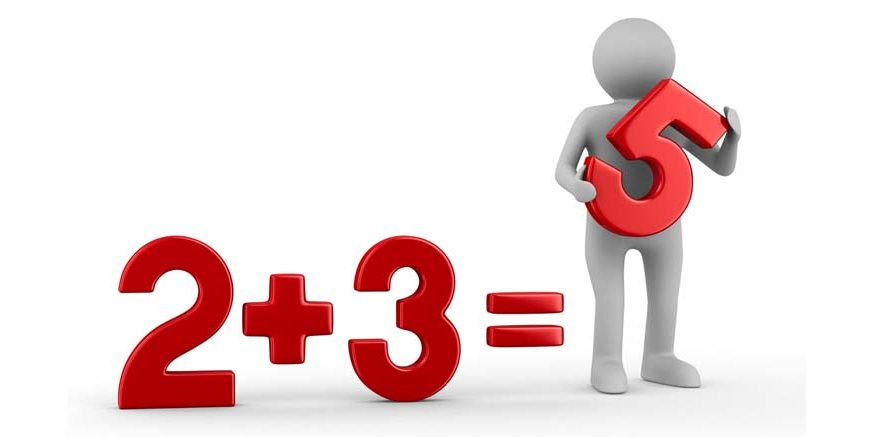
The sum is the result we get when we add two or more numbers together. If your child adds 3 + 2, the answer 5 is called the sum. Think of it like this: You have 2 candies, and you get 3 more candies. Now you count all the candies together. The total is the sum.
It is combining quantities to find the total. Children usually learn sums through counting objects first, then numbers, and later word problems.
Sum Definition Math with Everyday Examples
Children understand addition faster when they see it in real life. Here are simple examples you can use at home:
- 2 apples + 4 apples = 6 apples
- 5 pencils + 1 pencil = 6 pencils
- 3 birds + 2 birds = 5 birds
You can also ask:
“How many do we have in total?”
That total is the sum.
Read More – Learning Math with Everyday Objects
Sum Formula in Mathematics
The basic addition or sum formula is: Sum = First number + Second number
For more numbers: Sum = a + b + c
Where: a, b, and c are numbers being added, and the result is the sum.
Example:
4 + 7 = 11
Here: 4 and 7 are addends, and 11 is the sum.
Word Problems Using Sum
Example 1
Riya has 4 balloons. Her friend gives her 3 more.
How many balloons does she have now?
Solution:
4 + 3 = 7
Sum = 7 balloons
Example 2
There are 6 ducks in a pond, and 2 more arrive.
How many ducks are in total?
Solution:
6 + 2 = 8
Sum = 8 ducks
Practice Examples
Example 1
Add: 8 + 5
Solution:
Start at 8 and count 5 more- 9, 10, 11, 12, 13
Sum = 13
Example 2
Add: 12 + 7
Solution:
12 + 7 = 19
Sum = 19
Example 3
Add three numbers: 3 + 6 + 2
Solution:
3 + 6 = 9
9 + 2 = 11
Sum = 11
Example 4
Find the sum of 40 and 60
Solution:
40 + 60 = 100
Sum = 100
Practice like this builds speed and accuracy.
Read More – Importance of Math in Everyday Life
Common Mistakes Children Make with Sums
It’s completely normal for children to make mistakes while learning sums. Here are a few common ones:
- Forgetting to count all objects
- Skipping numbers while counting
- Mixing up addition with subtraction
- Writing digits in the wrong column
Fun Activities to Teach Sum at Home
Learning sums doesn’t have to feel like homework. Try these playful ideas:
1. Addition with Toys
Ask your child to group toys and count totals.
2. Snack Addition
Let them count before eating.
3. Dice Game
Roll two dice, add the numbers, and say the sum.
4. Step Counting
Take 3 steps + 2 steps, then total steps, and sum.
Read More – Math Magic Tricks
Why Learning Sum Early Is Important
Understanding the sum definition helps children:
- Build number confidence
- Improve logical thinking
- Solve daily math problems
- Prepare for multiplication and algebra
- Develop mental math skills
Addition is the doorway to all higher math. When the base is strong, everything else feels easier.
How EuroKids Strengthen Math Foundations
When math is taught through stories, objects, and hands-on play, children grasp ideas like sums much faster. That’s why structured early learning environments focus on activity-based math. At EuroKids, children are introduced to core math ideas using playful tools, visual aids, and interactive number games under the HEUREKA curriculum approach. Concepts like addition and sum are practiced through everyday examples, so children don’t just memorise, they understand. With a child-centric and play-based method developed over 20+ years across 1600+ preschools, the focus remains on building confidence first, speed later.
Conclusion
The sum definition math concept is one of the first and most important ideas children learn. A sum simply means the total we get after adding numbers together. With clear formulas, simple methods, and lots of practice, children quickly become comfortable with addition.
Using real-life examples, games, and step-by-step solved solutions makes the process smoother and more enjoyable. Even ideas like the direct sum definition can be introduced in simple terms so children don’t feel overwhelmed.
To explore more learning ideas, simple explanations, and early childhood resources, parents can visit the EuroKids Blog. Those who wish to understand the preschool journey better or explore enrolment options can find complete information on the EuroKids Preschool Admission Page, where learning is designed to be joyful, engaging, and child-friendly.
FAQs:
1. What is the sum definition in math?
The sum is the total we get after adding two or more numbers together. For example, 4 + 5 = 9, and 9 is the sum.
2. What is the basic sum formula?
The basic formula is:
Sum = Number 1 + Number 2 (+ more numbers if given).
3. What are addends in addition?
Addends are the numbers that are added together to find the sum.
4. What does the direct sum definition mean for kids?
For young learners, direct sum means adding numbers straight away without changing them, simply combining values to get the total.
5. How can children practice sums easily at home?
They can practice using toys, snacks, dice games, number lines, and simple word problems from daily life. Playful practice works best.