


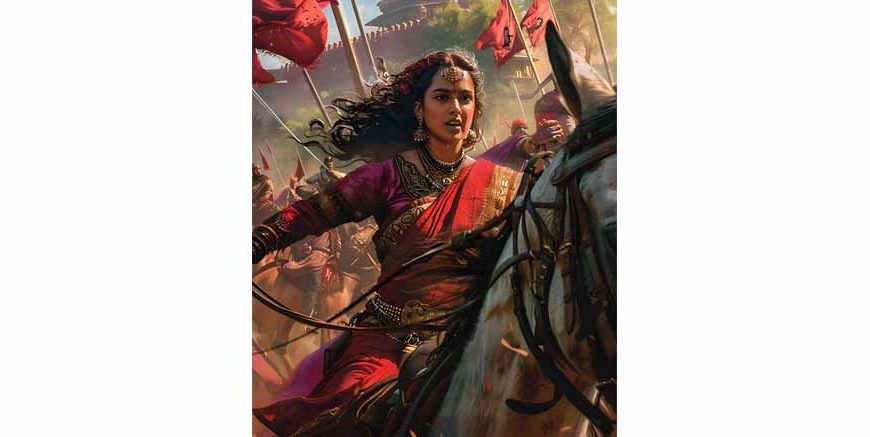
Every child is drawn to stories of bravery, of someone who stood tall when it would have been easier to step back. These aren’t just stories we listen to; they quietly shape who we become. And among those timeless tales stands one that continues to ignite courage in young hearts: the story of Rani Lakshmi Bai, the fearless queen who chose resistance over surrender and honour over fear.
Her story is not merely a chapter from history. It reminds us that courage is not about age, power, or position; it is about conviction. She fought not just for a throne, but for dignity, for justice, and for her people. When giving up would have been the safer choice, she chose to fight with unwavering strength.
This blog is designed especially for children and parents. It explains who Rani Lakshmi Bai is, shares simple and factual information about Rani Lakshmi Bai, and includes easy formats like 10 lines on Rani Lakshmi Bai, short paragraphs, essays, and points. The language is kept simple so children can read, understand, and remember her inspiring journey.
Who Is Rani Lakshmi Bai?
Rani Lakshmi Bai was a brave queen of India who ruled the city of Jhansi. She is also known as the Rani of Jhansi. She lived during a time when India was under British rule. Even though she was a queen, she was also a fearless warrior who fought to protect her kingdom and her people.
Today, Rani Lakshmi Bai is remembered as one of the greatest women freedom fighters of India. Her courage and sacrifice made her a symbol of bravery and strength. Children learn about her because her life teaches us to be fearless, strong, and confident.
Read More – Chhatrapati Shivaji Maharaj: Architect of the Maratha Empire
Early Life of Rani Lakshmi Bai
The early life of Rani Lakshmi Bai is as inspiring as her role as a queen. She was born in the year 1828. Her birth name was Manikarnika, and she was lovingly called Manu. From a very young age, she was different from other children of her time.
Manikarnika loved physical activities and adventure. She learned horse riding, sword fighting, and archery. These skills were usually taught to boys, but she proved that courage has no gender. Her upbringing played a major role in shaping her fearless personality.
Rani Lakshmi Bai as the Queen of Jhansi
As Manikarnika grew older, she got married to the king of Jhansi and became Rani Lakshmi Bai, the rani of Jhansi. As a queen, she was kind, responsible, and deeply cared for her people.
She did not see herself only as a ruler but also as a protector. She worked hard for the welfare of her kingdom and ensured justice for her citizens. Even after facing personal losses, she remained strong and focused on her duties.
Read More – Ways to Improve Your Kid’s General Knowledge
Role of Rani Lakshmi Bai in India’s Freedom Struggle
One of the most important parts of Lakshmi Bai history is her role in India’s freedom struggle. During the Revolt of 1857, also known as India’s First War of Independence, Rani Lakshmi Bai stood up against British rule.
She refused to give up her kingdom and fought bravely to protect Jhansi. She led her army with great courage and even fought on the battlefield. Her bravery shocked the British rulers and inspired many others to stand up for freedom.
Because of her fearless spirit, freedom fighters Rani Lakshmi Bai is a phrase often used in history books. She showed the world that even in difficult times, courage and determination can make a difference.
Values Children Learn from Rani Lakshmi Bai
The life of Rani Lakshmi Bai teaches many important lessons to children. Her story is not just history but a guide for building strong character.
Children learn courage from her fearless actions. They learn confidence from the way she trusted her abilities. They understand the importance of standing up for what is right. They also learn leadership, responsibility, and love for the country.
These values help children grow into confident and responsible individuals, which is why stories of freedom fighters are an important part of early education.
Read More – Lala Lajpat Rai Contributions to India’s Freedom
10 Lines on Rani Lakshmi Bai for Kids in Simple English
- Rani Lakshmi Bai was a brave queen of India.
- She is also known as the Rani of Jhansi.
- Her childhood name was Manikarnika.
- She loved horse riding and sword fighting.
- She fought bravely against British rule.
- She was one of India’s greatest freedom fighters.
- She protected her kingdom with courage.
- She inspired many people to fight for freedom.
- Her life teaches us to be fearless and strong.
- Rani Lakshmi Bai will always be remembered as a hero.
5 Lines on Rani Lakshmi Bai in English for Young Children
- Rani Lakshmi Bai was a brave queen.
- She ruled Jhansi with courage.
- Her childhood name was Manikarnika.
- She fought for India’s freedom.
- She is a symbol of bravery.
Read More – Subhash Chandra Bose Jayanti
Rani Lakshmi Bai Essay in English for Kids
Rani Lakshmi Bai was the brave Queen of Jhansi. She was born as Manikarnika Tambe in Varanasi on 19 November 1828. She was also known as Manu during her childhood. She learnt horse riding and sword fighting from a young age. After marrying Maharaja Gangadhar Rao, she became the Queen of Jhansi. She played an important role in the Revolt of 1857 and fought against British forces to defend her kingdom. She died in battle near Gwalior on 17 June 1858. Rani Lakshmi Bai is remembered for her courage, leadership, and determination.
10 Points About Rani Lakshmi Bai Explained Simply
- She was born as Manikarnika.
- She became the Rani of Jhansi.
- She was trained in martial arts.
- She loved her people deeply.
- She fought against British rule.
- She played a major role in the Revolt of 1857.
- She was a fearless warrior queen.
- She inspired many freedom fighters.
- She sacrificed her life for the country.
- She is remembered as a national hero.
How EuroKids Makes Learning History Fun for Kids
At EuroKids, learning history is made simple. Children are introduced to great personalities through storytelling, visuals, and age-appropriate activities.
Instead of memorising facts, children listen to stories, ask questions, and participate in discussions. This approach helps them understand concepts better and develop curiosity.
The HEUREKA Curriculum at EuroKids
The HEUREKA Curriculum at EuroKids focuses on experiential and play-based learning. It encourages children to explore, imagine, and learn through real-life connections.
The curriculum introduces stories of heroes like Rani Lakshmi Bai through activities, role-play, and discussions. This helps children develop language skills, emotional understanding, and confidence.
The curriculum supports holistic development by balancing academics with creativity, communication, and values. With caring educators and the HEUREKA Curriculum, EuroKids helps children grow into curious learners and confident individuals, ready to explore the world with courage and kindness.
Conclusion
Stories of heroes like Rani Lakshmi Bai inspire children to believe in themselves and face challenges with confidence. Learning about such brave personalities at an early age shapes character, values, and curiosity.
Choosing the right preschool plays an important role in this journey. EuroKids Admission offers a nurturing environment where learning is joyful, meaningful, and confidence-building. Explore more ideas on early learning and child development; visit the EuroKids Blog.
FAQs:
1. Who was Rani Lakshmi Bai?
Rani Lakshmi Bai was a brave queen who fought for India’s freedom.
2. Why is Rani Lakshmi Bai important for children?
Her life teaches courage, confidence, and leadership.
3. At what age can children learn about freedom fighters?
Children can start learning simple stories from preschool age.
4.Why is Rani Lakshmi Bai famous?
She is famous for defending Jhansi and playing an important role in the Revolt of 1857 against British rule.