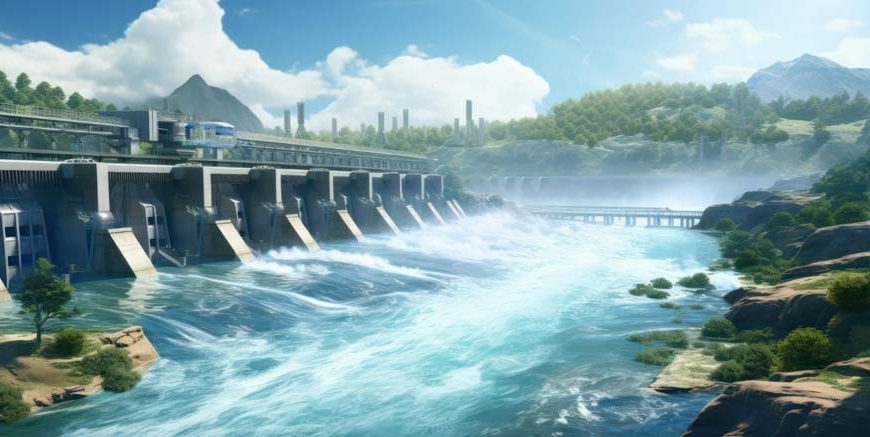
Have you ever tried to block a flowing garden hose with your thumb? The water instantly pushes back against your hand, spraying everywhere with surprising, heavy force. That tiny bit of push is actually pure physical energy. Now, multiply that tiny garden hose by a million. Imagine an entire, raging river tumbling down the side of a steep rocky mountain.
The sheer, terrifying force of that moving water has been used by humans for thousands of years to do our heavy lifting. Instead of just letting all that fantastic energy wash away into the ocean, we figured out a way to trap it and turn it into the electricity that powers our televisions, fridges, and bedside reading lamps. Let us dive deep into the splashing, roaring world of water energy.
Getting the Basics Right
If your child’s science teacher asks them to define hydro energy, the answer is brilliantly straightforward. To understand the true hydropower meaning, you just need to look at the word itself. ‘Hydro’ is an ancient Greek word for water. So, it simply means energy pulled directly from moving water. When we talk about a proper hydroelectric definition, we are talking about the clever scientific process of capturing the kinetic energy (the energy of movement) from flowing rivers or crashing waterfalls and transforming it into usable electricity. It is basically nature’s oldest, wettest battery.
Read More – Sources of Energy
Inside the Giant Machines
You cannot just plug your kitchen toaster directly into a river. To turn a wild stream into electricity, engineers have to build massive structures. If you are looking for solid hydroelectric power plant information, you usually start by looking at a giant dam. A dam acts like a massive concrete thumb blocking a river, creating a huge, deep artificial lake behind it. When the human operators open small gates at the very bottom of the dam, the trapped water rushes through with bone-crushing force. This fast water violently spins a giant metal wheel called a turbine. The spinning turbine then turns a generator, which magically creates invisible electricity. It is essentially a giant, modern waterwheel wired up to an entire city.
Spotting the Magic in Real Life
We use this incredible force far more than you might actually think. Some classic hydroelectric energy examples include the Hoover Dam in America or the massive Three Gorges Dam in China, which are so huge they look like alien mega-structures holding back oceans. But historical uses of water power were much simpler and quieter.
Hundreds of years ago, long before anyone even knew what a lightbulb was, millers used wooden waterwheels in small village streams to grind heavy wheat into fine flour for baking daily bread. Today, the electricity generated by modern water plants zips through thick underground cables to charge your tablet, power your school’s computers, and keep the streetlights glowing on a dark, freezing winter evening.
Read More – List of Major Dams in India
The Ultimate Endless Supply
Kids always ask a very logical, slightly worried question about the planet’s natural resources: is hydro power renewable or nonrenewable? You can happily tell them it is completely, 100 percent renewable. We will absolutely never run out of it. Why? Because it relies entirely on the Earth’s natural weather cycle. The hot sun beats down on the ocean, evaporating water into the sky.
That water forms heavy clouds, which eventually burst, dropping fresh rain onto the mountain peaks. The rain flows back into the rivers, spins our giant turbines again, and empties right back into the sea. The cycle never, ever stops. We do not actually ‘use up’ or burn the water; we just borrow its speed for a split second as it runs past our machines.
Brilliant Scientific Water Facts
Understanding the mechanics makes the science so much better. Here is a list of totally fascinating facts, backed by logic, to impress the classroom:
- Water is incredibly heavy: A single cubic metre of water weighs a massive 1,000 kilograms (a full tonne!). That is exactly why moving water carries so much destructive and creative energy. Gravity is constantly pulling that massive weight rapidly downhill.
- It is a nighttime lifesaver: Solar panels completely stop working when the sun goes down, and wind turbines stop spinning if the weather gets calm. But a river flows 24 hours a day, making hydro energy one of the most reliable, constant power sources on the entire planet.
- Fish get their own elevators: Because giant concrete dams block natural rivers, migrating fish like salmon used to get completely stuck trying to swim home. Now, clever scientists build ‘fish ladders’ or actual aquatic elevators alongside the dams so the fish can safely swim up and over the concrete walls to lay their eggs.
- It is totally clean: Unlike dirty coal or oil plants, a water plant does not pump any black smoke or toxic greenhouse gases into our air. The only thing coming out of the machine at the bottom is the exact same clean river water that went in at the top.
Conclusion
When you really stop and think about it, grabbing invisible electricity out of a rushing river is basically a real-life magic trick. It proves that the Earth already provides absolutely everything we need to power our modern, busy lives, provided we are clever enough to build the right tools to catch it. We do not always need to dig deep underground for dirty, finite fuels when the rain falling on our heads holds so much incredible, clean power.
Will the next generation of kids figure out an even smarter way to harness the wild oceans? Getting children to look at a simple splashing stream and see a glowing lightbulb is the very first step in raising brilliant future engineers. To discover more ways to spark your child’s imagination and help them change the world, explore the EuroKids Blog and secure their educational foundation via EuroKids Preschool Admission.
FAQs
Can a small river power a whole house?
Yes, it can! Micro-hydropower systems use very small turbines placed in local, fast-moving streams to generate enough electricity to easily power a single home or a remote farm.
Does building a dam hurt the environment?
It can. While the energy is clean, flooding a valley to create the artificial lake behind the dam forces local animals to move and completely changes the natural landscape forever.
What happens to the power plant if there is a bad drought?
If it does not rain for a very long time, the lake behind the dam will dry up. Without heavy, flowing water to spin the giant turbines, the power plant cannot create any electricity at all.