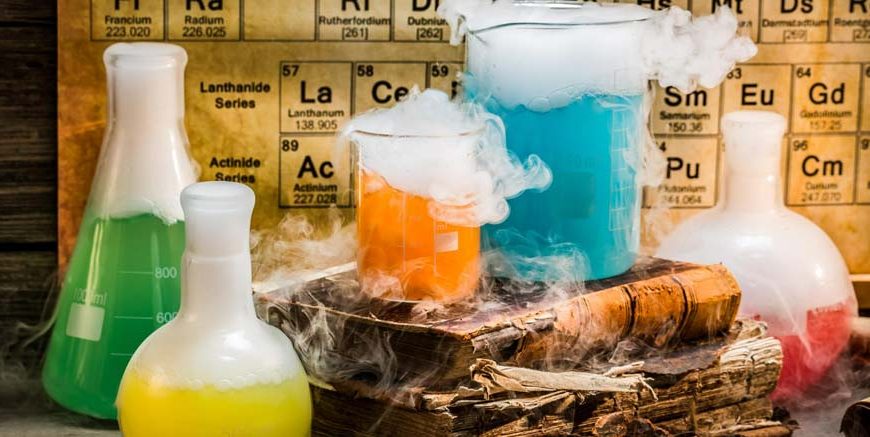
Chemistry is a lot like a giant, busy playground. Most elements are highly social. They constantly want to hold hands and combine with anyone they meet, creating everyday things like water, table salt, and sweet sugar. But if you look at the far right side of the science chart, there is a very quiet, exclusive group of elements. They do not want to hold hands, they refuse to mix, and they prefer to stay completely alone.
Today, we are exploring this fascinating family of elements. We will learn their names, discover why they are so independent, and see how we use their unique hidden powers to light up our city streets and float our party balloons.
Meet the Family: Which Are the Noble Gases?
When students first look at the massive chart of elements, they often wonder how many noble gases in periodic table actually exist. There are exactly seven of them, and they all live in a straight vertical line in Group 18.
If you need a complete noble gases list for your next science homework, here are all noble gases along with their specific identification numbers. Scientists call these numbers the atomic number of all noble gases, and it tells us exactly how many tiny protons live inside each atom.
|
Name of the Gas |
Chemical Symbol |
Atomic Number |
|
Helium |
He |
2 |
|
Neon |
Ne |
10 |
|
Argon |
Ar |
18 |
|
Krypton |
Kr |
36 |
|
Xenon |
Xe |
54 |
|
Radon |
Rn |
86 |
|
Oganesson |
Og |
118 (This one is artificial and made in a lab!) |
These are the most famous gases on the periodic table because they behave entirely differently from everything else in the universe.
Read More – Discovering the Periodic Table Elements for Kids
Happy Alone: Characteristics of Noble Gases
To understand this group, we need to gather some basic information about inert gases. “Inert” is a science word that simply means lazy or unreactive. The most important characteristics of noble gases is that they are perfectly happy exactly the way they are.
Atoms usually connect with other atoms because they are trying to fill up their outside shell with tiny moving particles called electrons. Most atoms have empty seats in their outside shell, so they share seats with other atoms. But the noble family is completely full! Every single seat in their outside shell is perfectly taken. Because they do not need any more electrons, they simply ignore all the other elements. They are completely stable, safe, and independent.
Invisible Neighbors: In What Form Do Noble Gases Occur in Nature?
Because they refuse to combine with other things to make solid rocks or liquid water, you might wonder in what form do noble gases occur in nature.
They exist as monatomic gases. “Monatomic” means they float around as single, lonely atoms. They are completely invisible to human eyes. They have absolutely no color, no smell, and no taste. Right now, as you take a deep breath of air, you are actually breathing in a tiny amount of Argon gas! It just floats quietly in the air around us, minding its own business and never reacting with our lungs or our blood.
Read More – How do you make science interesting for kids?
Lighting Up the World: Uses of Noble Gases
Even though they are invisible and lazy in nature, humans have discovered brilliant ways to put them to work. The uses of noble gases are actually very common in our daily lives. Here are a few great examples:
1. Helium
Helium is much lighter than normal air. Because it does not catch fire or explode, it is the absolute safest gas to use for filling up floating birthday balloons and giant flying blimps.
2. Neon
If you walk down a busy city street at night, you will see bright, glowing signs in restaurant windows. When we trap this invisible gas inside a glass tube and shoot a little bit of electricity through it, it suddenly glows with an incredibly bright, reddish-orange light!
3. Argon
Because it completely refuses to catch fire, engineers use Argon inside normal glass lightbulbs. It protects the extremely hot metal wire inside the bulb, stopping it from burning up and snapping, which helps our reading lights last for many months.
4. Krypton and Xenon
These two are quite rare and heavy. Car makers use them to build extremely bright, bluish-white headlights for fancy cars, and photographers use them to create the fast, bright flashing lights inside digital cameras.
Read More – What Is Solid, Liquid, Gas?
Conclusion
To sum up our chemistry lesson, this special family of elements sits proudly on the far right edge of the periodic table. They include Helium, Neon, Argon, Krypton, Xenon, Radon, and Oganesson. Because their atomic shells are already completely full, they are highly stable, invisible, and unreactive in nature. However, when we safely trap them and add electricity, these invisible “loners” help us do amazing things, from floating high in the sky to creating the brightest, most colorful lights in the city.
Learning about these silent elements leaves us with a truly thought-provoking idea. These gases spend almost all of their time completely unnoticed, floating invisibly around us without ever making a sound or forcing a reaction. People often think that the loudest, most reactive things are the most important. But nature proves that sometimes, the quietest and most stable things hold the brightest, most brilliant potential just waiting to be switched on.
FAQs
Are these gases dangerous to humans?
Most of them are completely safe and harmless because they do not react with our bodies. However, Radon is an exception; it is naturally radioactive and can be harmful if it gets trapped inside a closed basement.
Why is Helium used in balloons instead of Hydrogen?
Hydrogen is also very light and makes balloons float beautifully, but it is highly flammable and catches fire very easily. Helium is a noble gas, meaning it will never catch fire, making it perfectly safe for children’s parties.
Can we freeze these gases into solid ice?
Yes, but it is extremely difficult! Because they love being a free-floating gas, you have to cool them down to incredibly freezing temperatures (way colder than the North Pole) to finally force them into a solid block of ice.
Do Neon signs only glow in the color orange?
Pure Neon gas only glows reddish-orange. To make other bright colors like blue, green, or purple, sign makers have to use different noble gases like Argon or Xenon, or mix them together!