Have you ever accidentally dropped a television remote control or a noisy, flashing electronic toy, only for the plastic casing to pop open? If you peeked inside before hastily snapping it back together, you likely saw a flat green board covered in tiny, colourful cylinders, shiny flat discs, and little wire coils. They look exactly like a miniature, futuristic city! Those tiny components are the unsung heroes of our modern world. They are the essential building blocks that make every single one of our favourite gadgets work.
Today, we are going to look closely at the three most important residents of this electronic city: the resistor, the capacitor, and the inductor. By understanding what these three tiny parts do, you will unlock the secret language of electronics and discover exactly how energy moves through the devices we use every day.
Understanding the Resistor
Let us start with the simplest and most common component of the trio. Think of electricity as a rushing river of tiny, invisible cars driving down a very fast motorway. If these electrical cars travel too quickly and without any control, they could easily crash, overheating and burning out the delicate lights and chips inside your favourite toy.
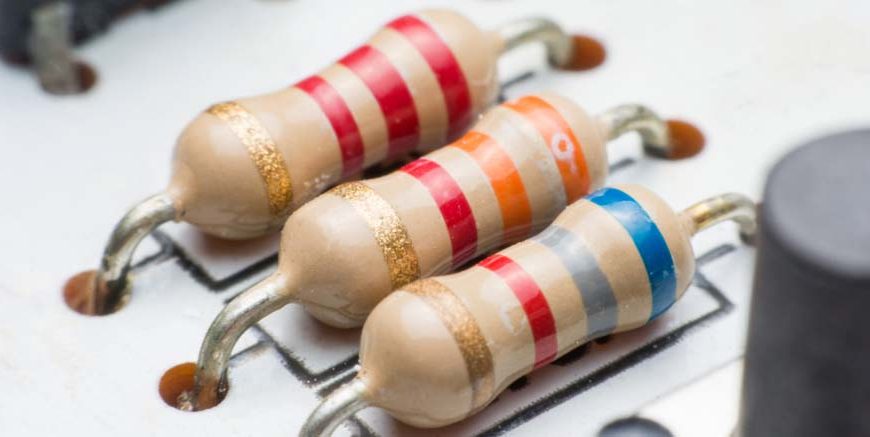
A resistor acts exactly like a speed bump on that motorway. Its only job is to create a bit of friction and slow down the flow of electricity, making sure that just the right amount of energy reaches the fragile parts of the circuit. If you look closely at a resistor, you will see it is painted with colourful stripes. These stripes are a secret code that tells engineers exactly how big of a ‘speed bump’ it is! Without resistors, our gadgets would constantly overheat, spark, and break down.
Read More – What is Electric Current?
Decoding the Capacitor Meaning
Now, let us move on to the second crucial component and explore the capacitor meaning. Imagine you are trying to fill a large bucket with water from a standard kitchen tap, but you suddenly need a massive, quick splash of water to put out a small campfire in the garden. The tap is simply too slow to provide that sudden rush.
A capacitor works just like that bucket. It is a brilliant little temporary storage tank for electrical energy. It quietly gathers up electricity from the battery and holds onto it tightly. When the electronic circuit suddenly needs a huge, fast burst of energy, the capacitor dumps all its stored electricity out in one massive, powerful rush. You see this in action all the time! The sudden, blindingly bright flash on a digital camera uses a capacitor. Furthermore, the sensitive touchscreen on your parent’s mobile phone relies on countless microscopic capacitors to detect exactly where your finger is tapping.
Inductor Definition and Uses
Next, we have the fascinating coil known as the inductor. If a curious child asks you for an inductor definition, you can simply tell them it is a tightly wound coil of wire that stores energy, but it does so in a completely different, almost magical way compared to a capacitor. Instead of storing electricity in an internal tank, it stores energy in an invisible magnetic field floating right around the wire.
Think of an inductor like a very heavy, solid wooden water wheel sitting in a river. When the water (the electricity) first starts pushing it, the heavy wheel is stubborn and very hard to turn. It fights against the flow. But once it finally gets spinning, it builds up massive momentum and becomes incredibly hard to stop. If the river suddenly dries up, that heavy spinning wheel will keep pushing a little bit of water forward just because it is already moving. An inductor strongly dislikes sudden changes in electrical flow. It tries its absolute best to keep the energy moving steadily and smoothly at all times.
There are brilliant inductor examples hidden all around our neighbourhoods. They are tucked inside the large, humming transformer boxes on your street, they help tune the radio in your car to pick up your favourite music station, and massive ones are even buried directly under the tarmac at traffic lights to detect the heavy metal of a car driving over them!
Read More – Good and Bad Conductors of Electricity
Difference Between Capacitor and Inductor
Because both of these components are famous for storing energy, young scientists often get confused about the exact difference between capacitor and inductor. The absolute easiest way to remember is to look at how they choose to hold onto their power and how they react to change.
- Storage Method: A capacitor stores its energy in a static electrical field, acting like a tightly stretched rubber band ready to snap. An inductor stores its energy in a magnetic field, acting like a heavy, spinning wheel full of momentum.
- Reaction to Change: A capacitor absolutely loves rapid, sudden changes and is perfect for delivering quick bursts of power. An inductor, however, hates sudden changes and wants the electrical current to flow as smoothly and consistently as possible.
In many ways, they are complete opposites. Engineers cleverly place them next to each other on circuit boards so they can work wonderfully together to balance out the flow of power.
The Ultimate Trio: Difference Between Resistor Capacitor and Inductor
To perfectly summarise the difference between resistor capacitor and inductor, let us use a highly relatable water park analogy. Imagine a massive, complex system of water slides and pools.
- The Resistor is the narrow, twisty plastic slide. It creates friction, deliberately slowing down the flowing water and stopping the enthusiastic swimmers from travelling at dangerously fast speeds. It does not store any water; it just controls the pace.
- The Capacitor is the giant, tipping bucket right at the top of the play area. It slowly fills up with water from a small hose, waits patiently, and then suddenly tips over, dumping a massive, thrilling splash of water all at once.
- The Inductor is the heavy, motorised water pump keeping the lazy river moving. It takes a moment to get up to speed, but once it is pumping, it forcefully keeps the water flowing steadily, preventing any sudden stops, surges, or dry patches in the pipes.
Read More – Uses of Electricity in our Daily Life
Conclusion
When we look at a highly complex computer motherboard or the delicate insides of a modern mobile phone, it is incredibly easy to feel completely overwhelmed by the blinking lights and the maze of wires. However, breaking it all down into these three fundamental parts reveals a beautiful, logical simplicity. The resistor, the capacitor, and the inductor are simply mechanical tools for controlling, storing, and smoothing out invisible energy. They remind us that even the most complex, mind-boggling modern inventions are built upon a foundation of simple, easily understandable rules of nature.
Electricity is not just a chaotic, wild force; it is a highly choreographed dance, and these tiny green, blue, and silver components are the strict dance teachers keeping everything perfectly in step. By nurturing this fundamental curiosity about how everyday things work, we actively empower the next generation to become the fearless inventors, engineers, and problem-solvers of tomorrow.
To spark your child’s brilliant imagination and proactively support their holistic educational adventure, read more on the EuroKids Blog and secure their vibrant future through EuroKids Preschool Admission today.
FAQs
What is a simple inductor definition?
An inductor is a tightly wound coil of wire that temporarily stores electrical energy in an invisible magnetic field, helping to keep the flow of electricity smooth, steady, and consistent.
What is the meaning of the core capacitor?
A capacitor is a tiny electronic component that acts exactly like a temporary storage tank. It holds onto electrical energy and releases it in a very quick, sudden burst when the circuit demands it.
What is the main difference between resistor capacitor and inductor?
A resistor creates friction to slow down electricity, a capacitor stores electricity for a sudden, powerful release, and an inductor uses momentum and magnetism to keep the electrical flow incredibly steady.