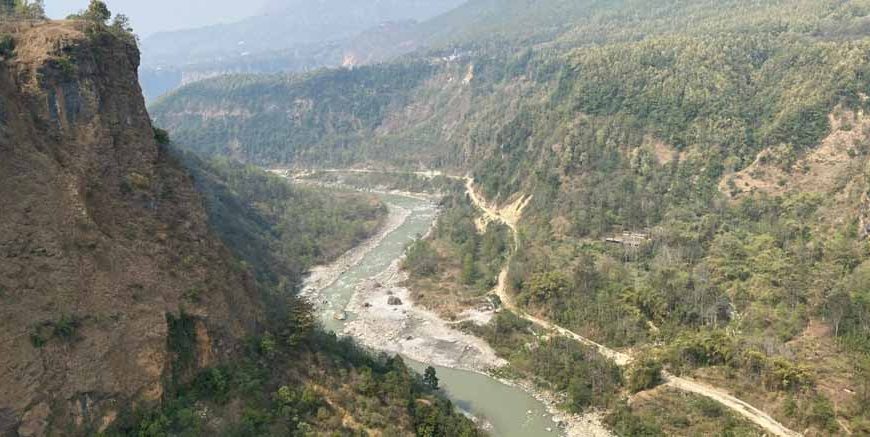
A valley is one of the most beautiful and important landforms on Earth. Valleys are not only scenic but also very useful for human life, agriculture, and settlements. In geography textbooks, valleys are taught as an essential topic to help students understand landforms and natural processes.
Here, we explain what a valley is, its meaning, types, formation, importance, and interesting facts in a clear and easy way.
Valley Meaning and Definition
What Is a Valley?
A valley is a low area of land found between hills or mountains, usually with a river flowing through it.
Valley Definition
In geography, a valley is defined as:
A long depression on the Earth’s surface formed mainly by erosion due to rivers, glaciers, or tectonic activity.
Read More – Exploring Mountains with Fun Facts
Valley Meaning in Geography
A valley in geography refers to a landform created over thousands of years due to erosion by natural agents like water and ice.
In geography, valleys are studied to understand:
- River systems
- Glacial activity
- Human settlement patterns
This is why valley landform is an important chapter in school syllabi.
Valley Examples from India and the World
Some famous valley examples include:
- Kashmir Valley (India)
- Yamuna Valley (India)
- Narmada Valley (India)
- Great Rift Valley (Africa)
These valleys are rich in soil and support agriculture and human life.
Read More – Summer Travel Destinations for Families
Valley Names Commonly Known
Some popular valley names in India:
- Kangra Valley (Himachal Pradesh)
- Dehradun Valley (Uttarakhand)
- Kullu Valley (Himachal Pradesh)
Each valley has its own shape, climate, and importance.
Valley Diagram and Shape
A valley diagram helps students understand the shape and structure of valleys.
Valley Shape
Valleys can have different shapes, such as:
- V-shaped
- U-shaped
- I-shaped
The shape depends on how the valley was formed.
How Are Valleys Formed?
Students often ask how valleys are formed. Valleys are formed mainly by erosion.
Main Agents of Valley Formation
- Rivers
- Glaciers
- Tectonic movements
Read More – Types of Landforms of the Earth
V-Shaped Valley Explained
A V-shaped valley is a narrow valley with steep sides that looks like the letter “V”.
A V-shaped valley is Formed Due To
- River erosion
- Vertical cutting by fast-flowing rivers
I-Shaped Valley Example
An I-shaped valley example is found in very steep regions, where erosion occurs mainly downward, with little lateral erosion.
Types of Valleys
Some common types of valleys are:
1. V-Shaped Valley
Formed by rivers in mountainous areas.
2. U-Shaped Valley
Formed by glaciers; wide and flat bottom.
3. River Valley
Formed by continuous river erosion.
4. Gorge
A very deep and narrow valley.
Difference Between Gorge and Valley
Many students confuse gorges and valleys.
|
Gorge |
Valley |
|
Very narrow |
Wider |
|
Steep sides |
Sloping sides |
|
Deep |
Comparatively shallow |
Difference Between Valley and Mountain
|
Valley |
Mountain |
|
Low land |
High land |
|
Often fertile |
Rocky |
|
Supports settlements |
Less suitable for living |
Read More – Highest Mountain Peak in the World
Valley in Geography and Human Life
Importance of Valleys
The importance of valleys is huge in India and worldwide.
Importance of Valleys:
- Fertile soil for farming
- Source of freshwater
- Ideal for human settlements
- Support biodiversity
- Tourist attractions
Many Indian cities and villages are located in valleys.
Here are some Indian cities located in geographical valleys, along with the valleys they are situated in:
1. Srinagar (Jammu & Kashmir)
- Located in the Kashmir Valley
- Surrounded by the Himalayas and Pir Panjal ranges
- Situated along the Jhelum River
2. Dehradun (Uttarakhand)
- Located in the Doon Valley
- Lies between the Shivalik Hills and the Lesser Himalayas
3. Kullu (Himachal Pradesh)
- Situated in the Kullu Valley
- Along the banks of the Beas River
4. Manali (Himachal Pradesh)
- Also part of the Kullu Valley
- A popular hill station in the Himalayan region
5. Leh (Ladakh)
- Located in the Indus River Valley
- Surrounded by the Karakoram and Himalayan ranges
6. Imphal (Manipur)
- Situated in the Imphal Valley
- A flat valley surrounded by hills
7. Gangtok (Sikkim)
- Located in a valley region of the Eastern Himalayas
- Near the Teesta River valley
8. Aizawl (Mizoram)
- Though mostly hilly, parts of the city lie in small valley formations between ridges
9. Itanagar (Arunachal Pradesh)
- Located in a valley region at the foothills of the Himalayas
10. Jammu (Jammu & Kashmir)
- Situated near the Tawi River Valley
These cities are surrounded by hills or mountains and lie in low-lying areas formed between them, which is the defining feature of a geographical valley.
Valley Diagram for Students
A valley diagram is commonly asked in exams.
How to Draw a Simple Valley Diagram
- Draw two sloping hills
- Draw a river in between
- Label the valley floor
Drawing diagrams improves marks.
How EuroKids Builds Strong EVS Foundations
When Environmental Studies (EVS) is introduced through observation, storytelling, nature walks, and hands-on exploration, young learners begin to understand their surroundings in a meaningful and lasting way. Instead of memorising facts about plants, animals, or seasons, children learn by experiencing and questioning the world around them. This is why structured early education programs focus on experiential and inquiry-based learning rather than rote memorisation.
At EuroKids, foundational EVS concepts are nurtured through the HEUREKA – Visible Thinking Curriculum. This approach encourages children to explore themes such as “My Family,” “My Community,” “Plants and Animals,” “Seasons and Weather,” and “Good Habits” through interactive discussions, thematic projects, role play, outdoor exploration, and guided observation.
The Visible Thinking framework helps children observe carefully, think deeply, and express their ideas confidently. Through activities like nature-based learning, environmental awareness projects, sensory exploration, and group conversations, children develop curiosity about how things grow, how communities function, and how they can care for the environment.
With a child-centric and play-based methodology refined over 20+ years and implemented across 1600+ preschools, EuroKids focuses on building awareness, responsibility, and curiosity first, allowing knowledge, empathy, and critical thinking skills to develop naturally over time.
Fun Facts About Valleys
Here are some interesting facts:
- Valleys can take millions of years to form
- Most civilisations started in river valleys
- Valleys are cooler than plains
These facts make learning geography fun.
What Is the Valley? (Simple Explanation)
So, when asked what is the valley, the simplest answer is:
A valley is a low land between hills or mountains, often with a river.
Summary: About Valleys
To sum up:
- Valley meaning refers to low land between high areas
- Valleys are formed by erosion
- There are different types of valleys
- Valleys are important for life and agriculture
Understanding valleys helps students connect geography with real life.
To explore more learning ideas, simple explanations, and early childhood resources, parents
can visit the EuroKids Blog. Those who wish to understand the preschool journey better or
explore enrolment options can find complete information on the EuroKids Preschool Admission
Page, where learning is designed to be joyful, engaging, and child-friendly.