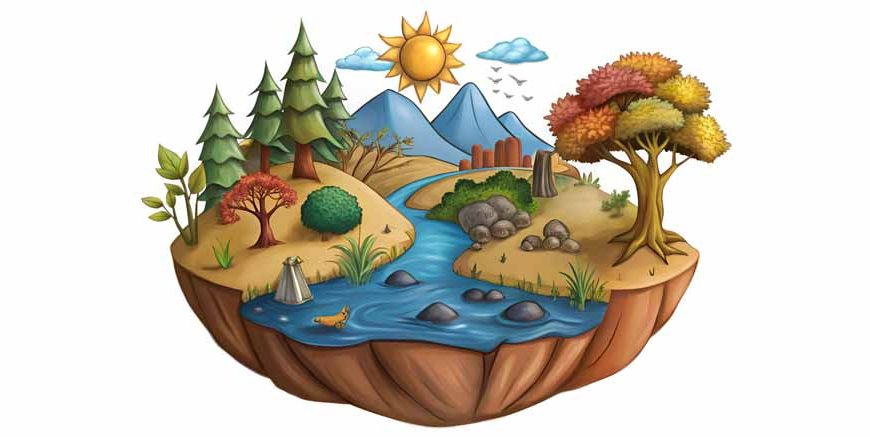
Every time your child looks out of a car window, watches a travel video, or flips through a picture book, they see the Earth in different shapes. Sometimes the land looks flat and endless. Sometimes it rises sharply and touches the clouds. Sometimes it looks dry and sandy, and at other times green and fertile. These shapes are not random. They tell the story of how our planet was formed and how life learned to live on it.
Many children learn geography by memorising terms, but true understanding begins when learning feels real. When your child understands why land looks the way it does, they begin to see the world with curiosity rather than confusion. This is where learning about landforms of the earth becomes meaningful. It connects nature, history, science, and everyday life into one clear picture.
This blog helps you explain different types of landforms to your child in a simple, structured, and engaging way. You will understand the names of landforms, how they formed, and what are the 5 types of landforms most commonly taught to young learners. More importantly, you will learn how early education turns these ideas into lasting knowledge.
What Are Landforms of the Earth
Landforms are the natural shapes and features found on the surface of the Earth. They include everything from tall mountains to wide plains and deep valleys. Unlike buildings or roads, landforms form naturally over thousands or even millions of years. Water, wind, ice, heat, and movements inside the Earth slowly shape the land we see today.
Long ago, the Earth looked very different. Volcanoes erupted, rivers carved paths through land, and huge plates beneath the surface shifted over time. These changes created the landforms of the earth that now support plants, animals, and human life. Even today, landforms continue to change slowly, although we often do not notice it happening.
When children learn about landforms, they begin to understand that the Earth is alive in its own way. This knowledge helps them appreciate nature and respect the environment. Learning the names of landforms also prepares children for future topics like maps, climate, and world geography.
Why Children Should Learn About Different Types of Landforms Early
Early childhood is the best time to introduce geography concepts because children naturally observe their surroundings. When children learn about different types of landforms, they start noticing patterns in nature. They understand why some places receive more rain, why some areas grow crops easily, and why people live differently across regions.
Learning landforms also builds vocabulary and thinking skills. When your child knows words like mountain, plain, or valley, they can describe places clearly. This strengthens language development and comprehension. Geography becomes less about memorising facts and more about understanding relationships between land, weather, and life.
Early exposure also builds confidence. Children who understand basic geography concepts feel more comfortable asking questions and exploring the world around them. This curiosity supports lifelong learning and critical thinking.
Read More – Fascinating Facts About Earth for Kids
What Are the 5 Types of Landforms
When teaching geography to young learners, educators usually begin with five main landforms. These provide a clear framework and help children organise information easily. What are the 5 types of landforms commonly taught? They are mountains, plains, plateaus, deserts, and valleys.
These landforms appear across the world and influence climate, vegetation, and human settlement. By understanding these five types, children gain a strong foundation in geography. Each landform has unique features, but together they explain how the Earth’s surface supports different forms of life.
The sections below explain each landform in a way that children can understand and parents can confidently teach.
Mountains
Mountains are tall landforms that rise high above the surrounding land. Some mountains have pointed peaks, while others have rounded tops. Mountains form when large sections of the Earth’s crust push against each other and rise upwards over time. Volcanic activity also creates certain mountains.
Mountains influence weather and water flow. Many rivers begin in mountains because snow melts and flows downward. Mountains also affect rainfall patterns and temperature. Higher mountain areas remain colder than low-lying regions.
For children, mountains often represent adventure and beauty. Snow-covered peaks, wildlife, and scenic views help children visualise geography clearly. Learning that mountains take millions of years to form teaches patience and respect for natural processes.
Read More – Facts About the Layers of the Earth for Kids
Plains
Plains are large areas of flat or gently rolling land. They cover vast parts of the Earth and often support farming and cities. Rivers usually flow through plains, making the soil fertile and suitable for agriculture.
Many early human civilisations developed on plains because food was easier to grow and travel was simpler. Today, plains continue to support millions of people around the world.
When children learn about plains, they understand how landforms influence daily life. They see why towns, farms, and roads often appear in flat areas. Plains help children connect geography with human history and development.
Plateaus
Plateaus are flat areas of land that rise above the surrounding land. They look like tables with steep sides. Plateaus form due to volcanic activity or erosion over long periods.
Even though plateaus sit at high elevations, they differ from mountains because their tops remain flat. Many plateaus contain minerals and waterfalls, which makes them important for natural resources.
Children often confuse plateaus with mountains, so clear explanations help. Understanding plateaus strengthens their ability to compare and classify different types of landforms accurately.
Deserts
Deserts are landforms that receive very little rainfall. Many people think deserts are always hot, but some deserts remain cold throughout the year. The defining feature of a desert is dryness, not temperature.
Plants and animals living in deserts adapt to harsh conditions. They conserve water and survive extreme climates. Humans also adapt their lifestyle to desert environments. Teaching children about deserts builds environmental awareness. They learn how landforms influence survival and why conserving resources matters.
Valleys
Valleys are low areas of land found between hills or mountains. Rivers often flow through valleys, making the land fertile and suitable for settlement. Valleys usually form due to erosion caused by flowing water or glaciers.
Historically, valleys supported early communities because they provided water, shelter, and fertile soil. Many modern cities still exist in valley regions. Understanding valleys helps children see how landforms connect water sources, agriculture, and human life.
Children do not need to travel far to recognise landforms. Pictures, maps, storybooks, and travel experiences introduce landforms naturally. Even animated shows and documentaries help children visualise geography. Talking about landforms during holidays or while reading encourages real-world connections. When learning feels relatable, children remember concepts more easily.
Read More – Exploring Earth’s Mysterious Gravitational Anomalies
Role of Early Education in Teaching Landforms
Structured early education helps children understand complex ideas through age-appropriate activities. Visual aids, storytelling, and hands-on learning make geography enjoyable rather than intimidating. EuroKids follows the Heureka Curriculum, which encourages experiential learning and helps children explore concepts like landforms through observation and discovery.
Conclusion
Learning about landforms of the earth helps your child see the world clearly and thoughtfully. It builds curiosity, environmental awareness, and foundational geography skills that support future learning.
Choosing the right early education environment strengthens this journey. EuroKids Admission opens doors to learning that balances structure with curiosity. The EuroKids Blog continues to support parents with reliable, research-backed insights that make learning meaningful from the very beginning.
Frequently Asked Questions
1. What are landforms of the earth in simple words?
Landforms are natural shapes of land like mountains, plains, deserts, valleys, and plateaus.
2. Why should children learn about landforms early?
Early learning builds observation skills, vocabulary, and environmental awareness.
3. What are the 5 types of landforms taught to kids?
Mountains, plains, plateaus, deserts, and valleys.
4. How can parents teach landforms at home?
Use pictures, maps, stories, and real-life conversations during travel or play.
5. How does preschool help with geography learning?
Preschools simplify concepts through visuals, stories, and guided exploration.