Anyone who spends five minutes with a toddler knows they are essentially tiny scientists who absolutely love making a mess. If there is a muddy puddle in the garden, they will stomp right in the middle of it. If you hand them a solid chocolate bar on a hot afternoon, they will somehow manage to melt it all over the clean sofa cushions.
Everything they interact with, the wet mud, the sticky juice, the invisible air pumping up their bicycle tyres, is made of physical ‘stuff’. In the world of science, we call this stuff matter. Learning about matter and its states gives children a brilliant, practical way to understand the physical world around them. It is basically the fundamental recipe book for the entire universe.
What Are The Three Main States Of Matter?
When a child looks up from their homework and asks what are the three main states of matter, they are asking about the physical forms we interact with every single day: solids, liquids, and gases. The difference between them all comes down to one simple thing: energy.
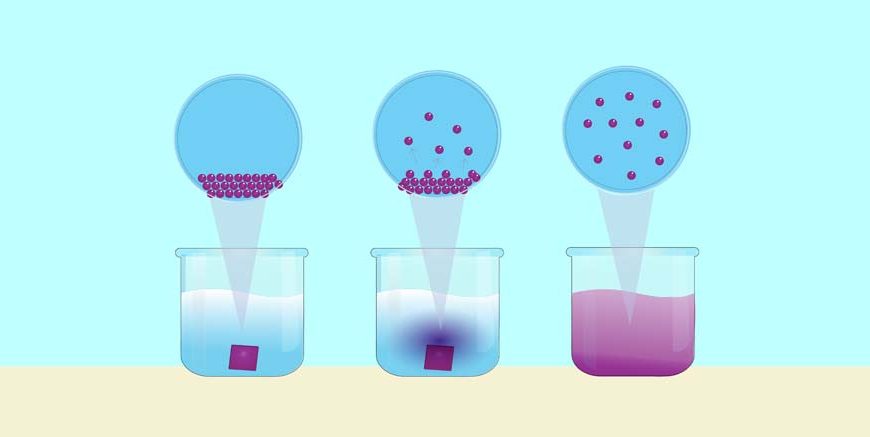
Everything you can see and touch is built from microscopic building blocks called particles. How those tiny particles behave dictates the final shape of the object. Think of the particles like a group of energetic kids. If they are holding hands tightly and refusing to move, the object feels hard. If they have enough energy to let go and slide around each other, the object flows freely. If they are bouncing wildly off the walls with too much energy, they turn into a gas.
Read More – Fascinating Science Facts for Kids
A List of Matters and Their Characteristics
To truly understand how the physical world behaves, we have to look at the specific rules for each form. Here is a clear breakdown of the different matters and how they act in the real world:
- Solids: These items have a rigidly fixed shape and a definite volume. The particles inside are packed together so tightly that they can only vibrate in place. You cannot compress them at all. A solid will stubbornly refuse to change its shape unless you apply physical force to break, cut, or bend it.
- Liquids: These have a definite volume, but they completely lack a fixed shape. The internal particles sit close together but have enough thermal energy to roll and slide over each other. This freedom allows liquids to flow easily and take the exact shape of whatever container you pour them into, whether that is a tall drinking glass or a wide bowl.
- Gases: Gases possess no definite shape and absolutely no fixed volume. Their particles are full of intense energy, zipping around at top speed to fill up all the available space. Because there is so much empty room between the particles, gases are incredibly easy to compress.
- Plasmas: This form is essentially a super-heated gas. The particles get so unbelievably hot that they become electrically charged, or ionised. Because of this electrical charge, plasmas react strongly to magnetic fields.
- Bose-Einstein Condensates (BEC): This is the exact opposite of a hot plasma. It occurs when particles are frozen to almost absolute zero. At this extreme, bitter cold, they lose their individual energy entirely and clump together to behave like one giant super-atom.
Finding Simple Examples Of Matter
Science makes much more sense to a young brain when they can spot it happening in their own kitchen or living room. You can find brilliant examples of matter without even leaving your house.
For solids, just knock your knuckles on the wooden dining table, pick up a metal fork, or hold a hard apple. They hold their shape without any help. Liquids are incredibly easy to spot on a daily basis. Think about the cold milk poured over a bowl of breakfast cereal, the tap water running into the bathroom sink, or the heavy rain hitting the roof. Gases are slightly trickier to point out because they are usually entirely invisible to the naked eye. However, the oxygen filling up your lungs, the helium making a shiny balloon float against the ceiling, and the warm steam rising off a hot bowl of soup are all perfect examples.
Read More – How do you make science interesting for kids?
What Are The 5 States Of Matter?
Sometimes, an older student might come home with a tricky science assignment asking: what are the 5 states of matter? We normally just stick to teaching the main three because that is what we interact with on Earth. But physics is wonderfully weird.
The fourth state is plasma. You actually see it whenever you look up at the stars at night, watch a heavy lightning storm, or see a bright neon sign glowing on the high street. The fifth state, the Bose-Einstein Condensate, only exists inside highly controlled laboratories under freezing conditions that do not exist naturally on our planet. It just goes to show how bizarre things get at extreme temperatures.
Changing Between Forms
The best bit about physics is that these forms are not permanently stuck that way. You can easily force them to change their costumes just by adding or removing heat. If you leave a solid ice cube sitting on the kitchen counter on a warm summer day, it absorbs the heat energy from the room and melts into a liquid puddle.
If you put that liquid water into a kettle and turn it on, it gains even more energy and evaporates into a gas. If that gas hits a cold window, it loses energy and turns back into liquid water drops. This constant, beautiful cycle of melting, freezing, and evaporating is exactly how the weather works outside, recycling water to keep the earth perfectly balanced.
Read More – Science Quiz Questions and Answers for Kids
Conclusion
Teaching kids about physics does not require dry textbooks or complicated laboratory equipment. It happens quite naturally when they watch a morning puddle dry up in the sun or help you melt butter for baking in the kitchen. Understanding how tiny, invisible particles build the world gives them a completely new perspective on their everyday environment. It turns the mundane into something magical.
When you look at a simple glass of iced water, you are actually watching solids, liquids, and gases existing together in one single cup. Do we take enough time to point out these quiet, brilliant little miracles to our children, or do we just rush through the day? Keep feeding that spark of daily curiosity by reading the EuroKids Blog, and start their next big learning adventure through EuroKids Preschool Admission.
FAQs
Can a solid change directly into a gas without melting?
Yes, it can. This process is known as sublimation. Dry ice is a fantastic example, as it turns directly from a frozen solid block into a thick, smoky gas without ever becoming a messy liquid.
Is jelly a solid or a liquid?
Jelly is a fascinating scientific oddity called a colloid. It holds its wobbly shape on a plate like a solid, but it is actually made of liquid trapped inside a microscopic web of solid proteins.
Are the clouds in the sky a gas?
Surprisingly, no. While they float high up in the air, clouds are actually made up of millions of tiny, liquid water droplets or solid ice crystals suspended in the atmosphere.