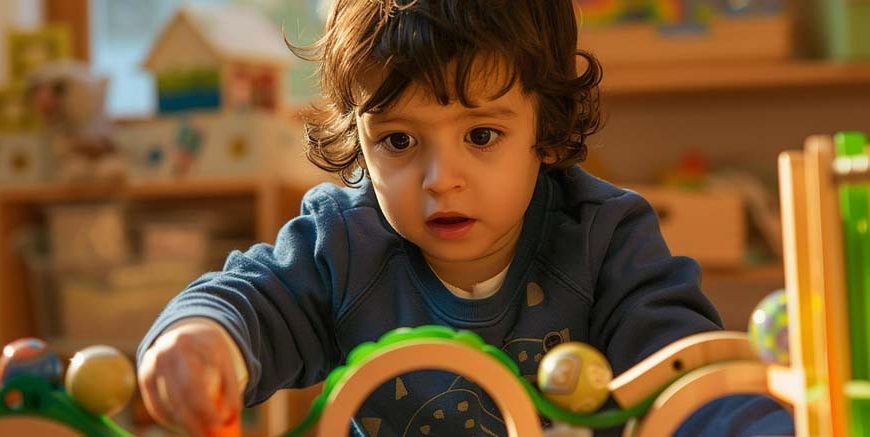
You watch your little one happily stacking plastic cups on the living room rug. They are completely engrossed in their own tiny world, chatting away to a stuffed bear and occasionally knocking the cups over with a dramatic crash. It is a beautiful, peaceful scene. Looking at them, it is incredibly easy to wonder why you would ever want to disrupt this safe bubble and send them into a noisy classroom full of strangers. The debate around early years education is massive, and every family eventually hits this exact crossroads. We look at our toddlers and try to figure out if packing a tiny lunchbox and waving goodbye at a classroom door is actually a vital step, or just an expensive modern trend.
Does preschool matter?
Let us look at what actually happens when a child walks into an early learning centre. If you peek through a classroom window, it honestly just looks like organised chaos. You will see three-year-olds squishing bright blue playdough, arguing over a wooden train, or singing loudly off-key. But underneath that messy play, massive neurological changes are happening. So, does preschool matter? Absolutely, because a child’s brain is literally built through these specific, varied interactions.
When a child tries to build a ridiculously tall tower out of wooden blocks alongside a classmate, they are not just passing time. They are actively learning about gravity, balance, and spatial awareness. More importantly, they are learning social negotiation. If two kids both want the red block at the exact same time, they have to figure out how to solve that crisis without resorting to biting or shouting. This kind of raw, unfiltered social interaction with their peers is something they simply cannot learn while sitting safely at home with an accommodating parent who usually just hands them the toy they want.
Read More – Importance of Preschool Education
The Realities of Routine: is preschool necessary?
There is a big difference between something being generally helpful and something being essential. When parents ask, is preschool necessary, they are usually worrying about whether their child will fall behind if they stay home a little longer.
The truth is, primary school is a huge shock to the system. Suddenly, a child is expected to sit quietly on a carpet, listen to a teacher, hold a pencil correctly, and follow a strict timetable. Early learning environments gently introduce these exact routines but in a highly supportive, playful way. They learn that coats go on a specific peg, that we wash our hands before eating our snack, and that we have to wait our turn to speak during circle time.
Programmes like the Heureka Curriculum are specifically designed to nurture this independence, allowing children to figure out their own capabilities at their own pace. They discover how to open their own lunchboxes, put on their own shoes, and ask for help from an adult who is not their mother or father. This slow, gentle introduction to a structured life makes the eventual leap into “big school” significantly less terrifying for the child.
The Concrete importance of preschool education facts
It helps to look past opinions and dive straight into the hard evidence. Decades of child psychology and educational research have given us a very clear picture of how early learning environments shape a growing mind. Here is a clear list of the most crucial importance of preschool education facts that every parent should consider:
- Massive Vocabulary Growth: Children are exposed to a much wider variety of words, songs, and sentence structures when they converse with trained teachers and peers, rapidly expanding their daily vocabulary beyond what they hear at home.
- Emotional Regulation: A structured classroom forces kids to experience mild, manageable frustrations (like waiting for a turn on the big playground slide) and teaches them how to calmly process those big, overwhelming feelings.
- Fine Motor Skill Development: Activities like holding chunky crayons, cutting paper with blunt safety scissors, and threading large wooden beads actively build the tiny muscles in their hands required for future handwriting.
- Building Immunity: While catching the inevitable classroom sniffles is incredibly annoying for parents, early exposure to common bugs actually helps build a much stronger, more resilient immune system for the future.
- Early Mathematical Concepts: Sorting plastic dinosaurs by colour or counting the number of jumps during a playground game introduces raw maths concepts long before they ever see a formal textbook.
Read More – Life Lessons Preschool Teaches Your Child
Conclusion
It is a genuinely strange feeling to realise that your child is growing up and requires a world slightly bigger than your living room to truly thrive. Sending them off with a tiny backpack is terrifying for most parents, but the sheer amount of growth that happens in those early classrooms is undeniable. They walk in as entirely dependent toddlers and slowly transform into confident, curious little people with their own friends, their own opinions, and their own unique ways of solving problems.
The foundation they build while squishing playdough and sharing wooden trains becomes the exact bedrock they will stand on for the rest of their academic lives. It makes you wonder: are we just preparing them for primary school, or are we actually setting the stage for how they will interact with the entire world as adults? To discover more brilliant parenting insights and explore our unique approach to early learning, read the latest articles on the EuroKids Blog and secure your child’s vibrant future today through EuroKids Preschool Admission.
FAQs
At what age should a child ideally start attending?
While it varies for every single family, most children thrive when they begin between the ages of two and a half to three years old, as this is precisely when their natural social curiosity starts to blossom.
What if my child cries every morning at drop-off?
Separation anxiety is completely normal and entirely expected. A swift, confident goodbye from the parent helps the child settle much faster, and they are usually playing happily with their friends within five minutes of you leaving the building.
Will they be forced to learn how to read and write immediately?
Not at all. Early years education focuses primarily on play-based learning, emotional intelligence, and basic social skills, laying the essential groundwork rather than forcing strict academic lessons on young children.