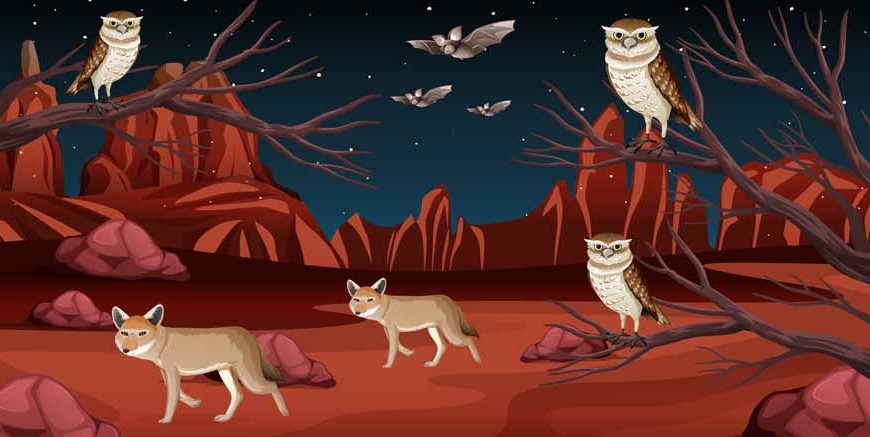
Children are naturally curious about animals and the different ways they live in nature. While many animals are active during the day, there is an entire group of creatures that become active only after sunset. These animals have special adaptations that help them move, hunt, and survive in the darkness. Learning about these creatures can be exciting for children and can also help them understand how nature works. In this blog, we will explore what nocturnal animals are, why some animals are nocturnal, examples of nocturnal animals and nocturnal birds, and how they adapt to life in the dark.
What Are Nocturnal Animals?
Nocturnal animals are active at night and sleep or rest during the day. These animals have evolved with special features that allow them to function efficiently in low-light conditions. Being nocturnal helps them survive, find food, and avoid danger. Some key characteristics of nocturnal animals include:
- Excellent night vision
- Strong hearing and sense of smell
- Quiet movement to avoid detection
- Special adaptations to survive in darkness
Why Are Some Animals Nocturnal?
Children often wonder why some animals prefer the night to the daytime. There are several reasons why animals become nocturnal. Some of them are as follows:
1. Avoiding Predators
Some animals stay hidden during the day because predators are active then. By becoming nocturnal, they can move around when fewer predators are hunting.
2. Easier Hunting
For many predators, being nocturnal makes hunting easier. Their prey may be less alert at night, making it easier to catch food.
3. Cooler Temperatures
In hot climates, daytime temperatures can be extremely high. Many animals become nocturnal to avoid the heat and conserve energy.
4. Less Competition for Food
Being active at night also means fewer animals are competing for the same resources.
Read More – List of Animals That Live On Land And Water
List Of Nocturnal Animals
1. Owls
Owls are among the most famous nocturnal animals. They have excellent night vision and powerful hearing. Their silent flight helps them sneak up on prey without being detected.
2. Bats
Bats are unique nocturnal animals that use echolocation to navigate in the dark. They send out sound waves and listen for echoes to find insects and avoid obstacles.
3. Raccoons
Raccoons are clever nocturnal animals known for their curiosity. They often search for food at night and are skilled at opening containers or exploring new environments.
4. Hedgehogs
Hedgehogs sleep during the day and come out at night to hunt insects and worms.
5. Foxes
Foxes are skilled hunters, and many species are nocturnal. Their sharp hearing and excellent sense of smell help them locate prey in the dark.
6. Nightjars
Nightjars are mysterious nocturnal birds that hunt insects. Their camouflaged feathers help them blend into tree bark during the day.
7. Kiwi Birds
The kiwi is a flightless bird found in New Zealand and is one of the rarest nocturnal birds. It relies heavily on its strong sense of smell to find food.
How Nocturnal Animals Adapt to the Dark
1. Night Vision
Many nocturnal animals have large eyes that gather more light, helping them see better in the dark.
2. Strong Hearing
Animals like owls rely heavily on their hearing to detect small movements made by prey.
3. Enhanced Sense of Smell
Some nocturnal animals use their sense of smell to locate food or detect danger.
4. Echolocation
Bats use echolocation, where they produce sound waves that bounce off objects and return to them as echoes.
Read More – Names Of Flying Animals For Kids
How EuroKids Encourages Curiosity About Nature
At EuroKids, children are encouraged to explore the natural world through curiosity, observation, and interactive learning. Topics such as animals, habitats, and day-and-night behaviour help children develop a deeper understanding of their environment. When learning about nocturnal animals, children discover that some animals are active at night while others prefer the daytime.
Understanding these differences helps children appreciate how animals adapt to their surroundings. Learning about creatures such as owls, bats, and foxes allows children to see how nature works in fascinating ways. Through storytelling, activities, and discussions, children begin to understand why certain animals sleep during the day and become active after sunset. This kind of exploration builds curiosity, observation skills, and a love for learning about the natural world.
Learning Through the HEUREKA Curriculum
The HEUREKA Curriculum at EuroKids focuses on experiential learning that encourages children to understand concepts through exploration and play. When children learn about topics such as nocturnal animals, they are introduced to these ideas through engaging activities that make learning enjoyable and memorable.
Through HEUREKA, children:
- Learn about animals and their habitats through stories and visual activities
- Develop curiosity by observing patterns in nature, such as day and night behaviour
- Improve language and communication skills through storytelling and discussions
- Strengthen creativity through art, play, and interactive projects
This learning approach allows children to understand natural concepts in a fun and meaningful way while developing critical thinking skills.
Conclusion
Learning about nocturnal animals opens up a fascinating world that many children may not notice during the day. From mysterious nocturnal birds like owls to incredible mammals like bats and foxes, nighttime wildlife is full of amazing adaptations and behaviors. Understanding what nocturnal animals are helps children appreciate how animals survive and thrive in different environments. Through storytelling, outdoor exploration, and fun educational activities, parents and teachers can make the study of nocturnal wildlife exciting and meaningful.
Parents looking to give their child a strong foundation in early learning can explore EuroKids Preschool Admission to begin this enriching journey.
For more insightful articles that support early learning, awareness, and child development, parents and educators can explore the wide range of resources available on EuroKids Blogs.
For those interested in joining this impactful learning ecosystem and contributing to high-quality early education across communities, EuroKids Franchise opportunities offer a meaningful path forward.
FAQs:
1. What are nocturnal animals?
Nocturnal animals are active at night and rest or sleep during the day.
2. What are some examples of nocturnal animals?
Some common nocturnal animals include owls, bats, raccoons, foxes, and hedgehogs.
3. Are owls nocturnal birds?
Yes, owls are among the best-known nocturnal birds, and they hunt mainly at night.
4. Why do animals become nocturnal?
Animals become nocturnal to avoid predators, hunt more efficiently, stay cool in hot climates, and reduce competition for food.
5. How do nocturnal animals see in the dark?
Many nocturnal animals have large eyes and specialised eye structures that allow them to see clearly in low light.