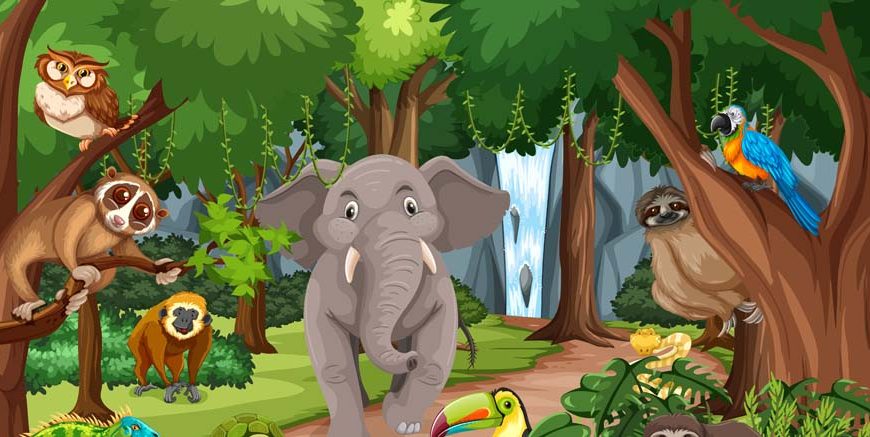
Jungles are among the most exciting and mysterious natural habitats on Earth. They are full of thick greenery, climbing vines, tall trees, colorful birds, and powerful animals. Because jungles are so dense and lively, they often appear in adventure stories and wildlife documentaries that fascinate children and students.
The term jungle has an interesting history and meaning. It is used to describe land covered with dense vegetation, usually in warm regions with high rainfall. Jungles support rich biodiversity but are also delicate ecosystems that must be protected.
In this blog, we will explore what is a jungle, jungle word origin, jungle forest features, types of jungles, plants and animals found there, and important jungle facts for students.
What Is a Jungle?
A jungle is a thick forest area filled with dense trees, shrubs, vines, and undergrowth where many animals and birds live. Jungles are usually found in warm and wet climates. The word “jungle” comes from the Hindi word “jangal”, which means uncultivated land or wild forest area. During the colonial period, the word entered English and began to mean thick tropical forest. So the term jungle that we hear in stories actually has roots in Indian language history.
Define Jungle in Easy Words
To define jungle in easy student-friendly words:
- A jungle is a forest that is very thick and hard to walk through
- It has many tall trees and climbing plants
- It receives heavy rainfall
- It is home to wild animals
- It has rich biodiversity
Read More – King Of The Jungle Story for Kids
Types of Plants in the Jungle
Jungles have a wide variety of plants that grow in hot and rainy climates. Some of the most common plants found in jungles include the Brazil-nut tree, palm trees, vines, moss, and ferns. Many of these plants grow on the ground, while others grow on the branches and trunks of tall trees.
Some special plants, called epiphytes, grow on other trees instead of in the soil. They get support from the tree and absorb moisture from the air.
Because the jungle environment is tough and full of animals, many plants protect themselves by producing toxins or having thick leaves and strong stems. These features help them survive and avoid being eaten by animals.
Animals that Live in the Jungle
Jungles are home to a wide variety of animals that adapt to survive in hot, humid, and dense surroundings. Many of them are skilled hunters and gatherers. Some of the most common animals found in jungles include jaguars, howler monkeys, tigers, and cobras. In some jungles, larger animals such as elephants, rhinoceroses, water buffaloes, and black eagles can also be found. These animals depend on the jungle for food, shelter, and protection.
Jungle Forest vs Regular Forest
Students often ask how a jungle forest is different from other forests. All jungles are forests, but not all forests are jungles.
Jungle Forest Features:
- Very dense vegetation
- Thick undergrowth
- Warm and wet climate
- Hard to walk through
- Many vines and creepers
- High animal diversity
Regular Forest Features:
- Trees more spaced out
- Less undergrowth
- Can exist in many climates
- Easier walking paths
5 Sentences About Jungle
- A jungle is a dense forest found in hot and rainy regions.
- Jungles are home to many plants, animals, and insects.
- They usually grow near the equator where the climate is warm.
- Jungles receive a lot of rainfall and sunlight.
- Animals like tigers, elephants, monkeys, and jaguars live in jungles.
Read More – Animal Movements and Behaviour For Kids
Famous Jungle Names Students Should Know
Learning jungle names helps children connect geography with ecology. Here are some well-known jungle names around the world:
- Amazon Rainforest
- Congo Rainforest
- Sundarbans Jungle
- Daintree Jungle
- Borneo Jungle
- Western Ghats Forests
- Madagascar Jungles
Types of Jungles
There are different types of jungles based on climate and vegetation.
1. Tropical Jungle
- Found near the equator
- Very hot and rainy
- Evergreen trees
- Highest biodiversity
Example: Amazon jungle forest
2. Rainforest Jungle
- Extremely high rainfall
- Thick canopy layers
- Many insects and birds
- Dense shade below trees
3. Monsoon Jungle
- Found in monsoon regions
- Seasonal rainfall
- Trees may shed leaves
Example: Parts of India and Southeast Asia
4. Swamp Jungle
- Wet and marshy
- Waterlogged soil
- Mangrove trees
Example: Sundarbans
Why Jungles Are Important
Jungles are extremely important for Earth. Without jungles, global climate balance would suffer. The importance are as follows:
- Produce oxygen
- Absorb carbon dioxide
- Control climate
- Support biodiversity
- Provide medicines
- Protect soil
- Support indigenous communities
Read More – Wildlife Facts for Kids
Facts About Jungle
Given below are some important facts about jungles:
- More than half of the world’s plant and animal species live in jungle environments.
- Jungles are similar to rainforests, but they usually have fewer tall trees and receive more sunlight at ground level.
- Jungles are found in hot regions that receive heavy rainfall throughout the year.
- They are commonly located near the equator.
- Animals such as tigers, jaguars, elephants, and monkeys live in jungles.
The Role EuroKids Plays in Teaching About Jungles
EuroKids helps children understand nature topics like what is a jungle, jungle animals, and jungle forests through stories, visuals, models, and themed classroom activities. Students learn jungle meaning and jungle definition using pictures, crafts, and role play instead of only textbook reading. Activities such as animal sorting games, habitat charts, and nature storytelling make learning engaging and memorable. This approach builds environmental awareness, vocabulary, and curiosity while helping children connect classroom learning with the natural world around them.
Conclusion
Jungles are dense tropical vegetation areas filled with rich plant and animal life. From the jungle word origin to the types of jungles and jungle area across the world, they are fascinating ecosystems for students to explore. Jungles are beautiful but fragile, and they play a major role in protecting our planet. Learning about jungles helps children understand nature, biodiversity, and environmental responsibility in a simple and meaningful way.
To explore more learning ideas, simple explanations, and early childhood resources, parents can visit the EuroKids Blog. Those who wish to understand the preschool journey better or explore enrolment options can find complete information on the EuroKids Preschool Admissions, where learning is designed to be joyful, engaging, and child-friendly.
FAQs:
1. What is a jungle?
A jungle is a dense forest with thick plants and many animals, usually in warm regions.
2. Define jungle simply.
A jungle is a wild, thick forest that is hard to walk through.
3. How is a jungle different from a forest?
Jungles have denser undergrowth and more tangled vegetation.
4. Which is the largest jungle in the world?
The Amazon jungle.
5. Why are jungles important?
They support biodiversity and help regulate climate.