Learning shapes is one of the first moments when children begin to understand that maths exists beyond notebooks. Shapes live in their rooms, classrooms, toys, books, and everyday surroundings. Yet many children struggle to connect what they see on paper with what exists in real life. This gap often creates confusion, especially when learning three-dimensional shapes.
Among these shapes, the cuboid appears more often than you may realise. From cupboards to books, from school bags to lunch boxes, the cuboid shape quietly surrounds children every day. Still, without guided explanation, children may see these objects without understanding the shape behind them. This is where learning with clarity becomes important.
When children understand shapes with meaning and relevance, learning feels natural. This guide helps you explain the cuboid shape clearly, practically, and confidently, so children do not just memorise definitions but truly understand what they see around them.
What Is a Cuboid Shape? A Simple and Clear Definition
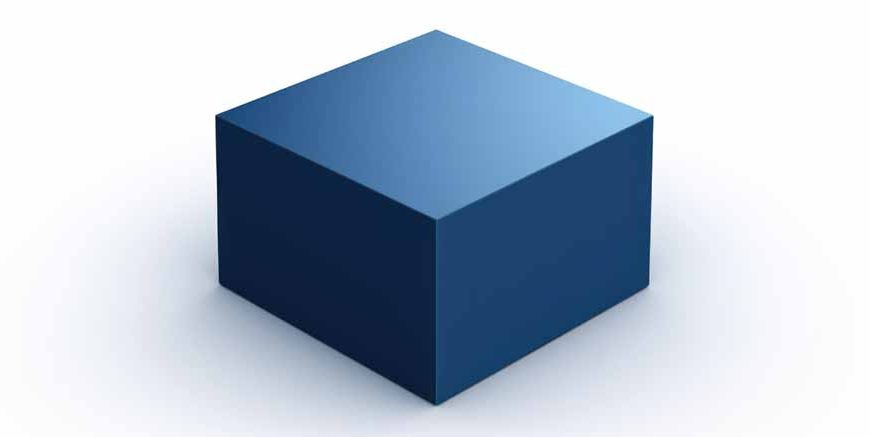
A cuboid is a three-dimensional shape that has length, breadth, and height. Unlike flat shapes such as squares or rectangles, a cuboid has depth. This means it occupies space and can be held, stacked, or stored.
When you look at a cuboid shape, you notice that all its faces are rectangles. Some faces may be longer, some shorter, but they all remain rectangular in shape. This makes the cuboid easy to recognise once children know what to look for.
Understanding the cuboid does not require complex terminology. It begins with observation. When children learn that objects around them share the same shape features, learning becomes intuitive. This clarity builds confidence and curiosity, two qualities that support strong early learning.
Read More – Geometric Shapes Name for Kids
Key Features That Help Identify a Cuboid Easily
Children identify shapes through what they can see and touch. A cuboid shape has flat surfaces that meet neatly at corners. These surfaces feel smooth and structured, not curved.
Each cuboid has faces, edges, and corners. Faces are the flat surfaces you see. Edges are the lines where two faces meet. Corners are the points where edges come together. Helping children notice these features encourages careful observation rather than guesswork.
When children learn to identify shapes by features, they stop confusing similar objects. They begin recognising patterns, which strengthens logical thinking and prepares them for geometry at later stages.
Properties of Cuboid Explained With Simple Logic
The properties of cuboid help children understand what makes this shape unique. A cuboid has six faces, twelve edges, and eight vertices. Each face is a rectangle, and opposite faces are equal in size.
These properties explain why cuboids stack easily and why they store items efficiently. Boxes, cupboards, and shelves use cuboid shapes because they maximise space. When children understand this, shapes stop being abstract ideas and start making sense in real life.
Teaching properties with context helps children remember better. They do not memorise numbers without meaning. Instead, they connect properties to function and design.
Read More – Pre-Math Concepts for Preschoolers
Difference Between Cuboid and Cube for Better Shape Clarity
Children often confuse cubes and cuboids. While both are three-dimensional shapes, they differ in structure. A cube has all sides equal, while a cuboid has rectangular faces that may differ in size. Explaining this difference helps children refine observation skills. A dice is a cube. A book is a cuboid. This comparison allows children to categorise objects accurately and strengthens spatial awareness. Understanding differences also prevents learning errors later, especially when children begin measuring volume and surface area.
Real-Life Cuboid Shaped Objects Children See Every Day
Children interact with cuboid shaped objects constantly. Their school books, pencil boxes, wardrobes, doors, and even refrigerators follow the cuboid structure.
When children start identifying shapes in real environments, learning feels rewarding. They feel proud recognising shapes independently. This sense of achievement encourages further exploration and strengthens learning motivation. Real-life connections turn maths into a living subject rather than a classroom task.
Read More – Significance of Mathematical Patterns
10 Examples of Cuboid With Everyday Context
A book uses a cuboid shape so pages stack neatly.
A brick uses the cuboid shape for stability in construction.
A shoebox uses the cuboid structure to store items efficiently.
A cupboard follows the cuboid shape to maximise space.
A refrigerator uses this shape for organised storage.
A school bag often forms a soft cuboid structure.
A lunch box commonly follows the cuboid design.
A television cabinet uses the cuboid shape for balance.
A classroom desk appears as a cuboid from most angles.
A matchbox is a small but perfect example of cuboid.
These cuboid shape examples help children see learning in daily life rather than isolated lessons.
Why Learning About Cuboid Shape Matters in Early Education
Learning shapes develops spatial awareness, reasoning skills, and observation ability. When children understand the cuboid shape, they begin noticing structure in their surroundings.
This understanding supports subjects beyond maths, including art, design, and science. Shapes teach children how objects fit, stack, and balance. These skills influence problem-solving and creativity.
Early exposure builds a strong foundation that supports academic confidence as children grow. You support learning best when teaching feels natural. Encourage children to identify cuboid objects during daily routines. Ask simple questions. Let curiosity lead.
Avoid turning learning into testing. Instead, make it conversational. When children feel safe making mistakes, understanding grows organically. Your involvement reinforces classroom learning and strengthens confidence.
The Role of Structured Early Learning in Shape Recognition
Children learn best when concepts build gradually and logically. Structured learning environments introduce shapes in meaningful ways that support long-term understanding. EuroKids follows the Heureka Curriculum, which focuses on experiential learning and helps children understand shapes like cuboids through observation and hands-on exploration.
Conclusion
Understanding the cuboid helps children see the world through structure and logic. When learning connects with daily life, confidence follows naturally.
Early learning plays a vital role in shaping this understanding. If you are exploring quality early education, EuroKids Admission supports strong conceptual foundations through thoughtful learning approaches. You can also explore the EuroKids Blog section for more parent-friendly guides that support your child’s learning journey.
Frequently Asked Questions
What is a cuboid in simple words?
A cuboid is a 3D shape with rectangular faces and depth.
How many faces does a cuboid have?
A cuboid has six rectangular faces.
What are common cuboid shaped objects?
Books, boxes, cupboards, and bricks are common examples.
Why are properties of cuboid important?
They help children understand structure, space, and geometry.
How can parents teach cuboid shape easily?
By identifying cuboid objects during daily activities.