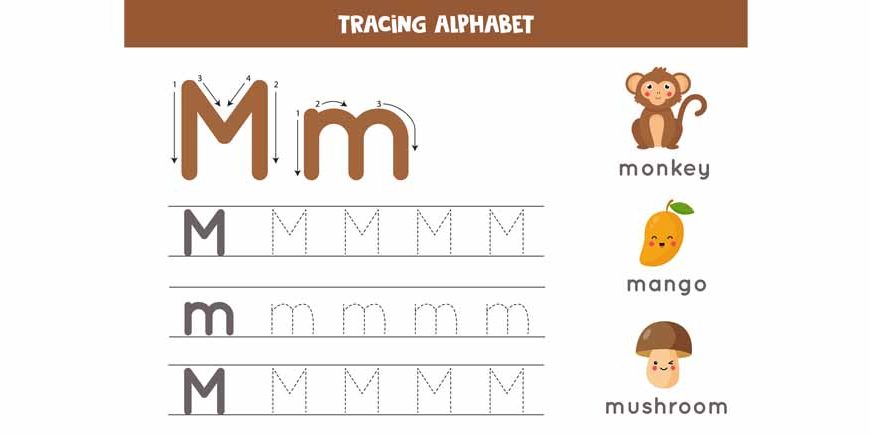
Even as adults, our brains get stuck on the two or three animals we grew up reading about in primary school. We stick to monkeys and mice because they are easy to draw on a slate. But that narrow list makes phonics drills feel like a chore. The alphabet gets interesting only when children realise that letters belong to strange, living things that dig, swim, and climb in ways they have never seen before. Working through a fresh selection of m animal names pulls your evening reading out of that rut and gives a curious child something memorable to talk about.
List Of Common Animals That Start With Letter M
- Manatee: People call it the sea cow for a reason. It spends nearly all day floating through warm coastal shallows and muddy rivers, chewing on river grass.
- Manta Ray: This one looks like a giant dark kite gliding through tropical ocean currents. The wide span from one fin tip to the other can reach seven metres, and big ones weigh close to two tonnes.
- Mole: A mole spends almost its entire life underground in total darkness. People often call them rodents, but they actually belong to an insect-eating family of mammals.
- Mink: You usually spot these near riverbanks, marshy ditches, and reed beds. A mink belongs to the weasel family and loves the water.
- Monkey: There are well over two hundred and fifty recognised types of monkeys scattered across forests and rocky hills worldwide. Unlike apes, monkeys almost always have tails.
- Meerkat: Meerkats are skinny, sharp-nosed members of the mongoose family that dig out big underground warrens in the dry Kalahari plains.
- Maned Wolf: Found across the tall grassy fields of South America, this animal looks like a regular red fox walking around on black wooden stilts.
- Moose: The moose is the undisputed heavyweight of the deer world, living out in the cold pine forests of the north.
- Mouse: The common field mouse is probably one of the toughest small animals anywhere.
- Mongoose: Famous across Indian towns and villages for taking on deadly cobras, the mongoose is a wiry, restless hunter living in dry roadside scrub, gardens, and crop fields.
Read More – Domestic Animal Names in English for Kids
More Animals That Begin With The Letter M
- Markhor: A wild mountain goat with horns that twist up like giant corkscrews.
- Mandrill: A big African forest monkey with bright blue and scarlet ridges down its nose.
- Muntjac: A small Asian deer that makes a barking noise when frightened.
- Minke Whale: A sleek, dark baleen whale that feeds in cold ocean waters.
- Millipede: A slow, round crawler with two pairs of legs on each body ring.
- Mantis: A green hunter that holds its spiky front legs together like it is praying.
- Mantella Frog: A tiny, brightly coloured frog found in damp forest litter.
- Marbled Salamander: A secretive creature marked with grey bands across its dark back.
- Maine Coon: A heavy domestic cat with a thick winter coat and tufted ears.
- Malayan Tiger: A compact tiger with dark, narrow stripes that hunts in deep jungle.
- Muskox: A stocky Arctic beast with a shaggy coat hanging down to its hooves.
- Monk Seal: A quiet sea mammal that pulls up onto rocky Mediterranean beaches to sleep.
- Mollusc: A soft creature, like a garden snail or an oyster, that grows its own shell.
- Maltese: A small lapdog covered in long, silky white hair.
- Mule: A stubborn, sure-footed animal bred from a male donkey and a female horse.
- Macaque: The common, noisy brown monkey seen near temples, bridges, and roadside trees.
- Moth: A night flyer with dusty wings that rests with its wings lying flat.
- Malayan Civet: A long-bodied spotted hunter that moves along the ground after dark.
- Mamba: A slender, dangerously fast venomous snake found across African scrub.
- Marine Iguana: A black coastal lizard from the Galápagos that swims into the sea to eat algae.
- Marmoset: A very small tree monkey with white fur tufts sticking out past its ears.
- Marsican Brown Bear: A rare, shy brown bear that lives up in the central Italian mountains.
- Massasauga: A small, thick rattlesnake that hides out in northern bogs and wet fields.
- May Beetle: A clumsy brown flying beetle that bangs into porch lights in the warm months.
- Mexican Alligator Lizard: A bright green tree lizard with rough, keeled scales along its back.
Read More – List of Animal Names That Start With Letter L
How EuroKids Sparks Everyday Wonder
EuroKids sets up its classrooms around this kind of active discovery. Instead of treating science like a dry textbook chapter, teachers use sensory tables, animal puppets, textured figurines, and story circles to bring foreign landscapes and wildlife to life. Children handle wooden animal figures, mimic animal calls, work together on wild habitat models, and learn to respect living creatures big and small. By pairing basic phonics with real-world exploration and steady encouragement, EuroKids helps little learners find their voice, trust their own curiosity, and step into primary school ready to ask big questions about the world around them.
Conclusion
Going past the usual animals on an alphabet chart reminds us that words are not just symbols meant for school examinations. When you sit with your child and explore unusual m animal names, you give them a peek into icy peaks, deep oceans, and wild forest tracks that stretch far beyond their own neighbourhood.
To find more practical learning guides and parenting ideas, take a look at the EuroKids Blog, and visit your neighbourhood centre to speak with our staff about EuroKids Preschool Admission for your little one today.
Frequently Asked Questions
Which animal starting with M is commonly found in Indian gardens?
The Indian grey mongoose is common across Indian fields, gardens, and scrub patches, often seen darting across pathways in search of insects and small rodents.
Why do toddlers find the letter M so easy to pronounce?
The sound needs only gentle lip closure and vocal cord vibration, avoiding difficult tongue placement against the teeth or roof of the mouth.
Is a mandrill the same thing as a baboon?
A mandrill is closely related to baboons and was once classified with them, but it is a distinct, forest-dwelling primate famous for its vivid red and blue facial ridges.