You want your child to grow up confident, aware, and kind. Yet you often struggle with one important question. How do you teach safety and wise decision making without making the world sound frightening? Children learn best through stories. A well told tale speaks to their imagination while quietly shaping their values. That is why Little Red Riding Hood continues to hold a special place in childhood.
When you share this story, you do more than narrate a forest adventure. You help your child understand trust, caution, listening skills, and personal responsibility. In this blog, you will explore the full story, read a clear little red riding hood summary, understand the moral, and discover why a picture story for kids like this supports early learning and emotional growth.
The Origin of Little Red Riding Hood
Before you tell the story, it helps to understand where it began. Little Red Riding Hood emerged from European folklore centuries ago. French author Charles Perrault published one of the earliest written versions in 1697. Later, the Brothers Grimm included their version in the 19th century.
Each version carried slight differences, yet all focused on one central idea. A young girl must learn to stay cautious and follow wise advice. Over time, storytellers softened darker elements to make the tale more suitable for children. Today, parents and educators share a gentler version that emphasises safety and learning rather than fear.
When you tell this story, you connect your child to a tradition that has shaped moral learning for generations.
Little Red Riding Hood Story for Children
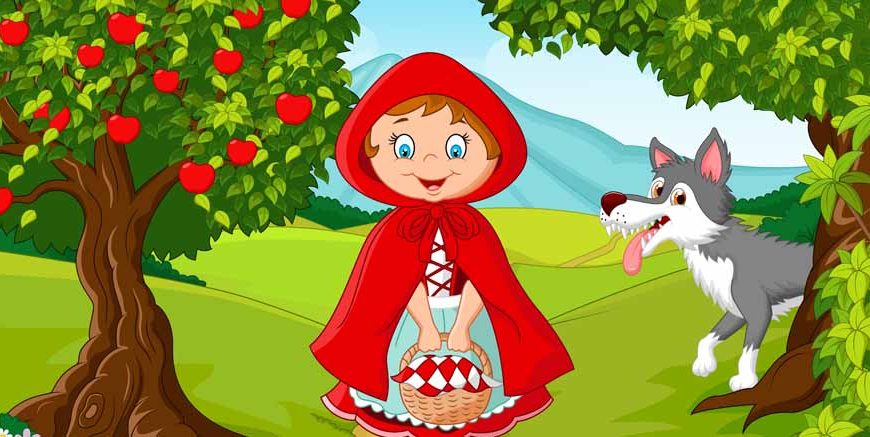
Once upon a time, a cheerful little girl lived in a small village near a forest. Everyone called her Little Red Riding Hood because she always wore a bright red cloak with a hood. Her grandmother gifted it to her, and she loved it dearly.
One day, her mother prepared a basket with fresh bread and fruit. Grandmother felt unwell and needed care. Her mother said, “Walk straight to Grandmother’s house. Stay on the path and do not talk to strangers.”
Little Red Riding Hood promised to listen. She stepped into the forest with excitement. Birds chirped above her, and sunlight filtered through tall trees. As she walked, a wolf appeared. He looked calm and friendly.
“Where are you going, little girl?” he asked.
She forgot her mother’s warning. She told him about her grandmother’s house at the end of the path. The wolf quickly formed a plan. He suggested she pick flowers for her grandmother. While she gathered flowers, he ran ahead to Grandmother’s cottage.
The wolf knocked on the door and tricked Grandmother. In many modern versions for children, the wolf locks her safely in a cupboard instead of harming her. Then he disguised himself in her clothes and waited.
When Little Red Riding Hood arrived, she noticed something strange. “Grandmother, what big eyes you have,” she said. “The better to see you,” replied the wolf.
Soon, a woodcutter nearby heard unusual sounds. He entered the cottage and rescued both Grandmother and Little Red Riding Hood. The wolf ran away, and the little girl learned a powerful lesson. She realised that ignoring wise advice can lead to danger.
This picture story for kids often appears with colourful illustrations that make each moment memorable and engaging.
Read More – Bedtime Stories for Kids
Little Red Riding Hood Summary
If you look for a simple little red riding hood summary, you can explain it this way. A young girl visits her grandmother through the forest. Her mother advises her to stay on the path and avoid strangers. She meets a wolf, shares information, and faces danger. A woodcutter rescues her, and she learns to listen carefully and stay cautious. This short recap helps your child understand the main idea while keeping the lesson clear.
What Is the Moral of Little Red Riding Hood?
Every story carries meaning beyond its plot. The moral of Little Red Riding Hood centres on awareness and responsibility.
First, it teaches your child to listen to parents and trusted adults. When Little Red Riding Hood ignored her mother’s instructions, she created a risk for herself. You can use this moment to discuss why guidance matters.
Second, the story highlights stranger awareness. You can explain that not everyone who seems friendly has good intentions. This lesson encourages critical thinking without creating fear.
Third, it promotes personal responsibility. The little girl learned from her mistake. Children need to understand that choices carry consequences, yet mistakes also offer opportunities for growth.
When you discuss these lessons calmly, your child learns to balance curiosity with caution.
Why a Picture Story for Kids Improves Learning
You may notice that children respond strongly to illustrated books. A picture story for kids supports learning in powerful ways. Visual elements strengthen memory retention and comprehension. When your child sees images of the forest, the red cloak, and the grandmother’s cottage, they connect emotions with information.
Research in early childhood education shows that visual storytelling enhances vocabulary development and listening skills. Images help children predict outcomes, interpret expressions, and understand context.
When you choose a richly illustrated version of Little Red Riding Hood, you encourage imagination and language growth at the same time.
Read More – Little Mermaid story for kids
Using the Story to Build Life Skills
You can turn this story into a meaningful conversation. After reading, ask your child simple questions.
Why did the wolf trick the girl?
What should she have done differently?
How can you stay safe when you go outside?
Encourage role play. Let your child practice saying “I need to ask my parents first.” This simple exercise builds confidence.
Stories like this create safe spaces to discuss real-world topics such as trust and decision making. You guide your child gently rather than lecturing.
The Role of Storytelling in Early Childhood Education
Storytelling plays a vital role in preschool development. When you read aloud, you improve your child’s concentration and language skills. You also strengthen your bond.
Classic tales such as Little Red Riding Hood support emotional intelligence. Children learn to recognise danger signals, understand feelings, and anticipate consequences. These skills prepare them for school and social settings.
Educators across the world integrate storytelling into early years programmes because it builds literacy foundations and moral reasoning simultaneously.
Read More – Storytelling Activities For Preschoolers
Supporting Your Child’s Learning Journey with EuroKids
As a parent, you want more than academic success. You want your child to grow with confidence, empathy, and awareness. At EuroKids, we design early learning experiences that combine storytelling, creativity, and structured guidance.
Through EuroKids Preschool Admission, you can enrol your child in programmes that focus on holistic growth. You can also explore the EuroKids Blog section for more meaningful stories and parenting insights that support your child’s development at home.
EuroKids follows the Heureka Curriculum, which promotes experiential learning and value-based development in early childhood education.
When you choose a nurturing environment and meaningful stories, you build a strong foundation for your child’s future.
Frequently Asked Questions
1. What is the moral of Little Red Riding Hood?
The moral teaches children to listen to parents, stay cautious around strangers, and think carefully before making decisions.
2. What is a short little red riding hood summary?
A simple little red riding hood summary explains that a girl visits her grandmother, meets a wolf, faces danger due to ignoring advice, and learns an important safety lesson.
3. Why is Little Red Riding Hood important for children?
The story helps children understand safety, responsibility, and awareness in a simple and memorable way.
4. How does a picture story for kids improve learning?
A picture story for kids strengthens comprehension, vocabulary, imagination, and emotional understanding through visual engagement.
5. Is Little Red Riding Hood based on a true story?
No historical evidence proves it as a true event. It remains a traditional European fairy tale passed down through generations.