We live in an age that is obsessed with the harvest but often indifferent to the soil. You see this everywhere in modern life. People want a physique without training or wealth without saving. It is a culture of extraction where the goal is to get as much as possible as quickly as possible. This mindset is dangerous because it ignores a fundamental law of nature which says that true value takes time to accumulate. When you try to bypass the process to get to the result immediately, you often end up destroying the very thing that produces the result. There is no story that captures this catastrophic error of judgment better than the goose that laid the golden eggs.
It is a fable that is often told simply as a warning against greed. However, if you look closer, it is actually a profound lesson on sustainability and asset management. It asks you a difficult question. Are you nurturing the source of your happiness, or are you trying to squeeze it dry? This blog will take you through the classic golden egg story, analysing the psychology of the farmer and the tragic consequences of his impatience. We will explore how the golden egg story in English with morals applies not just to fairy tales but to financial literacy and the way you nurture your own child’s potential.
The Classic Tale: A Stroke of Luck
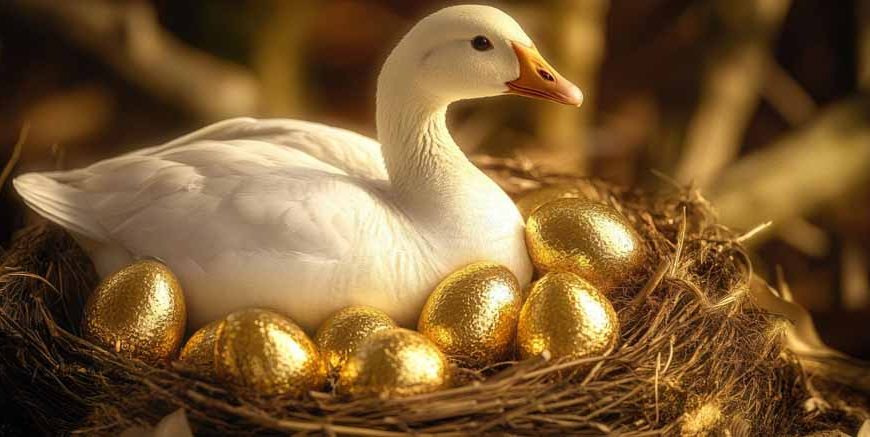
The story begins with a poor farmer and his wife who lived a life of struggle. They worked hard from dawn until dusk just to put food on the table. One day, the farmer made a discovery that would change their lives forever. He went to his nest to collect eggs and found a heavy, yellow egg. At first, he thought someone was playing a trick on him. He was about to throw it away when he realised it was heavy. He took it home and tested it. To his disbelief, it was pure gold.
This was not a one-time miracle. Every single morning, the bird produced another golden egg. The farmer became rich very quickly. He bought a larger house, fine clothes and better food. His life of struggle was over. He had a reliable source of wealth that required almost no effort on his part. All he had to do was wait for the sun to rise and collect his treasure. This should have been a happy ending. But the golden goose story takes a dark turn because human nature is rarely satisfied with “enough.”
Read More – Animals That Live On Land And Water
The Psychology of Greed: Why We Kill the Goose
The farmer’s problem was not poverty anymore; it was impatience. As he grew richer, he grew greedier. He began to calculate. If the goose laid one egg a day, there must be a huge lump of gold inside it. Why should he wait day after day for a single egg when he could have it all at once? The golden egg story in English describes how his gratitude turned into resentment. He started to view the goose not as a miraculous gift but as an obstacle that was withholding his fortune.
He convinced himself that the slow pace of the goose was a problem he needed to solve. In a moment of impulsive madness, he decided to cut the goose open to get all the gold immediately. He took a sharp knife and killed the bird. When he looked inside, he found nothing. It was just like any other goose. There was no hoard of gold. In his rush to get everything, he had destroyed the only thing that gave him anything. He sat and wept, not just for the lost gold, but for the realisation that his own haste was the cause of his ruin.
The Moral: Sustainable Growth vs. Quick Destruction
The core lesson of the golden egg story in English with morals is about the difference between “income” and “capital.” The goose represented the capital (the source of wealth) and the eggs were the income (the result). The farmer wanted to consume his capital. This is a powerful concept to understand. When you destroy the source to get the result, you end up with neither.
This applies to almost every aspect of life. If you overwork your body to get fit quickly, you get injured and cannot train at all. If you overwork your team to hit a deadline, they burn out and quit. The moral is that you must protect the asset. You must protect the thing that creates value. Patience is not just about waiting; it is about preservation. The farmer failed because he did not understand that the value was in the life of the goose, not in its body.
Read More – Moral Stories For Kids
Teaching Financial Literacy Through Fables
You can use this story to teach your children the basics of economics in a way they can understand. Explain to them that their skills, their health and their savings are their “Goose.” The rewards they get from them, like good grades, energy or interest money, are the “Golden Eggs.”
If they spend all their savings (kill the goose), they stop getting interest. If they cheat to get a good grade without learning (kill the goose), they lose the ability to solve problems in the future. The golden egg story is an excellent tool for explaining why we save money. We save so that we have a “goose” that can take care of us later. It shifts the focus from “what can I buy now” to “how can I build something that lasts.”
Applying the Lesson to Child Development
As a parent, you can also see a reflection of the farmer in how we sometimes treat children. Your child is a goose. Their natural curiosity, their joy and their mental health are the source of their future success. The grades, the trophies and the accolades are the golden egg.
Sometimes, in our desire for them to succeed, we push them too hard. We want the eggs faster. We fill their schedules with tuition, coaching and activities until they are exhausted. We risk “killing the goose” by burning them out. This story serves as a gentle reminder to nurture the child first. If you protect their love for learning and their well-being, the results will come naturally over time. You cannot force a goose to lay two eggs a day, and you cannot force a child to develop faster than their natural pace allows.
The EuroKids Approach to Learning
At EuroKids, we understand that true development is a marathon, not a sprint. We follow the Heureka curriculum which focuses on “Mindful Learning,” prioritising the holistic growth of the child’s mind and spirit over rote memorisation or pressure. We nurture the “goose”—your child’s potential, ensuring they grow up with a deep, sustainable love for learning that will serve them for a lifetime.
We believe that by providing a supportive and patient environment, we allow your child to produce their own “golden eggs” of creativity and intelligence in their own time.
Conclusion
The golden egg story in English is a timeless reminder that the best things in life cannot be rushed. It teaches us that greed acts like a blindfold, preventing us from seeing the long-term cost of our actions. By sharing the goose that laid the golden eggs with your child, you are teaching them to value what they have and to understand that patience is the key to lasting abundance.
Your role is to guide your child to be a builder of value, not just a consumer of it. EuroKids is here to support you in that journey, providing an educational foundation that respects the pace of childhood. We invite you to visit our website to learn more about EuroKids Preschool Admission and find a centre near you. For more expert parenting advice and resources, please explore the EuroKids Blog section.
Frequently Asked Questions (FAQs)
1. What is the moral of the goose that laid the golden eggs?
The moral is that greed and impatience can lead to the loss of everything. It teaches us that trying to get too much too quickly often results in destroying the source of our good fortune. We should be content with steady progress rather than risking it all for instant gratification.
2. How does the golden egg story teach patience?
The story illustrates the direct consequences of impatience. The farmer could have been wealthy for the rest of his life if he had just been patient enough to wait for one egg a day. His inability to wait led to his poverty. It shows that patience preserves wealth, while haste destroys it.
3. Is the golden goose story suitable for teaching money management?
Yes, it is excellent for teaching financial concepts. The goose represents the “principal” or investment, and the eggs represent the “interest” or return. It teaches children that if they spend their principal, they lose the ability to generate future income.
4. What character flaws does the farmer show in the golden egg story in english?
The farmer displays greed, impatience and shortsightedness. He is ungrateful for the miracle he has received and feels entitled to more. He lacks the wisdom to understand that the eggs are a product of the living bird, and without the bird, there can be no eggs.
5. How can I explain the concept of greed to a preschooler using this story?
You can explain that greed is when you want everything for yourself right now, without thinking about what will happen next. Tell them the farmer was silly because he wanted all his presents at once, and because he couldn’t wait, he broke the magic that gave him the presents.