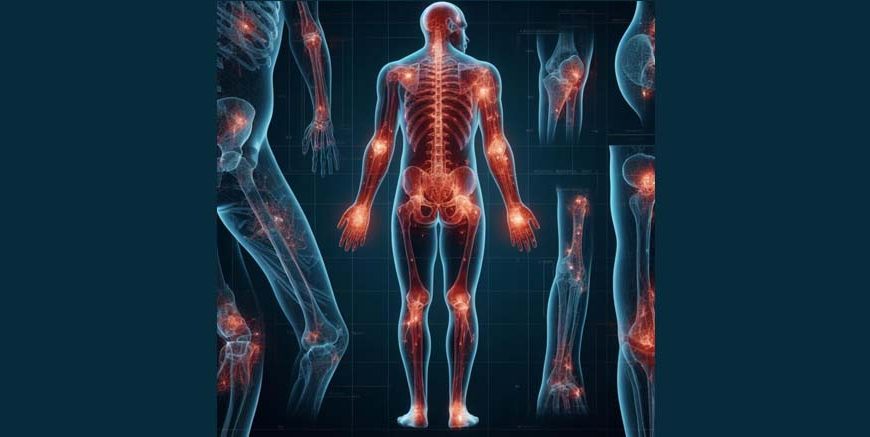
Imagine sitting in the stands, watching a brilliant gymnast leaping effortlessly through the air, bending their back into a perfect arch, and landing solidly on their feet. Or picture a professional footballer making a lightning-fast, twisting turn on a grassy pitch to score a magnificent goal. Have you ever stopped to think about how their bodies manage to bend, pivot, and stretch so dramatically without their bones simply falling apart?
While our powerful muscles usually get all the credit for moving us around, there is a network of secret, invisible heroes holding our entire skeletal structure safely together. Today, we are going to dive deep into the fascinating world of human anatomy to discover the tough, stretchy bands that keep our bones exactly where they belong.
What is a Ligament?
If someone asks you to explain the ligament meaning, the absolute easiest way to describe them is to think of nature’s heavy-duty bungee cords. But what is ligament in human body in scientific terms? It is a short, incredibly tough, and flexible band of fibrous connective tissue.
To understand this perfectly, imagine two solid wooden blocks. These blocks represent your bones. You need these blocks to stay close to one another, but you also need them to wiggle and hinge so you can move. If you tied a thick, strong elastic band between the two blocks, that elastic band would act exactly like a ligament! They exclusively connect one bone to another bone, effectively holding our movable joints together.
It is also very important not to confuse them with tendons. While they are made of similar collagen fibres, they have different jobs. Tendons attach your muscles to your bones, while ligaments strictly attach bones to other bones.
Read More – What are the organs in the human body?
Ligament Function
Without these brilliant fibrous bands, the human body would be a highly unstable, wobbly pile of bones! The primary ligament function is to provide absolute stability to our joints. They act as strict traffic controllers for our skeleton.
When you bend your elbow to lift a heavy school bag, or twist your knee to kick a ball, these tissues tightly control exactly how far the bones are allowed to move. They gracefully guide the joint through its natural motions while actively preventing the bones from twisting the wrong way, rubbing painfully against each other, or moving too far apart.
Think of a door hinge. The hinge allows the heavy door to swing open and closed smoothly, but it stops the door from falling off the wall. Our ligaments are the biological hinges of our bodies. Sometimes, if we twist our ankle too hard while running, these bands can stretch a little bit too far, which is what doctors call a ‘sprain’.
How Many Ligaments Are in the Human Body?
You might be completely surprised if you try to guess exactly how many ligaments are in the human body. We know that an adult skeleton contains 206 bones, so you might assume we have roughly the same number of connective bands.
In reality, the human body contains roughly 900 ligaments! Why do we need so many? Because most of our joints are highly complex. Take your hand, for example. Your wrist and fingers are made up of dozens of tiny bones that all need to move in multiple directions to help you write, draw, and play instruments. Every single one of those tiny bones requires multiple bands crisscrossing over them to keep them stable from every possible angle. The numbers add up incredibly fast!
Read More – Facts about Skeletal System
Exploring Types of Ligaments and Brilliant Examples
Because we have so many moving parts, from our clicking jaws to our wiggling toes, there are many different types of ligaments scattered throughout our anatomy. Some are shaped like thin, round strings, while others look like wide, flat ribbons. Let us look at some brilliant ligament examples that help you navigate your day:
- The Knee Protectors: The human knee is a very busy, load-bearing joint. It relies heavily on four main bands to keep it stable. One of the most famous is the Anterior Cruciate Ligament (ACL), which sits right in the middle of the knee and stops the shin bone from sliding too far forward.
- The Ankle Stabilisers: When you run across an uneven, bumpy park, the ligaments sitting on the outside of your ankle stretch tightly to stop your foot from completely rolling over and tripping you up.
- The Spinal Cords: Running straight down your back are long, incredibly tough bands that keep your vertebrae neatly stacked. They allow you to bend forward to touch your toes while making sure your spine stays perfectly aligned.
Strongest Ligament in the Body
With over 900 different bands keeping us together, which one takes the grand prize for being the absolute toughest? The magnificent title for the strongest ligament in the body goes to the iliofemoral ligament.
This incredible piece of anatomy is located right in your hip joint and is shaped very much like an upside-down letter ‘Y’. But why does this specific one need to be so incredibly thick and strong? It all comes down to human posture. Every single time you stand up straight, this specific ligament bears the massive, constant responsibility of keeping your hips perfectly stable and preventing your heavy upper body from tipping completely backwards. It is the ultimate anchor of the human skeleton.
Read More – Teaching Human Body Systems to Students
Conclusion
Our bodies are magnificent, highly complex machines built with awe-inspiring precision. Every time you jump for joy, run across a playground, or simply reach up to a high shelf for a favourite book, hundreds of tough, invisible bands are working tirelessly beneath your skin to keep your skeleton perfectly safe and beautifully stable. Understanding the secret mechanics of how these fibrous connectors work teaches us to deeply appreciate the brilliant, hidden engineering of human anatomy.
Just as these invisible bands provide a strong, unshakeable foundation for our physical bodies to grow, move, and explore safely, a brilliant early education provides the essential, foundational structure for a child’s rapidly expanding mind. To discover more fascinating, family-friendly articles and to explore incredibly joyful learning pathways for your little one, visit the EuroKids Blog and find out all the vital details regarding EuroKids Preschool Admission today.
FAQs
What is the main difference between a ligament and a tendon?
A ligament connects one bone directly to another bone to stabilise a joint, whereas a tendon connects a muscle to a bone to help it move.
What happens if you stretch a ligament too far?
If you stretch it beyond its natural limit, it results in an injury known as a sprain, which can be quite painful and requires rest to heal.
Where is the strongest ligament located?
The strongest one is the iliofemoral ligament, which is strategically located in the hip joint to help us stand upright.