Indian mythology is filled with fascinating stories that teach powerful life lessons. One of the most loved stories among children is Kaliya Daman, the tale of Krishna and Kaliya, the poisonous serpent who lived in the Yamuna River. This story beautifully combines courage, compassion, and divine power, making it popular not only in India but also among global audiences interested in cultural storytelling.
The story of Krishna and Kaliya is part of the childhood adventures of Lord Krishna, who is worshipped as an incarnation of Lord Vishnu. Let us explore this exciting and meaningful story in simple language for children.
Who Was Kaliya Nag?
Before we begin the story, let us understand who Kaliya Nag was.
Kaliya, the snake, was a powerful and poisonous serpent (naag) who lived in the Yamuna River near Vrindavan. His venom was so dangerous that:
- The river’s water became poisonous.
- Birds flying over it fell dead.
- Cows and animals that drank the water became sick.
People in Vrindavan were terrified of Kaliya Naag and Krishna’s eventual encounter.
Read More – Short Moral Stories For Kids
Why Did Kaliya Live in the Yamuna?
According to mythology, Kaliya originally lived in the ocean but was chased away by Garuda, the king of birds. To escape Garuda, he came to the Yamuna River, where Garuda was not allowed to enter due to a sage’s curse.
However, instead of living peacefully, Kaliya the snake polluted the river with his poison, harming the environment and living beings.
The Story of Krishna and Kaliya
The Poisoned River
One day, while playing with his friends near the Yamuna, young Krishna saw that the river water had turned black and lifeless. The nearby trees had dried up, and animals were afraid to come close.
Krishna understood that Kaliya Nag was responsible for this destruction.
Krishna Jumps into the River
Without fear, little Krishna climbed a Kadamba tree and jumped into the poisoned river. Seeing this, his friends and the villagers panicked.
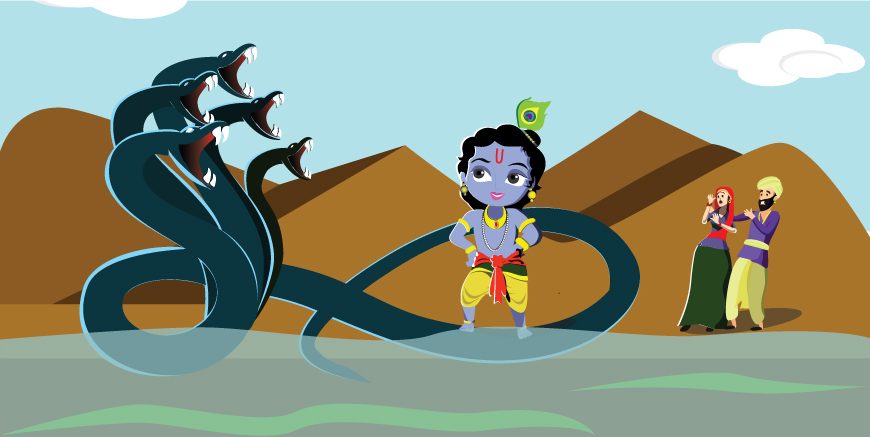
Inside the river, the Krishna snake encounter began. The massive Kaliya snake rose from the depths, hissing angrily. He wrapped his coils tightly around Krishna, trying to defeat him.
Krishna on Snake – The Divine Dance
Suddenly, something miraculous happened. Krishna freed himself from the serpent’s grip. Then, in a breathtaking moment, Krishna began dancing on the many hoods of Kaliya Nag.
This scene, often depicted in paintings and temples, shows Krishna Kaliya with grace and confidence, pressing down the serpent’s pride with each step.
The villagers watched in awe as Krishna and Kaliya battled. The earth trembled, and the river churned violently.
Kaliya’s Defeat
As Krishna continued dancing, the Kaliya snake grew weaker. His wives (Naag Patnis) came forward and pleaded with Krishna to forgive their husband.
They prayed:
“Please spare him, O Lord. We know you are divine.”
Seeing their surrender and repentance, Krishna showed compassion.
Read More – Top Stories of Lord Krishna for Kids
What Is the Krishna Snake Name?
The snake Krishna defeated in this story is called Kaliya or Kaliya Nag. The event is known as Kaliya Daman, meaning “the subduing of Kaliya.”
Kaliya Daman – Meaning Explained
The term Kaliya Daman comes from:
- Kaliya – The serpent’s name
- Daman – To control or subdue
So, Kaliya Daman means Krishna controlling or defeating the poisonous serpent.
Why Did Krishna Spare Kaliya?
Instead of killing Kaliya Naag and Krishna’s enemy, Krishna forgave him. He ordered Kaliya to leave the Yamuna River and return to the ocean.
Krishna’s footprints remained on the serpent’s hoods, which protected him from Garuda in the future.
This shows that even when we defeat evil, compassion is important.
Moral of the Story
The story of Krishna and Kaliya teaches powerful lessons for children:
1. Courage Wins Over Fear
Krishna was not afraid of the dangerous Kaliya snake. We should also face our fears bravely.
2. Protect Nature
Kaliya polluted the river. Krishna restored balance. The story reminds us to protect our environment.
3. Pride Leads to Downfall
Kaliya’s arrogance caused his defeat. Humility is important.
4. Forgiveness Is Powerful
Even after defeating Kaliya Nag, Krishna forgave him. Kindness and mercy are noble qualities.
Cultural Significance in India
The story of Kaliya Daman is celebrated during Janmashtami, the festival marking Krishna’s birth.
In places like:
- Vrindavan
- Mathura
- Gujarat
- Maharashtra
Temples often have beautiful idols depicting Krishna Kaliya, symbolising victory over negativity.
Krishna and Kaliya in Art and Literature
The scene of Krishna and Kaliya has inspired:
- Classical Indian paintings
- Temple sculptures
- Dance dramas like Kathak and Bharatanatyam
- Children’s storybooks
Globally, this story is studied as part of Hindu mythology and spiritual literature.
Symbolism Behind the Story
Beyond the exciting adventure, the story has a deeper meaning:
- Kaliya snake, symbolises ego and negativity.
- The poisoned river represents a polluted mind.
- Krishna on the snake represents divine wisdom overcoming ignorance.
This symbolic interpretation makes the story relevant for all ages.
Read More – Bedtime Stories for Kids
Kaliya Naag and Krishna – Lessons for Today
Even in modern times, the story remains relevant:
- Protect rivers and water bodies from pollution.
- Stand up against wrongdoing.
- Stay humble even when powerful.
- Choose forgiveness over revenge.
Parents and teachers worldwide use this story to teach moral values in a simple and engaging way.
How EuroKids Builds Strong Storytelling Foundations
At EuroKids, storytelling is introduced through hands-on activities, imaginative play, and interactive discussions, helping young learners naturally grasp language, sequencing, and creative expression. The HEUREKA – Visible Thinking Curriculum encourages children to actively explore stories, characters, and events, rather than just listen passively.
Storytelling sessions use props, picture cards, and guided questioning routines like See Think Wonder and Circle of Viewpoints to help children think critically and express ideas clearly. Concepts such as plot, character emotions, and moral lessons are reinforced through everyday experiences, enabling children to connect stories to real life.
With 20+ thinking routines designed to make thinking visible, EuroKids nurtures curiosity, creativity, and communication skills. Across 1600+ preschools, storytelling builds confidence, vocabulary, comprehension, and the ability to articulate thoughts effectively, setting a strong foundation for lifelong learning.
Frequently Asked Questions
Who was Kaliya?
Kaliya was a poisonous serpent living in the Yamuna River.
What is the Krishna snake name?
The snake’s name was Kaliya Nag.
What is Kaliya Daman?
Kaliya Daman is the event where Krishna subdued the serpent Kaliya.
Why did Krishna dance on the snake?
Krishna danced on the Kaliya snake to defeat his arrogance and reduce his poison.
Short Version for Kids
Here is a simple summary:
Once upon a time, a dangerous snake named Kaliya lived in the Yamuna River. His poison made the water harmful. One day, brave Krishna jumped into the river and fought the snake. Krishna danced on the snake’s head and defeated him. The snake asked for forgiveness. Krishna spared him and told him to leave. The river became clean again.
Conclusion
The story of Kaliya Daman – Krishna and Kaliya snake story for children with a moral is one of the most inspiring tales from Indian mythology. It teaches bravery, humility, environmental awareness, and forgiveness.
From the dramatic moment of Krishna on the snake to the compassionate ending, this story continues to inspire children across India and around the world.
By remembering the lessons of Krishna and Kaliya, we learn that good always triumphs over evil and thatkindness is stronger than anger.
To explore more learning ideas, simple explanations, and early childhood resources, parents
can visit the EuroKids Blog. Those who wish to understand the preschool journey better or
explore enrolment options can find complete information on the EuroKids Preschool Admission
Page, where learning is designed to be joyful, engaging, and child-friendly.