Imagine it is a very hot afternoon, and you take a big bite of cold, sweet chocolate ice cream. A few minutes later, you accidentally bite into a slice of a bright yellow lemon. Your face instantly scrunches up because it is incredibly sour! Have you ever stopped to wonder how your body instantly knows the difference between sweet chocolate and a sour lemon?
The answer lives right inside your mouth. It is that pink, bumpy, and highly flexible muscle we call the tongue. When we learn about the human body, we often talk about the heart, the lungs, and the brain. But this small pink muscle is actually one of the hardest working parts of your entire body. Today, we are going to look closely at this amazing muscle, find out exactly how it works, and learn how it helps us enjoy our favorite foods every single day.
The Ultimate Helper: Tongue Function Explained
Most people think the tongue is only there to taste food. While tasting is a huge part of its job, a proper tongue function list includes many other highly important daily tasks.
The Food Mixer:
Think of your mouth like a busy kitchen, and your tongue is the head chef. When you chew your food, this muscle constantly pushes the pieces around, mixing them with saliva. It rolls the chewed food into a small, soft ball so you can easily swallow it without choking.
The Master Speaker:
Try saying the words “Tree,” “Dog,” or “Light” without letting your tongue touch the roof of your mouth or your teeth. It is completely impossible! This muscle bends and taps in tiny, rapid movements to help you form clear words and sounds.
The Natural Toothbrush:
After you finish eating a crunchy biscuit, you might feel a small piece stuck between your teeth. Your tongue immediately acts like a built-in cleaner, sweeping across your teeth and gums to remove leftover food pieces.
Read More – Body Parts for Kids with Names
The Tiny Detectives: What Are Taste Buds?
When a curious student asks, “what are taste buds?”, the easiest way to explain them is to call them tiny flavor detectives.
Your tongue is covered in a layer of moisture called saliva. When you eat a piece of food, the chemicals in that food dissolve into the saliva. The taste buds are microscopic sensory organs that grab onto these dissolved chemicals. The moment they figure out what the flavor is, they send a lightning-fast electrical message straight up to your brain. Your brain then tells you, “This is a sweet mango!” or “This is salty popcorn!”
These tiny detectives can recognize five main flavors: sweet, salty, sour, bitter, and a special savory flavor called umami (which is the rich taste you find in cheese or tomatoes).
Spotting the Bumps: Where Is Taste Buds Located?
Go stand in front of a bathroom mirror, stick your tongue out as far as you can, and look very closely. You will see hundreds of tiny pink bumps all over the surface. Many people point to these bumps and say, “Those are my taste buds!”
However, that is a very common scientific mistake. Those visible pink bumps are actually called papillae. They are there to give your tongue a rough texture, which helps it grip food like a strong piece of sandpaper. So, where is taste buds located? The actual taste buds on tongue surfaces are completely invisible to the human eye. They hide safely inside the walls of those little pink bumps.
Read More – Sense Organs for Kids
The Numbers Game: How Many Taste Buds On Tongue?
If we cannot see them, exactly how many taste buds on tongue surfaces do we actually have?
When you are a young child, your mouth is packed with around 10,000 of these tiny flavor detectives! This is exactly why kids experience flavors much stronger than adults do. It is also the reason why young children often hate the taste of bitter green vegetables. Their thousands of flavor sensors pick up the bitter taste very strongly.
However, as we grow up and become adults, some of these tiny sensors stop working and do not grow back. An older adult might only have around 5,000 working sensors left. Because their sense of taste gets a little weaker, adults start to enjoy bitter things like dark coffee and spicy curries much more than children do.
Are We All the Same? Types of Tongue
You might be surprised to learn that everyone’s mouth is completely unique, almost like a fingerprint. When scientists talk about the types of tongue in humans, they often look at genetics and physical appearance.
The Rollers vs. Non-Rollers:
Stick your tongue out and try to curl the sides up to make a “U” shape or a tube. Some people can do this easily, while others cannot curl it at all, no matter how hard they try! This is a genetic type. You are simply born with the ability to roll it or you are not.
Geographic Tongue:
Sometimes, the pink bumps (papillae) wear off in random patches, making the surface look like a map with different continents and islands. Doctors call this a geographic tongue. It is completely harmless and just a unique way the muscle looks.
Read More – Teaching Children to Identify Different Tastes
Conclusion
To summarize everything, the human tongue is an absolute masterpiece of biology. It helps us speak our favorite words clearly, acts as a natural cleaner for our teeth, and safely pushes food down into our stomachs. Most importantly, it holds thousands of invisible flavor detectives inside its tiny bumps, allowing us to experience the wonderful tastes of the world around us.
The next time you eat a slice of your favorite pizza or a scoop of vanilla ice cream, take a moment to appreciate the hard work happening inside your mouth. It leaves us with a truly thought-provoking realization. This small, pink muscle is the only muscle in the entire human body that works perfectly without any bones supporting it. Yet, without this boneless wonder, our world would have no flavor, our voices would have no clear words, and our lives would be incredibly dull.
To read more fun and educational articles, check out the EuroKids Blog, and visit our website for details on EuroKids Preschool Admission.
FAQs
Does the tongue have a specific “taste map”?
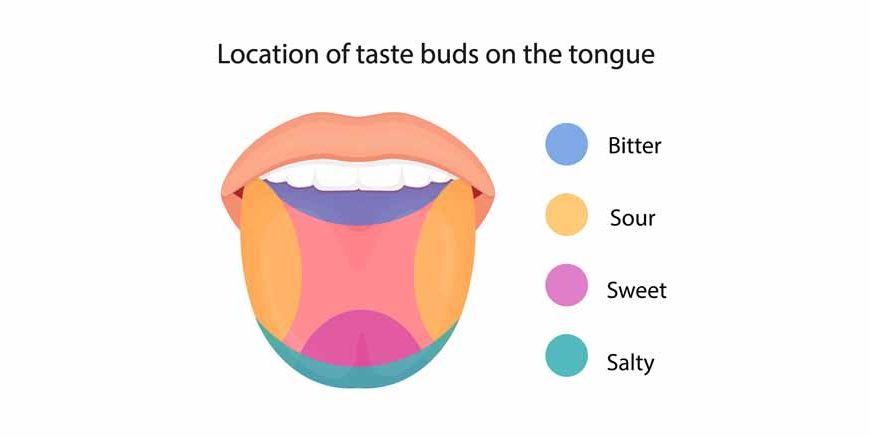
No, that is a very old myth! People used to believe the front tasted sweet and the back tasted bitter. In reality, you can taste all five flavors on every single part of your tongue.
Do these flavor sensors live forever?
No, they do not. A taste bud only lives for about 10 to 14 days. Your body is constantly making brand new ones to replace the old ones.
Why does food taste completely blank when I have a cold?
Your nose and your mouth work together as a team. When your nose is blocked by a cold, your brain cannot smell the food, which makes the tongue’s job much harder, leaving the food tasting blank or dull.
Is the tongue the strongest muscle in the body?
While it is incredibly flexible and never really gets tired, the jaw muscle (used for biting down hard) is actually the strongest muscle in the human body.