Children are naturally bundles of vibrant, kinetic energy. They prefer to run rather than walk, shout rather than whisper, and seem to possess an endless internal battery pack. Yet, growing up today is also an incredibly noisy experience. Between digital screens, rigorous school timetables, and bustling playgrounds, a child’s mind rarely gets a moment of true, uninterrupted quiet. Teaching them how to intentionally slow down is perhaps one of the greatest gifts we can offer. Drafting an essay on yoga helps children articulate this exact journey, discovering how to beautifully balance their boundless energy with calming stillness.
Gathering Basic Yoga Information
Before a student can write effectively about this discipline, they need the proper historical context. When gathering yoga information, we must look back thousands of years to ancient India. The word itself comes from a Sanskrit root meaning ‘yoke’ or ‘unite’. For a young child, you can easily explain this as building a strong, invisible bridge between their busy brain and their growing body. It is not merely about twisting limbs into complicated shapes like a pretzel; it involves deep, focused breathing, gentle physical stretching, and learning exactly how to sit peacefully in the present moment.
Read More – Simple Yoga Poses for Young Children
10 Lines on Yoga (For Early Learners)
For younger students who might find structuring a full paragraph quite difficult, a numbered list is a brilliant starting point. If your child has been asked to write 10 lines on yoga, here is a straightforward and highly engaging template they can easily memorise:
- Yoga is an ancient and highly peaceful practice that started in India.
- It helps connect our active, busy minds directly with our physical bodies.
- Practising daily teaches us how to breathe deeply, slowly, and calmly.
- It stretches our muscles, making them very flexible and incredibly strong.
- The different physical poses are often named after nature, like the tree or the downward dog.
- It does not require any heavy equipment, just a quiet space and a soft mat.
- Sitting still in meditation helps instantly calm me down when I feel angry or upset.
- It greatly improves my focus so I can pay much better attention to my schoolwork.
- Doing these gentle exercises early in the morning fills my body with fresh, positive energy.
- It is a wonderful, healthy habit that keeps us happy and fit for our entire lives.
Structuring an Importance of Yoga Essay
For middle primary students, the writing task naturally shifts from just listing facts to deeply explaining the ‘why’. An importance of yoga essay should focus heavily on how the practice acts as a daily toolkit for navigating big emotions. Children can write about how taking three deep belly breaths instantly calms the butterflies in their tummy before a tricky spelling test. By describing the physical act of finding balance, like standing on one leg during the ‘Tree Pose’ without wobbling, they gradually learn to express the much broader, abstract concept of mental stability.
Read More – Ways to Teach Relaxation Skills to Your Child
Yoga Essay in English 250 Words
If an older student requires a more cohesive, flowing assignment, here is a beautifully structured yoga essay in English 250 words that they can use for excellent inspiration:
“In our incredibly fast-paced modern world, finding a moment of absolute quiet can be quite rare, especially for growing children. Yoga is a magical, ancient practice that teaches us exactly how to find peace within ourselves. It is a beautiful combination of physical postures, known as asanas, and deep, mindful breathing techniques. The true importance of this practice lies in how it completely nurtures both the body and the mind simultaneously. Physically, it stretches out tight, tired muscles, improves our posture after hours of sitting at hard school desks, and builds immense core strength.
Mentally, stepping onto a mat is exactly like pressing a reset button for the brain. When we feel overwhelmed by difficult homework or frustrated with our playground friends, focusing entirely on our breath quickly clears the mental fog. It acts as a safe, quiet harbour. Furthermore, the benefits of yoga for kids are practically endless; it powerfully boosts memory, encourages daily self-discipline, and fosters a deep, lifelong respect for our personal physical health. Ultimately, adopting this gentle, non-competitive discipline early in life equips us with the invisible, emotional tools we need to handle future stress with complete grace, ensuring we grow into beautifully balanced, joyful, and highly resilient adults.”
Read More – Animal Yoga Poses for Kids
Exploring the Core Benefits of Yoga for Kids
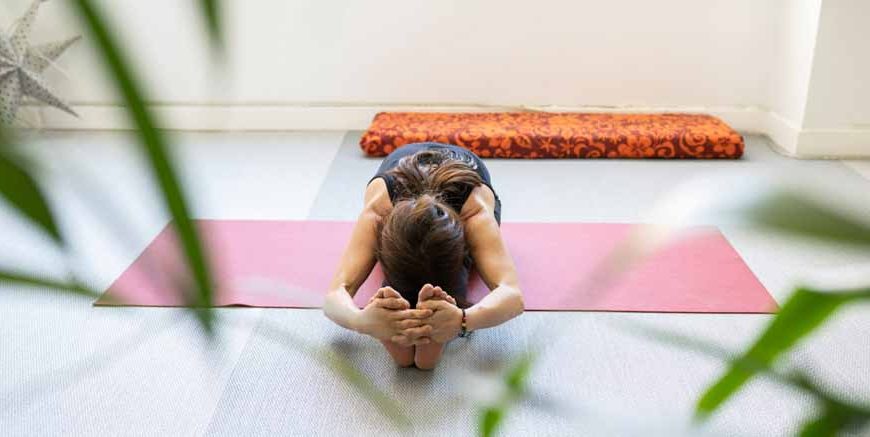
When children write about the benefits of yoga for kids, they should be encouraged to include highly descriptive, personal examples. They can mention how stretching their chest like a ‘cobra’ makes their spine feel long and healthy, or how resting quietly in the ‘child’s pose’ makes them feel entirely safe and cosy. It is absolutely crucial to highlight that this is a completely non-competitive activity. Unlike a weekend football match where someone eventually has to lose, on the exercise mat, every single child is highly successful simply by trying their best and breathing deeply.
Conclusion
Ultimately, teaching a young child how to stretch, breathe, and find absolute stillness is far more valuable than simply keeping them physically fit. It is about handing them a lifelong, invisible emotional anchor. In a loud world that constantly demands them to move faster, achieve more, and look outward, this ancient practice gently and firmly invites them to look inward. When a student writes an essay on this topic, they are not just fulfilling a standard English homework requirement; they are actively processing the profound realisation that peace is not something you can easily find on the outside, but something you must carefully cultivate from within. Equip a child with the quiet ability to calm their own mind, and you effectively equip them to bravely weather any storm that life might bring.
To discover more educational resources and to support your child’s holistic development, take a moment to explore the EuroKids Blog and find out all the vital details regarding EuroKids Preschool Admission today.
FAQs
At what age can a child safely start this practice?
Children as young as three or four can easily begin with simple, playful stretches and basic breathing games to gently introduce the concept of mindfulness.
Do kids need to be naturally flexible?
Not at all! The entire practice is about gradually improving flexibility and strength over time, rather than being absolutely perfect on the very first day.
How does this help with school performance?
By actively teaching children how to filter out noisy distractions and focus entirely on their breath, they naturally develop much longer attention spans for their daily classroom studies.