Preschoolers are naturally curious explorers. If you carefully watch any young child, you will see them touching everything within reach, stopping to smell flowers, or eagerly tasting new foods. This isn’t just curiosity; it’s how young children make sense of the world around them. As parents, it’s important to nurture this natural exploration by turning everyday moments into fun learning opportunities. If you are looking to teach your child about the five sense organs and how they work, you are in the right place. In this guide, we will share ways to help your preschooler discover their amazing sensory abilities.
Why Preschoolers Should Learn About the Five Sense Organs
As mentioned before, seeing, hearing, smelling, tasting, and touching, often referred to as the five senses, are the main tools children use to learn about their surroundings. Every day, they rely on their senses to stay safe, communicate, learn new words, and understand emotions. Therefore, when your little ones learn about the 5 sense organs, they begin to understand how their bodies work. Additionally, they realise why they can hear their name being called, how they know food tastes sweet or sour, and why they pull their hand away from something hot. This awareness builds confidence and independence.
Moreover, teaching the five senses also helps preschoolers develop focus and attention. When children are encouraged to listen carefully, observe closely, or describe how something feels, they learn to pay attention to details. These early observation skills later support reading, writing, and problem-solving.
Read More – Body Parts for Kids
What are the Five Sense Organs?
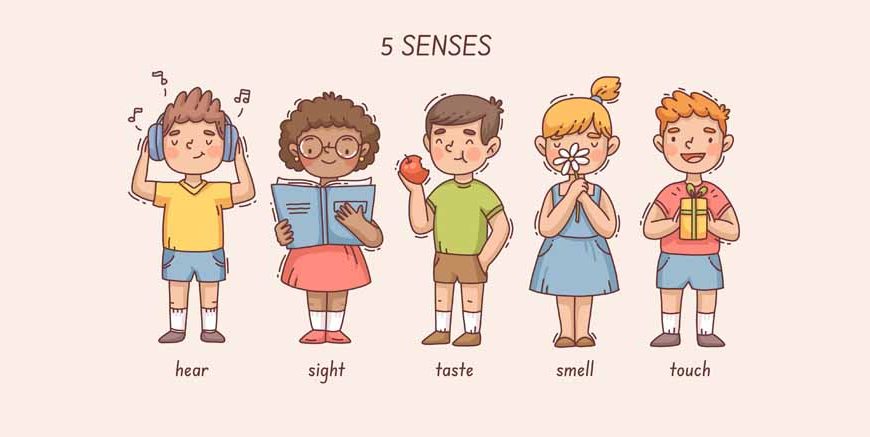
The five main sense organs are:
- Eyes: for sight
- Ears: for hearing
- Nose: for smell
- Tongue: for taste
- Skin: for touch
Let’s look at these sense organs for kids in detail:
Eyes
The eyes allow children to see light, colours, shapes, and movement. Sight is often the first sense children rely on to explore the environment. Through sight, they recognise faces, learn colours, and understand visual cues.
You can help children understand sight by pointing out everyday examples. Talk about the bright colours of fruits, the shapes of toys, or the movement of cars on the road. These simple observations make learning relatable and exciting. Sight also helps children stay safe. Being able to see obstacles, recognise familiar people, and notice changes in their surroundings builds confidence and independence.
Ears
The ears help children hear sounds and understand speech. Hearing plays a major role in language development, which is why this sense is especially important during preschool years.
Children use their ears to listen to stories, songs, instructions, and conversations. When they learn to focus on sounds, they begin to recognise patterns in language and develop communication skills.
You can help children appreciate hearing by asking them to identify everyday sounds. The sound of birds, traffic, rain, or laughter becomes an exciting listening game.
Nose
The sense of smell is closely connected to memory and emotions. A familiar smell can remind children of home, favourite foods, or happy experiences.
Explain to children that their nose helps them smell flowers, fruits, and even rain. You can turn this into a fun guessing game by introducing safe, familiar scents. Smell also plays a role in safety. It helps children detect smoke, spoiled food, or strong chemicals. This makes it an important sense for everyday awareness.
Tongue
The tongue allows children to taste different flavours. Preschoolers love learning about taste because it connects directly to food, one of their favourite topics.
Explain that the tongue helps us taste sweet, salty, sour, bitter, and savoury foods. Encourage children to describe flavours during meals. This not only teaches taste but also expands vocabulary. Taste helps children learn food preferences and recognise when food is fresh or spoiled. It also makes mealtime more interactive and engaging.
Skin
The skin is the largest sense organ and helps children feel temperature, texture, and pressure. Through touch, children learn about the physical world.
Touch is also connected to emotional development. Hugs, hand-holding, and gentle pats make children feel safe and loved. You can encourage children to describe textures such as soft, rough, warm, or cold. This strengthens both sensory awareness and language skills.
A Simple Way to Introduce the Five Sense Organs to Kids
The best way to teach preschoolers is to connect learning with daily life. Instead of starting with definitions, start with experiences.
For example, during snack time, ask:
- “How does this fruit taste?”
- “What colour is your juice?”
- “Can you hear the crunch when you bite?”
By linking senses to everyday moments, children learn naturally without feeling like they are in a lesson.
Read More – Organs in the Human Body
Fun Activities That Make Learning Memorable
Children learn best when they are actively involved. Hands-on activities help them remember what they learn. Therefore, a nature walk is a wonderful way to explore all five senses. Children can see colourful flowers, hear birds, feel leaves, smell grass, and taste fruits during a picnic.
Or a taste-testing game allows children to identify sweet, sour, salty, and bitter foods. Sound games encourage children to recognise everyday noises. Sensory bags filled with textured objects help children explore touch.
These playful activities make learning enjoyable and meaningful.
Conclusion
In the end, teaching preschoolers about the five sense organs is not just about science. It is about helping children understand themselves and the world around them. Through playful activities, daily conversations, and simple explanations, parents and educators can make this topic exciting and meaningful.
You can also check out EuroKids Blogs for more insightful and fun articles on your baby’s growth, health, and learning. Don’t forget to check out EuroKids Preschool Admission for the perfect foundation to kickstart your little one’s learning journey.
Frequently Asked Questions (FAQs)
How can I explain the five senses to my little one?
Tell children that their senses help them understand the world and decide what they like or dislike. We use our eyes to see, ears to hear, hands to feel, nose to smell, and tongue to taste.
What are the five sense organs, and what do they do?
The five senses are sight, smell, hearing, taste, and touch. Eyes help us see, ears help us hear, the nose helps us smell, the tongue helps us taste, and the skin helps us feel. The brain uses these signals to understand what’s happening around us.
What sensory activities work well for preschoolers?
Try sensory bins, playdough or slime play, finger painting, sound-matching games, musical instruments, storytime with sound effects, colour-sorting activities, and mirror play. These activities help children explore their senses through play.