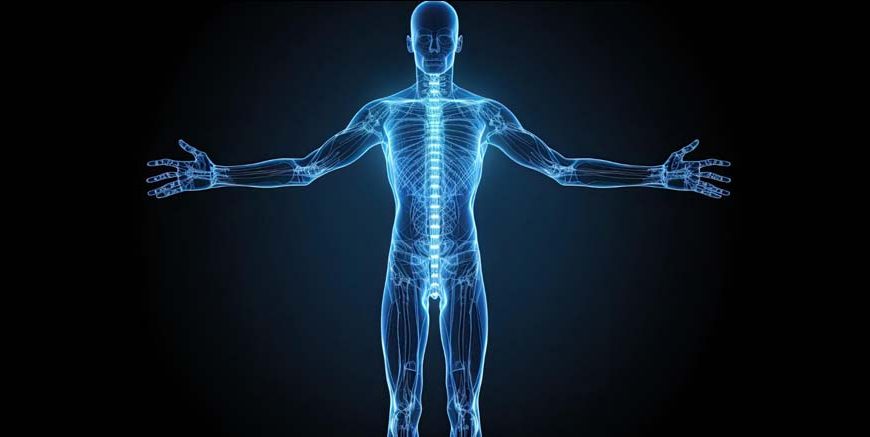
Watch a child climbing a massive oak tree in the local park, stretching their arms wildly to reach a high branch, or leaning completely over to scoop up a heavy football from the muddy grass. You are witnessing a spectacular piece of biological engineering in action. We usually spend all our time looking in the mirror at our faces, completely ignoring the brilliant, complex machinery working silently out of sight. The back is essentially the body’s ultimate support pillar. Without it, you would simply collapse onto the floor like a wet towel. We need to strip away the complex medical jargon and look at the brilliant physics holding us upright.
The Core Structural Framework
If a science teacher asks a classroom to identify the main human body back parts, most kids will instantly point right to the bumpy ridge running down the middle of their spine. The spine is completely central to how we move every single day. It isn’t just one long, solid stick of bone. If it were totally solid, you would walk around stiffly like a mechanical toy! Instead, it is built from a long stack of 33 interlocking little bones known as vertebrae.
These small bones stack neatly on top of each other to build a highly flexible column. Between each little bone sits a squishy, fluid-filled disc that acts as a powerful shock absorber. These discs stop the hard bones from grinding painfully against each other every time your child jumps off a high wall or runs across a playground. When you look closely at the wider back parts of body structures, you also notice the massive shoulder blades, known medically as the scapulae, resting flat at the top. Moving further down, the sturdy rib cage wraps securely around the middle of the spine to protect vital, fragile organs like the heart and lungs like a hard, bony shield.
Read More – All Body Parts for Kids with Fun Pictures
The Powerhouse Tissues
Having a flexible skeleton is absolutely brilliant, but bones cannot actually move themselves. To bend down to tie your shoelaces or swing a cricket bat, you rely entirely on a massive, overlapping network of human back muscles. These are some of the strongest, thickest, and most resilient tissues in your entire body. Think of these muscle groups like thick, elastic ropes fiercely strapping the spine to the shoulders, ribs, and hips. The ‘latissimus dorsi’ (often just called the lats) are massive, V-shaped muscles sweeping down the sides.
They do all the heavy, powerful pulling when you climb a rope or drag open a heavy wooden door. Higher up, the trapezius muscles stretch across the neck and shoulders, allowing you to shrug or tilt your head back. Meanwhile, the crucial ‘erector spinae’ muscles run straight up and down along the length of the spine. They constantly tighten and relax all day long just to keep you standing perfectly upright against the heavy pull of gravity. They work fiercely in the background without you even noticing the massive effort.
Naming the Different Zones
Medical doctors do not just point vaguely when something hurts; they map the entire area out very carefully to find the exact problem. When studying the parts of the body back side, it helps to divide the whole massive area into distinct, easy-to-understand zones.
Learning every single complex human back body part’s name can be a bit tricky for young students, so let us keep it relatively simple. First, at the very top, there is the cervical spine area. This is essentially your neck, and it works incredibly hard to support the heavy weight of your skull. Right below that sits the thoracic spine, which forms your upper and middle back, acting as the sturdy anchor point where all the ribs attach.
Finally, right at the bottom, sits the lumbar spine, or the lower back. This bottom section is incredibly thick and sturdy for one very specific logical reason: it has to carry the massive, combined weight of your entire upper body every single time you walk, run, or skip. Right at the very base, hidden away, is the tailbone, a tiny, fused reminder of our ancient biological ancestors.
Read More – Human Skeleton and Bones
Brilliant Scientific Facts
Learning dry biology from a textbook can be deeply boring for active, curious kids. To really grasp how clever our anatomy truly is, we need to look at the fascinating, hidden mechanics behind our daily movements. Here is a list of brilliant facts driven entirely by logic and science:
- You shrink during the day: As you walk heavily around all day, Earth’s gravity physically squashes the soft, watery discs sitting between your spinal bones. While you sleep horizontally in bed at night, they have the chance to fill back up with fluid. Because of this bizarre squishing effect, you are literally about a centimetre taller when you wake up in the morning than when you go to sleep!
- The information superhighway: Hiding safely inside the hollow centre of your bony spine is the spinal cord, a massive, thick bundle of highly sensitive nerves. This biological cable acts exactly like a lightning-fast internet connection, instantly firing electrical messages from your brain all the way down to your wiggling toes.
- Built-in curves: A healthy spine is not actually perfectly straight like a rigid plastic ruler. If you look at it from the side, it curves gently inwards at the neck, outwards at the ribs, and inwards again at the lower back. This clever ‘S’ shape acts exactly like a coiled metal spring, absorbing heavy impacts perfectly.
- The heavy lifting burden: Because the lumbar region sits right at the very base of the spine, it absorbs the absolute maximum amount of shock and physical stress. That is the exact logical reason why adults complain about lower back aches so frequently after lifting heavy shopping bags!
Conclusion
To sum up the brilliant science, your back is far more than just the blank, empty space behind your chest. It is a wildly complex, highly engineered system of stacking bones, squishy shock absorbers, and thick, elastic muscles working in perfect, seamless harmony. It is the biological anchor that allows us to bend, twist, climb, and simply stand tall against gravity. It is genuinely thought-provoking to realise that a massive, invisible scaffold is working constantly, twenty-four hours a day, just to keep you comfortably upright.
If we do not understand the heavy lifting happening out of sight, how can we ever fully appreciate the amazing machine that is the human body? Encouraging this exact type of active, mechanical curiosity is what the Heureka Curriculum is built upon, turning standard biology into a thrilling, practical puzzle for young minds. To uncover more fantastic ways to spark your child’s daily learning, dive into the EuroKids Blog and secure their exciting educational adventure today through EuroKids Preschool Admission.
FAQs
How many small bones make up the human spine?
The spine is constructed from 33 individual, interlocking bones called vertebrae, neatly stacked on top of each other to create a strong, highly flexible central column.
What do the soft discs in the back actually do?
They act exactly like built-in, squishy shock absorbers. They sit right between the hard spinal bones, stopping them from grinding painfully together when you run heavily or jump.
Which specific part of the back carries the most physical weight?
The lumbar region, commonly known as the lower back, carries the heaviest daily burden because it has to fiercely support the entire weight of your upper body against gravity.