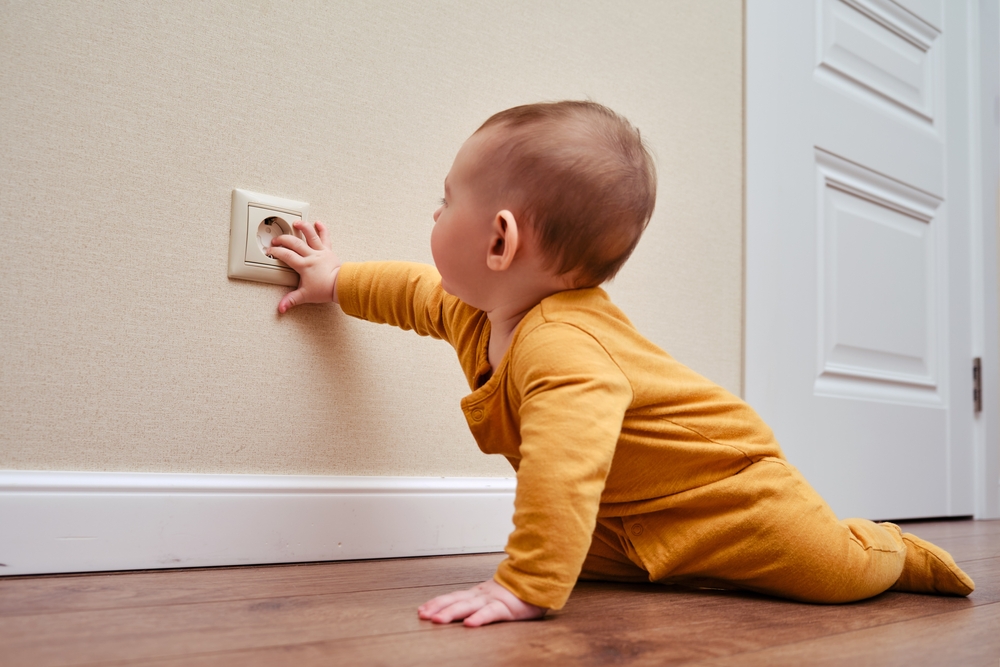
Kids look at the world through a completely different lens of scale. To a young child, a deep puddle is an ocean, a small hill is a treacherous mountain, and any number over a hundred is simply ‘infinity’. So, what happens when they sit down at the kitchen table and actually need to write out a massive five-digit figure for their maths homework?
It usually results in a bit of a stare-down with the paper. Expressing 14500 in words is a classic hurdle for primary school students. Instead of letting them panic over a confusing string of digits, we can easily teach them how to translate this scary code into a perfectly normal sentence. The answer is fourteen thousand five hundred. Let us explore a simple, stress-free way to guide them through this process.
Understanding the Place Value Code
Before tackling the actual spelling, a child needs to know how the number is built. You cannot just guess your way through five digits. I like to describe place value as a giant combination lock. Each dial on the lock has a very specific job, and they have to be read in the correct order for the lock to open.
Looking at the far left of our number, the first dial is set to ‘1’ in the ten-thousands slot. The second dial is set to ‘4’ in the thousands slot. Because these two dials sit right next to each other in the thousands section of our lock, we read them as a pair. That instantly gives us fourteen thousand.
Moving along to the right, the third dial sits on ‘5’ in the hundreds position, handing us our five hundred. Then, we reach the last two dials, which are both stuck on zero. Children frequently question why zeros are even there if they represent absolutely nothing. You have to remind them that these zeros are the safety catches. They hold the tens and units dials perfectly still. If those zeros were removed, the 14 and the 5 would slide out of place, shrinking the whole grand figure down to a tiny 145.
Read More – Understanding Number Words
Getting the Spelling Right on Paper
Once the mechanics of the number make total sense, the next step is writing 14500 in words English accurately. Luckily, this specific figure does not throw any massive grammatical curveballs our way.
Your child only needs to master four words:
- Fourteen
- Thousand
- Five
- Hundred
There is a very common spelling trap right at the beginning. Many kids (and quite a few adults, if we are being honest) know that the number forty drops the ‘u’. Because of that rule, they often mistakenly write ‘forteen’ instead of fourteen when they are rushing. You just need to gently remind them that the ‘u’ stays firmly in place for this specific word. Having them grab a pencil and write the whole phrase out on a piece of rough paper is the absolute best way to lock that muscle memory in.
Making Massive Numbers Relatable
Numbers mean absolutely nothing to a child if they stay trapped on a whiteboard. You have to give the maths a physical form that they can actually visualise. Think about arts and crafts. If you bought one of those giant plastic tubs of colourful crafting beads to make bracelets on a rainy Saturday afternoon, it could easily hold exactly fourteen thousand five hundred individual beads. Running their hands through a tub that huge gives them a physical sense of the number’s actual weight.
Alternatively, think about distances. If a family takes a long drive across the country for a summer holiday, the car’s wheels will easily roll over that many metres before you even stop for a quick snack. Grounding dry numbers into physical, messy, real-world experiences is the exact philosophy behind the Heureka curriculum. It shifts education away from boring repetition and turns it into an active discovery. When kids see that maths measures the things they can actually touch and feel, the intimidation simply vanishes.
Read More –
Conclusion
Mastering a five-digit number is a quiet but monumental shift in how a child perceives the world. It shows they are developing the necessary logic to decode much larger concepts. By breaking down the combination lock of place value and fixing that sneaky spelling trap, a daunting homework task turns into a completely manageable sentence. Are we taking the time to show kids the real-world magic behind these numbers, or are we just rushing them to finish their worksheets before dinner?
Changing our own approach to teaching these basics can permanently alter how confident they feel in the classroom. To uncover more engaging learning techniques and support your child’s daily growth, explore the EuroKids Blog and take the next step by looking into EuroKids Preschool Admission today.
FAQs
How do you write 14500 on a bank cheque?
When writing out a standard cheque, you must express it as ‘Fourteen thousand five hundred only’. Adding the word ‘only’ at the end is a crucial security step that stops anyone from sneaking extra digits onto the line.
Is 14500 an odd or even number?
It is a strictly even number. Because the final digit is a zero, the entire amount can be divided perfectly in half without leaving any fractions or awkward remainders behind.
What does this number look like in expanded form?
Expanded form simply stretches the number out to show the exact mathematical weight of each chunk. For this figure, it is written down as: 10000 + 4000 + 500.