Mathematics is full of numbers that help us count, measure, and understand the world around us. Among all numbers, 0 (zero) is one of the most important and interesting. Though it may look simple, zero has a deep meaning and plays a crucial role in math and everyday life. From counting objects to performing complex calculations, zero is everywhere.
In this blog, we will clearly explain what is zero, its definition, zero meaning, its history, the importance of zero, and simple examples that children can easily understand.
H2 – What Is Zero in Math?
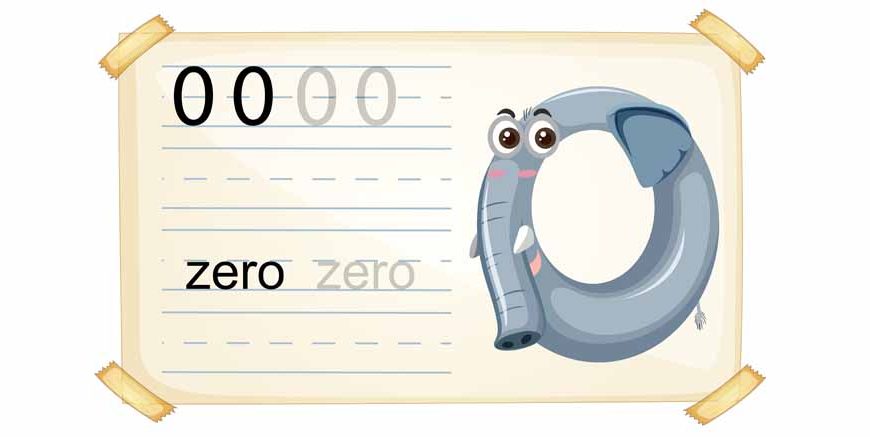
Zero is a number that represents nothing or no quantity. When there are no objects in a group, we say the number is 0. For example if there are no apples in a basket, the number of apples is 0 or if a child scores no points in a game, the score is 0. So, 0, meaning in math, is the absence of quantity.
What Is the Meaning of Zero?
When children learn what is the meaning of zero, they begin to understand counting, subtraction, and number order more clearly. The meaning of zero can be understood in different ways:
- It shows nothingness
- It represents no value
- It acts as a placeholder in numbers
Who Is the Founder of Zero?
Many people ask about the 0 founder. The concept of zero was developed in ancient India. Indian mathematician Brahmagupta is credited with giving clear rules for using zero in calculations around the 7th century. Later, the idea of zero spread to other parts of the world and became an essential part of modern mathematics. The concept of zero has a fascinating history.
- The Mayans used zero to represent time and calendar dates.
- Indian mathematicians were the first to treat zero as a number and define its rules.
- Later, Arab scholars adopted zero and spread its use across the world.
Read More – Discovery of Zero: Aryabhata’s Contribution to Mathematics
Importance of Zero in Math
The importance of zero in mathematics cannot be ignored. Here’s why zero is special:
1. Zero as a Placeholder
Zero helps give meaning to numbers. For example 5 and 50 are different because of zero.
2. Zero in Counting
Zero shows the beginning of counting.
3. Zero in Calculations
- Any number plus zero stays the same.
- Any number multiplied by zero becomes zero.
4. Zero in the Number System
Without zero, large numbers like 100 or 1000 would not exist.
Position of Zero on the Number Line
On the number line, zero lies between −1 and 1.
Important facts about zero’s position:
- Zero separates negative numbers and positive numbers
- Zero is neither positive nor negative
- It marks the center of the number line
Read More – Exploring Natural Numbers
Properties of Zero in Math
Zero behaves differently from other numbers. These properties of zero help us understand how it works in calculations. Some of the properties of zero are as follows:
1. Addition Property of Zero
When zero is added to a number, the number stays the same.
Example:
- 7 + 0 = 7
- 0 + 12 = 12
Zero does not change the value when added.
2. Subtraction Property of Zero
When zero is subtracted from a number, the number remains unchanged and when a number is subtracted from itself, the result is zero.
Examples:
- 9 − 0 = 9
- 8 − 8 = 0
3. Multiplication Property of Zero
When any number is multiplied by zero, the answer is always zero.
Examples:
- 5 × 0 = 0
- 0 × 100 =
This rule is always true in math.
4. Division Property of Zero
When zero is divided by any number, the result is zero and when a number is divided by zero, the result is undefined.
Examples:
- 0 ÷ 6 = 0
- 10 ÷ 0 = Undefined
Dividing by zero is not possible because we cannot divide something into zero parts.
Read More – The Importance of Math in Everyday Life
Use of Zero as a Placeholder
Zero helps us understand place value and write numbers clearly. One of the most important uses of zero is as a placeholder.
Example:
- In 502, zero holds the tens place.
- Without zero, 502 would become 52, which changes the meaning completely.
Place Value of Zero in Decimals
Zero also plays an important role in decimal numbers.
Examples:
- In 4.05, zero acts as a placeholder.
- In 5.60, the zero after the decimal does not change the value.
Zeros after the decimal point may or may not affect the value depending on their position.
Early Number Understanding With EuroKids
At EuroKids, math ideas like zero are transformed into meaningful learning experiences for young children. Educators introduce the concept through everyday examples, interactive play, and child-friendly activities. Using toys, counting games, storytelling, and visual demonstrations, children learn the zero meaning naturally. This practical approach helps children clearly understand what is zero, recognise its role in numbers, and build early confidence in mathematics while enjoying the learning process.
Conclusion
Zero may look like a small number, but it has a very big role in mathematics. Understanding what is zero in math, its definition, history, and the importance of zero helps children build a strong foundation in numeracy. From counting to calculations, zero supports learning at every stage.
When taught through engaging methods, children not only learn numbers but also enjoy math. Educational environments like EuroKids make learning concepts such as zero simple, meaningful, and fun. To explore more early learning resources, parents can visit the EuroKids Blog, and those interested in enrolling their child can check the EuroKids Admissions Page to begin their child’s joyful learning journey.
FAQs:
1. What is zero in math?
Zero is a number that represents no quantity or nothing.
2. What is the meaning of zero?
Zero means the absence of value or quantity.
3. Who is the founder of zero?
Indian mathematician Brahmagupta is known for defining zero clearly.
4. Why is zero important?
Zero helps in counting, calculations, place value, and understanding numbers.
5. Is zero a number?
Yes, zero is a whole number and an important part of the number system.