children can quickly recognise patterns that make reading easier and more enjoyable.Learning to read and write is one of the biggest milestones in a child’s early education. While recognising letters and learning phonics are important, children also benefit from understanding how words are built. One of the most effective literacy strategies is learning about onset and rime. These building blocks help children recognise word patterns, decode unfamiliar words, and become confident readers and writers. If you have ever wondered what is an onset rime, this guide explains the concept in a simple way for parents and teachers.
For Indian families preparing children for a global learning environment, early literacy skills are essential. Understanding what rime is and practising common word families strengthens phonics, spelling, and reading fluency. With regular practice and engaging activities,
What Is an Onset Rime?
Many parents ask, what is an onset rime? In simple terms, a word can often be divided into two parts.
The onset is the beginning sound or letter that comes before the vowel.
The rime is the vowel and all the letters that follow it.
For example, in the word cat:
- Onset: c
- Rime: at
When children understand this pattern, they can easily create and recognise many new words.
Read More – Best Phonemic Awareness Activities for Kids
What Is Rime?
If you are wondering what rime is, think of it as the part of a word that usually stays the same while the first sound changes.
For example, the rime -at appears in several words:
- cat
- bat
- hat
- mat
- rat
Children who recognise the rime -at can read several words without learning each one separately. This makes reading faster and more efficient.
Why Are Onset and Rime Important?
Learning onset and rime develops strong foundational literacy skills.
It helps children:
- Recognise common spelling patterns.
- Decode unfamiliar words.
- Improve reading fluency.
- Build spelling confidence.
- Expand vocabulary.
- Develop phonemic awareness.
These skills support success in English language learning both in school and beyond.
Onset and Rime Examples
The easiest way to understand the concept is through onset and rime examples.
|
Word |
Onset |
Rime |
|
cat |
c |
at |
|
sun |
s |
un |
|
dog |
d |
og |
|
pen |
p |
en |
|
fish |
f |
ish |
|
light |
l |
ight |
|
cake |
c |
ake |
|
star |
st |
ar |
How Onset and Rime Help Reading
Children often learn to recognise word families before they read long sentences.
For example, once a child knows the rime -an, they can quickly read:
- can
- fan
- man
- pan
- van
Instead of decoding every letter separately, they recognise the familiar pattern. This improves reading speed and confidence.
How Onset and Rime Improve Writing
The same strategy also supports writing.
Suppose a child wants to spell the word log. If they already know the rime -og, they only need to identify the onset l.
Likewise, children who know the rime -ill can easily write:
- hill
- fill
- will
- mill
Recognising these patterns reduces spelling mistakes and encourages independent writing.
Read More – Guide to Teaching English Grammar for Kids
Fun Activities to Teach Onset and Rime
Parents and teachers can make literacy learning enjoyable with simple activities.
Word Family Cards
Write different rimes such as -at, -ig, and -op on cards. Ask children to add different onsets and create new words.
Picture Matching
Match pictures to words with the same rime, such as cat, hat, and bat.
Reading Games
Choose one rime and challenge children to think of as many matching words as possible.
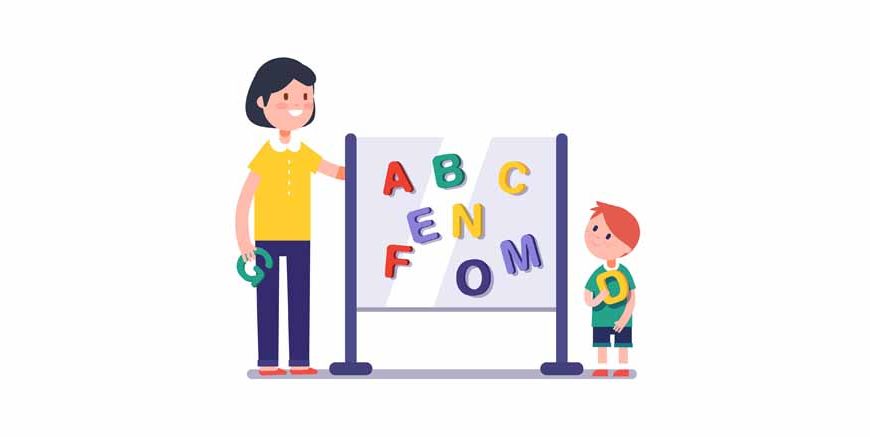
Magnetic Letters
Use magnetic letters on a board to change only the onset while keeping the rime the same.
These activities strengthen phonics through play.
Common Word Families
Some of the easiest rimes for beginners include:
- -at
- -an
- -ig
- -in
- -op
- -og
- -ell
- -ake
Practising these word families helps children recognise patterns across many new words.
Tips for Indian Parents
Parents play an important role in early literacy development.
Read Together Daily
Point out words that belong to the same word family.
Encourage Sound Play
Ask children to replace the first sound in familiar words to create new ones.
Use Everyday Objects
Find simple household items that belong to common word families.
Celebrate Small Successes
Praise children whenever they independently identify a new pattern.
Short, enjoyable practice sessions are often more effective than long lessons.
Read More – Simple & Jumbled Sentences for Class 1 Kids
Common Mistakes to Avoid
Children sometimes confuse individual letter sounds with word families.
Help them remember that:
- The onset comes before the vowel.
- The rime includes the vowel and everything after it.
- Some onsets contain two letters, such as br or st.
- Not every word has a single-letter onset.
Patient guidance helps children gradually master these concepts.
Quick Revision
Let’s review the key points.
- What is an onset rime? It is the division of a word into the beginning sound and the remaining word family.
- What is rime? It is the vowel and the letters that follow it.
- Onset-rime examples include cat, bat, sun, and dog.
- Word families improve reading and spelling.
- Fun games make literacy learning enjoyable and effective.
Conclusion
Understanding onset and rime is a simple but powerful way to help children become confident readers and writers. By learning what is an onset rime and recognising common word families, young learners develop stronger phonics skills, better spelling, and greater reading fluency. Regular practice with familiar patterns makes decoding new words much easier.
For Indian parents preparing children for success in a global learning environment, teaching what is rime through playful activities, books, and conversations creates a strong literacy foundation. With engaging onset and rime examples, children not only improve their reading and writing skills but also develop a lifelong love for language and learning.
To explore more learning ideas, simple explanations, and early childhood resources, parents can visit the EuroKids Blog. Those who wish to understand the preschool journey better or explore enrolment options can find complete information on the EuroKids Preschool Admission
Page, where learning is joyful, engaging, and child-friendly.