Life often throws curveballs that logic alone cannot solve. You teach your child to follow the rules and to be polite, but the real test of character happens when the rules suddenly change. Imagine a situation where your child faces a problem that is unfair, absurd or completely unexpected. How do they react? Do they panic, or do they pause? The ability to think on one’s feet is a skill that separates those who react from those who respond. It is what we call presence of mind. This cognitive agility is perfectly illustrated in one of the most beloved folktales of all time. The cap seller and monkey story is not just a funny anecdote about animals. It is a masterclass in emotional regulation and lateral thinking.
When you share this story with your child, you are providing them with a template for handling a crisis. You are showing them that sometimes, the solution to a problem requires you to stop fighting and start thinking. This blog will take you through the narrative of the cap seller and monkey story in English, decoding the psychology behind the monkeys’ behaviour and the seller’s brilliant strategy. We will explore how monkey stories like this one can teach your child to remain cool under pressure and turn a seemingly hopeless situation into a victory of wit.
Read More – Interesting Facts About Monkeys
The Classic Narrative: A Journey Through the Forest
The story begins on a day that was sweltering and still. A humble cap seller was travelling from village to village, his basket of colourful caps balanced precariously on his head. He had been walking for hours, calling out his wares to anyone who would listen. The heat was relentless. His legs grew heavy and his eyelids began to droop. He decided that he needed a brief rest before continuing his journey. He found a large, shady tree in the middle of a dense forest. It seemed like the perfect spot. He placed his basket carefully on the ground, sat down and soon drifted into a deep sleep.
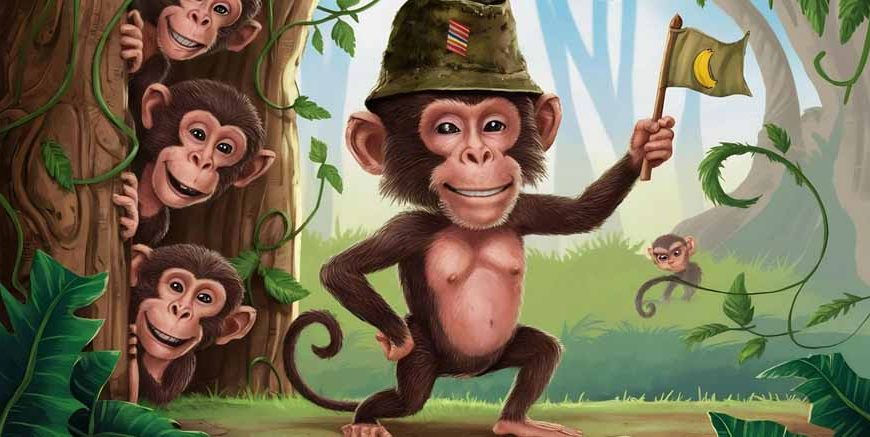
While he slept, the forest was not as empty as it seemed. High up in the branches, a troop of monkeys was watching him. They were curious creatures, naturally drawn to the colourful objects in the basket. One by one, they descended silently. They tiptoed to the basket, snatched the caps and scampered back up the tree. When the cap seller woke up, he was greeted by a nightmare. His basket was empty. He looked around in panic, his heart racing. Then he heard the chattering above him. He looked up to see the monkeys wearing his caps, mocking him from the safety of the branches. This moment in the monkey and the cap seller story writing sets the stage for a crucial lesson in conflict.
The Psychology of Imitation: Understanding the Antagonist
To understand the seller’s challenge, you must first understand the monkeys. They did not steal the caps because they needed them. They stole them because they saw the seller wearing one. Monkeys are creatures of instinct and imitation. In the context of monkey stories, they represent the chaotic, reactive parts of our environment. They mirror what they see without understanding the context.
This mimics the behaviour of young children or even difficult peers your child might encounter. When someone copies your child or teases them, it is often a reaction to what they are observing. The monkeys were not being malicious in a human sense; they were simply reflecting the seller’s behaviour. If the seller had realised this sooner, he might have saved himself a lot of frustration. This teaches your child that understanding why someone is acting a certain way is the first step to solving the problem. It shifts the focus from “they are being mean” to “they are copying me”.
Read More – Monkey Story For Kids
The Turning Point: Reaction vs. Response
The cap seller’s initial reaction was one of pure frustration. He shouted at the monkeys. He waved his fists at them. He even picked up stones and threw them into the trees. What did the monkeys do? They shouted back. They shook their fists. They threw twigs and fruit down at him. The more aggressive the seller became, the more aggressive the monkeys became.
This is a powerful lesson for your child. Aggression breeds aggression. If you fight fire with fire, you often just get a bigger fire. The seller realised that his anger was useless. He was exhausted and outnumbered. He had to stop reacting and start responding. He took a deep breath and observed the pattern. He noticed that the monkeys were copying his every move. This was the “Aha!” moment. He realised that the problem (their imitation) was also the solution. He touched his own cap. The monkeys touched theirs. He took his cap off. The monkeys took theirs off. He had found the key to the lock.
Moral: Presence of Mind is Power
The climax of the cap seller and the monkey is a triumph of intellect over force. The seller threw his own cap onto the ground. True to their nature, the monkeys immediately threw their caps onto the ground. The seller quickly gathered them up, placed them back in his basket and walked away before the monkeys could react.
The moral here is clear. Presence of mind is power. In a crisis, the person who remains calm and thinks clearly will always have the advantage. The seller won because he understood the rules of the game and used them to his benefit. He turned his disadvantage into a strategy. You can use this to teach your child that being the strongest or the loudest is not always the answer. Sometimes, you just need to be the smartest. It validates the idea that taking a pause to think is a sign of strength, not weakness.
Modern Parenting: Teaching Kids to Keep Cool
You can apply this story to modern scenarios your child faces every day. Perhaps they are dealing with a sibling who copies everything they do, or a classmate who tries to provoke them. Use the cap seller and monkey story as a reference point. Ask them “Are you reacting like the seller did at first, or are you thinking like he did at the end?”.
This encourages your child to detach from their immediate emotional response. It teaches them to look for patterns in the behaviour of others. If a bully is looking for a reaction, giving them one only feeds the cycle. By staying calm and changing their own behaviour, your child can often change the outcome of the situation. It empowers them to take control of their environment rather than being a victim of it.
The EuroKids Approach to Learning
At EuroKids, we believe that critical thinking is just as important as academic knowledge. We follow the Heureka curriculum which emphasises “Mindful Learning,” training children to pause, observe and analyse situations before they act. We use stories like the Cap Seller to spark discussions about problem-solving and emotional intelligence.
We want your child to be the one who finds the solution when everyone else is panicking. Our educators nurture this presence of mind through interactive play and guided storytelling, ensuring that your child is prepared for the complexities of the real world. We focus on building a mindset that is resilient, adaptable and consistently curious.
Conclusion
The cap seller and monkey story is a timeless reminder that wit often conquers might. It teaches your child that problems which seem impossible can be solved if they keep their cool and use their head. By sharing this story, you are equipping them with the mental tools to navigate a world that is often unpredictable and chaotic.
Your goal is to raise a child who is not just book-smart but life-smart. You want them to be calm in the storm. EuroKids is your partner in this journey. We invite you to visit our website to learn more about EuroKids Preschool Admission and find a centre near you. For more resources on child development and parenting strategies, please explore the EuroKids Blog section.
Frequently Asked Questions (FAQs)
1. What is the main moral of the cap seller and monkey story?
The main moral is that wisdom and presence of mind can solve problems that anger cannot. It teaches children that staying calm in a difficult situation allows you to think clearly and find a solution that might not be obvious at first.
2. Why did the monkeys throw the caps down?
The monkeys threw the caps down because they were imitating the cap seller. Throughout the story, they copied his gestures. When he threw his cap on the ground in frustration (or as a calculated move), their instinct to mimic him forced them to do the same.
3. How does the monkey and the cap seller story teach problem-solving?
It teaches problem-solving by showing that brute force often fails. The seller tried shouting and throwing stones, which didn’t work. He only succeeded when he analyzed the monkeys’ behavior and used it against them. This encourages lateral thinking.
4. Is the cap seller and monkey story in english suitable for preschoolers?
Yes, it is perfect for preschoolers. The narrative is simple, visual and funny. The repetitive actions of the monkeys make it easy for young children to follow and predict what will happen next, which keeps them engaged.
5. What can children learn about anger from this story?
Children can learn that anger is often counterproductive. The seller’s anger only made the monkeys more aggressive. It was only when he controlled his emotions and used his brain that he was able to get what he wanted.