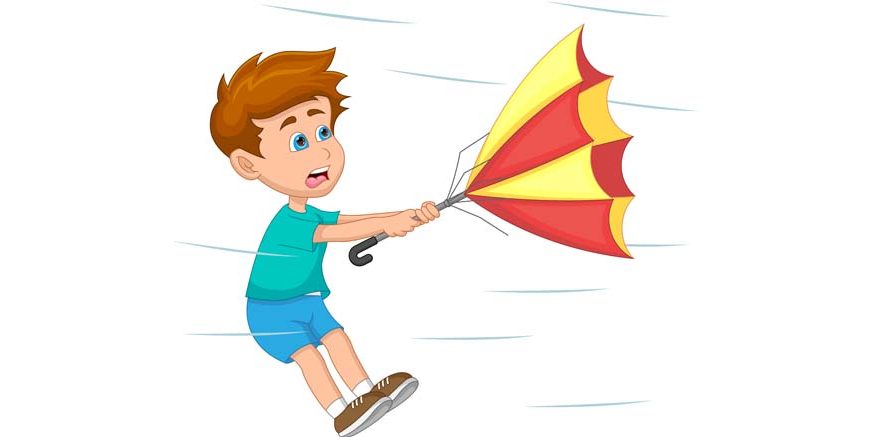
Invisible forces move things around us every single minute of the day. A colorful kite flies high into the clouds, a large sailboat glides smoothly across the ocean, and dry autumn leaves dance wildly across the street. The invisible pusher behind all this movement is something we feel on our faces but can never truly hold in our hands.
Today, we focus completely on this powerful, rushing air. We will look at exactly how it is created, learn why it sometimes blows gently and sometimes pushes fiercely, and discover how it acts as a massive, invisible highway connecting different parts of the entire globe.
The Core Concept: Scientific Definition of Wind
To truly understand what is happening outside your window, we need to ask a basic question. What is the scientific definition of wind? Simply put, it is the natural movement of air from one place to another. But why does the air decide to move in the first place? It does not have an engine or a motor.
The answer actually starts millions of miles away with the bright sun up in space. The sun shines down and warms the Earth, but it does not warm every single spot equally. Dark, black asphalt roads and sandy deserts get incredibly hot very quickly, while snowy mountains and deep, shaded oceans stay much cooler. This uneven heating of the planet is the exact engine that pushes the air around.
Read More – Advantages and Disadvantages of Wind Energy
The Great Balancing Act: How the Air Moves
When we gather information about wind, we have to look at what happens to air when it gets hot. When the sun heats the ground, the air sitting right above that ground also warms up. Hot air is very light and stretchy. Because it is so light, it quickly floats straight up into the sky.
When that hot air floats away, it leaves an empty, low-pressure space behind on the ground. Nature absolutely hates empty spaces! To fix this, the heavier, cooler air resting over a colder area nearby immediately rushes in to fill up that empty gap. That rushing, cool air is exactly what you feel blowing through your hair!
A perfect example of this happens at the beach. During a sunny day, the dry sand gets much hotter than the wet ocean water. The hot air over the sand floats up, and the cool air from the ocean rushes in to replace it. This creates a wonderful, refreshing breeze blowing off the water to keep you cool while you build sandcastles.
Read More – Renewable Resources & Energy Uses
Amazing and Fun Wind Facts
There is so much to learn about wind beyond just how it starts. Let us look at some amazing wind facts that show just how important this invisible force is to our daily lives.
1. A Natural Delivery Service
It acts like a giant, worldwide delivery truck. Many plants and trees cannot walk around to plant their seeds in new dirt. Instead, they grow tiny, lightweight seeds with little parachutes (like dandelions). A strong breeze picks these seeds up and carries them hundreds of miles away, helping brand new forests grow in completely different areas.
2. Creating Clean Power
Humans have learned how to capture this moving air to do heavy work. We build giant, tall pinwheels called turbines. When the breeze pushes against the massive blades, it spins them in a circle. This spinning motion goes into a generator and creates clean electricity to power our house lights and televisions without creating any dirty smoke.
3. Measuring the Speed
We cannot measure moving air with a ruler. Instead, meteorologists (scientists who study the weather) use a special tool called an anemometer. This tool looks like a small pole with little metal cups attached to the top. When the breeze catches the cups, it spins them around. The faster the cups spin, the faster the air is moving!
4. Helping Animals Travel
Many birds use strong, moving air currents to travel massive distances without getting tired. Eagles and hawks find columns of rising hot air (called thermals) and spread their wings wide. They let the rising air push them up into the sky like a natural elevator, saving their energy for long trips.
Read More – Sources of Energy: Types, Examples & Uses Explained
From Gentle Breezes to Dangerous Storms
Most of the time, the moving air is very gentle and helpful. It dries our wet clothes on the clothesline and cools our sweaty skin after we run outside. However, when the differences in temperature between the hot and cold areas get too extreme, the air rushes in far too quickly.
This creates severe weather events. A gale is a very strong, noisy gust that can easily snap thick branches off trees. A hurricane is a massive, spinning storm over the hot ocean that brings dangerous, destructive speeds to coastal cities. A tornado is a tightly spinning funnel of air that drops down from a thunderstorm and acts like a giant vacuum cleaner, tearing up anything it touches on the ground. Understanding how these extreme events form helps scientists warn people early so they can stay safe inside their homes.
Read More – Renewable Energy for Kids
Conclusion
To summarize our lesson, wind is simply the natural movement of air rushing from a cooler, high-pressure area to fill in an empty, low-pressure area created by rising hot air. Driven entirely by the uneven heating from the sun, this invisible force does massive amounts of work. It spreads plant seeds, powers giant electric turbines, helps birds migrate, and keeps the Earth’s temperatures perfectly balanced.
The very next time you step outside and feel a cool breeze brush against your cheek, think about its incredible journey. That specific gust of air might have started as a warm draft over a dry desert, rushed across a wide ocean, and traveled thousands of miles just to ruffle your hair today. It proves that we do not live in isolated bubbles; the moving sky directly connects every single person, plant, and animal on this shared, spinning planet.
To read more fun and educational articles, check out the EuroKids Blog, and visit our website for details on EuroKids Admission.
Read More – Facts About Cyclone: Key Terms, Effects & Safety Tips
FAQs
Can we ever actually see it?
No, air is completely invisible, so we can never see the wind itself. We can only see the things it pushes, like swaying trees, flying kites, or swirling dust.
What is a sudden gust?
A gust is a very quick, sudden burst of fast-moving air that only lasts for a few seconds before slowing down again.
Why does it sometimes make a loud, howling sound?
When fast air rushes past obstacles like bare tree branches, power lines, or narrow window cracks, it causes the air to vibrate quickly, which creates the howling sound waves we hear.
Does it blow on other planets in space?
Yes! Any planet that has an atmosphere (a layer of gases) will have moving air. The planet Neptune has the fastest and most violent storms in our entire solar system!