Imagine you are playing a brilliant game of catch in the garden on a sunny afternoon. Your friend suddenly throws a red ball high into the air in your direction. Without you even needing to think about it out loud, your eyes track the flying ball, your arms reach outwards, your fingers open wide, and smack, you catch it perfectly! But how did your hands know exactly when to snap shut? Who was giving the rapid orders to your muscles?
The answer lies hidden right beneath your skin. You possess a built-in supercomputer that is far more powerful, complex, and much faster than any mobile phone or modern tablet on the market. Today, we are going to explore this magnificent internal network and uncover some truly brilliant facts about the ultimate control centre of the human body.
What is Our Nervous System Class 5?
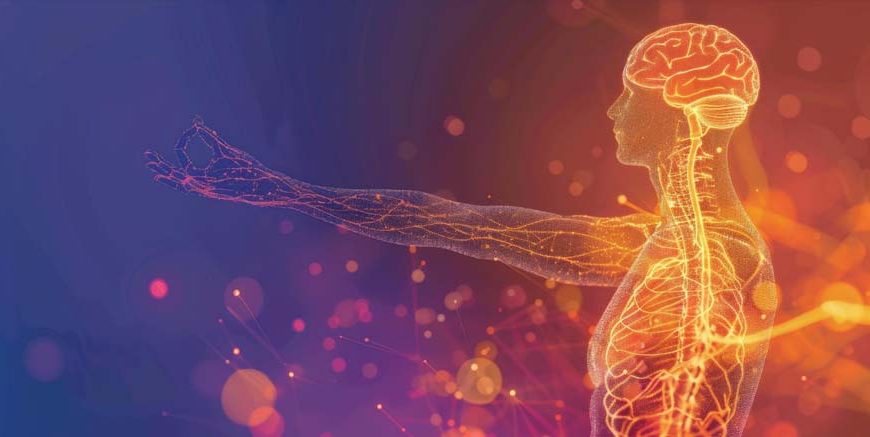
When exploring the wonders of human biology, one of the absolute most exciting topics is the body’s internal communication network. If you are learning about our nervous system class 5 style, it is easiest to picture it as a giant, bustling highway of information. This vast system is entirely responsible for everything you do, think, remember, and feel. It tells your heart to keep beating when you are fast asleep, it helps you balance on a wobbly bicycle, and it even lets you feel the soft, warm fur of a sleepy kitten. To do all of this, the network relies on three main, vital parts: the brain, the spinal cord, and millions of tiny, branching nerves.
Read More – Teaching Human Body Systems to Students
The Brain
The absolute star of the show is your brain. Sitting safely protected inside your hard, bony skull, the brain acts as the ultimate boss of the entire physical operation. It looks a bit like a giant, wrinkly grey walnut, but it is constantly buzzing with unseen electrical energy. The brain is neatly divided into three main sections to help share the heavy workload.
The cerebrum is the largest part, and it handles all your deep thinking, vivid memories, and everyday learning. It is the part you actively use when solving a tricky maths puzzle. The cerebellum sits neatly at the back of the head and acts as your personal balance centre, ensuring you can walk in a straight line without tumbling over. Finally, the brain stem directly connects the brain to the rest of the body and handles all the automatic, life-saving jobs you never even think about, like breathing fresh air and digesting your lunch.
The Spinal Cord
Directly below the brain is the spinal cord. You can imagine it as a thick, highly secure bundle of electrical cables running straight down the middle of your back, safely protected by the knobbly bones of your spine. The spinal cord acts as the body’s main information highway. Every single message from the brain must travel rapidly down this thick cable before it can finally reach your legs, arms, or toes. If this central highway is accidentally damaged, the vital messages simply cannot get through, which is exactly why wearing protective gear to protect your spine during extreme sports is so incredibly important!
Read More – Body Organs for Kids
Nerves in the Body
Learning about the nervous system for grade 5 is not truly complete without talking about the tiny, hard-working messengers themselves: the nerves. These act like incredibly thin, microscopic wires that branch out from the main spinal cord to reach every single remote corner of your body, right down to the very tips of your little toes.
There are two main types of nerves working together as a brilliant team. Sensory nerves continuously collect information from the outside world, like the sweet smell of baking bread or the freezing cold touch of a winter ice cube, and send that urgent message rushing up to the brain. Once the bossy brain decides what to do, it quickly uses motor nerves to send a firm command back down to your muscles, telling them exactly how to react and move.
The Magic of Reflex Actions
Sometimes, you might touch something so incredibly dangerous that your brain does not even have the necessary time to process the information safely. Imagine accidentally touching a boiling hot pan left on the kitchen cooker. If the pain message had to travel all the way up to your brain to wait for a slow decision, your hand would be badly burned.
Instead, your brilliant body uses something called a reflex action. The sensory nerves shout a warning of danger, and the message only travels as far as your spinal cord. The spinal cord instantly skips the brain and fires a message right back down to your hand, demanding you to pull away immediately. You instantly drop the hot pan before your brain even fully realises what just happened! It is your body’s amazing, built-in emergency survival system.
Read More – Facts About Human Body for Preschoolers
Mind-Boggling Facts to Remember
To make your next science project truly stand out in the classroom, here are some mind-boggling facts about your internal network. Did you know that the tiny electrical messages travelling through your nerve pathways can zoom at unbelievable speeds of up to 250 miles per hour? That is faster than a professional high-speed racing car!
Also, even though your brain is the specific organ that processes all the painful feelings in your body, the brain itself cannot physically feel any pain at all because it entirely lacks pain receptors. Finally, your brain is an incredibly greedy energy consumer; even though it only makes up a tiny, two per cent fraction of your overall body weight, it uses a massive twenty per cent of all the physical energy and oxygen you consume every single day!
Conclusion
When you stop and truly think about the science hidden beneath our skin, you realise that the human body is the most spectacular, complex, and flawlessly engineered machine ever created. Without this buzzing, humming network of invisible electrical signals, we simply would not be able to laugh out loud at a funny joke, run wildly across a grassy field, or taste our favourite sweet treats.
Your brain, spine, and nerves work tirelessly as a team, day and night, to keep you safe and actively help you explore the wonderful, vibrant world around you. It serves as a beautiful, daily reminder of how uniquely capable, incredibly strong, and naturally brilliant you truly are. To discover more wonderful, engaging educational topics and find the perfect environment to nurture your child’s boundless curiosity, read more on the EuroKids Blog and explore all the essential details regarding EuroKids Preschool Admission today.
FAQs
What are the three main parts of the human nervous system?
The system is entirely made up of the brain (the central control boss), the spinal cord (the main information highway), and the branching nerves (the tiny, electrical messengers).
What exactly is a reflex action?
It is a super-fast, automatic physical reaction to sudden danger, like immediately pulling your hand away from a hot stove, where the spinal cord quickly makes the physical decision before the brain even receives the message.
How fast do these electrical messages travel inside the body?
The urgent electrical signals passing through your nerve pathways can safely travel at incredibly rapid speeds of up to 250 miles per hour, allowing your body to react to the world instantly.