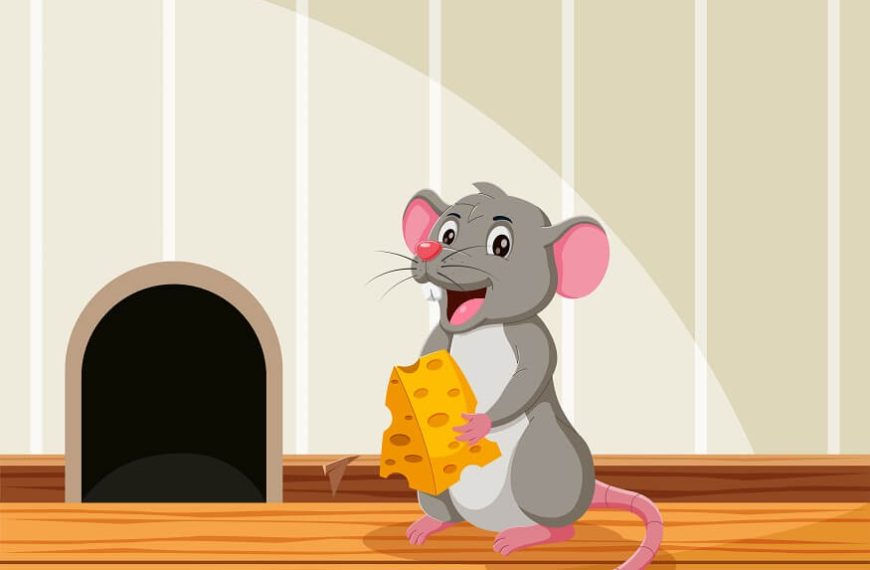
Have you ever heard a faint, tiny scratching sound coming from behind a cupboard and wondered who might be secretly sharing your home? Most of us jump onto a chair at the mere sight of one, but the truth is, these tiny creatures are incredibly fascinating. They are arguably some of the most misunderstood little survivors on our planet. Instead of reaching for a broom, taking a moment to understand them reveals a world of remarkable survival skills and hidden intelligence.
Whether you are trying to help your child with a school project or just looking to satisfy your own curiosity, gathering accurate details about these scurrying critters is always a fun exercise. Let us look closely at their habits, clear up a few cartoon myths, and discover some truly amazing facts.
The Living, Breathing Mouse Animal
In our modern world, if you ask a child about mouse functions, they might immediately point to the plastic device sitting next to their computer keyboard! So, it is always best to clarify right from the start that we are talking about the living, breathing mouse animal.
These creatures belong to a massive family of animals known as rodents. The word ‘rodent’ actually comes from an old Latin word meaning ‘to gnaw’, which is exactly what these little guys spend most of their day doing. You can find them living on almost every single continent in the world. From the freezing, snowy fields of the countryside to the busy, warm tunnels beneath our modern cities, they are ultimate survivors. They adapt to their surroundings faster than almost any other mammal on Earth.
Read More – Fun & Exciting Mickey Mouse Short Story
Fascinating Mouse Characteristics
To truly appreciate these tiny animals, you need to look at how their bodies are built. The physical mouse characteristics are nothing short of a biological marvel, designed purely for speed, balance, and survival.
Firstly, let us talk about their teeth. Their front teeth, called incisors, never stop growing! If they did not constantly chew on hard things like wood, tough seeds, or even electrical wires, their teeth would grow so long that they wouldn’t be able to close their mouths.
Secondly, take a look at their whiskers. Those long hairs on their snouts are not just there to look cute. A mouse has terrible eyesight, so it uses its whiskers to feel its way around in the pitch black. The whiskers can sense tiny changes in the air, telling the animal if it is about to bump into a wall or if a predator is sneaking up from behind. Finally, their long, hairless tails act like tightrope walkers’ poles, giving them the perfect balance to run along narrow pipes and thin branches without falling off.
Few Lines on Mouse for Young Learners
Sometimes, children come home from school needing to write a quick summary for their homework. If you are looking for reliable mouse information in English, breaking it down into simple, easy-to-remember points is the best approach.
Here is a perfect collection of 5 sentences about mouse facts that are highly descriptive but easy enough for a young child to memorise:
- A mouse is a very small mammal with a pointed snout and tiny, round ears.
- They have incredibly sharp front teeth that they use to nibble on seeds, grains, and fruits.
- Their long, thin tails help them keep their balance when they are climbing and running quickly.
- They are mostly nocturnal, which means they prefer to sleep during the day and come out to play and look for food at night.
- A mother mouse can have lots of babies at once, and a baby mouse is adorably called a ‘pup’.
If you need a super simple mice sentence for class 1, you can use this one: The little brown mouse ran quickly into its hole to eat a tasty seed.
Read More – A Short Story of The Lion and the Mouse
Crafting an Essay on Mouse Behaviours
If older children need to write an essay on mouse habits, it is important to look beyond their physical traits and explore how they actually live.
Despite what classic television cartoons have taught us for decades, cheese is not actually their favourite food! Because they have very sensitive noses, the strong smell of aged cheese actually repels them. In the wild, their natural diet consists heavily of grains, seeds, roots, and sweet fruits.
Furthermore, they are highly intelligent and social creatures. They hate living alone. In the wild, they build complex underground burrows with different ‘rooms’ for storing food, sleeping, and raising their pups. They also have excellent memories. Once a mouse learns a specific route through a house or a maze, it remembers that exact pathway for the rest of its life, which makes catching them quite a difficult task!
Summary
When we stop to really observe the natural world, even the smallest, most frustrating creatures have a story worth telling. It is incredibly easy to dismiss a tiny rodent as just a household nuisance. However, their ability to adapt to almost any environment, their complex social structures, and their brilliant physical designs are a testament to the sheer resilience of nature.
They remind us that size does not dictate success. You do not have to be the biggest or the loudest creature in the forest to thrive; sometimes, being quick, observant, and clever is all you need to survive. The next time you see a tiny shadow dart across the garden path, perhaps you will view it with a little less fear and a little more respect for the tiny, brilliant survivor it truly is.
To explore more engaging educational topics and discover wonderful ways to support your child’s learning journey, take a moment to read the EuroKids Blog, and find out everything you need to know about EuroKids Preschool Admission.
FAQs
1. What is the difference between a mouse and a rat?
The most obvious difference is size. Rats are significantly larger and heavier. Mice have smaller, more delicate bodies, larger ears compared to their head size, and much longer, thinner tails.
2. How long do these small rodents usually live?
In the wild, life is quite dangerous, so they usually only live for about 12 to 18 months. However, if they are kept safely indoors as domestic pets, they can easily live for up to two or three years.
3. Do mice actually carry diseases?
Yes, wild ones can carry certain germs and bacteria in their droppings. This is why it is always important to keep human food stored in sealed containers and wash your hands after cleaning out a dusty cupboard!