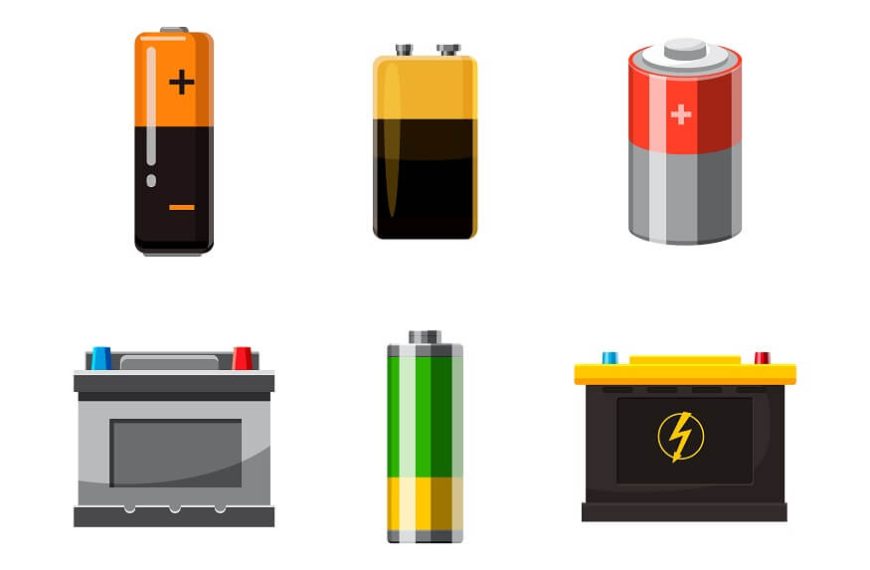
You are right in the middle of an intense video game, or perhaps your favourite remote-control car is zooming across the living room floor. Suddenly, everything stops. The flashing lights blink out, the screen goes dark, and the toy sits completely lifeless. What is the very first thing you do? You flip it over, pop open a tiny plastic door, and replace the little metal cylinders hidden inside.
These everyday items are the unsung heroes of our modern households. They are the reason our portable world keeps spinning without constantly tripping over tangled wires. Today, we are going to look closely at this incredible invention, understand the brilliant science hiding inside that small metal wrapper, and discover why it is so vitally important to our daily lives.
What Exactly is a Dry Cell?
Let us start with a simple dry cell definition. If a curious child tugs your sleeve and asks, “what is dry cell?”, you can tell them it is a tiny, portable power station that creates electricity using a clever chemical paste.
We usually just call them batteries! A dry cell battery is specifically called ‘dry’ because the chemicals inside are not a sloshing, dangerous liquid. If you look at a car battery, it is filled with liquid acid. But in our small household batteries, the chemicals are mixed into a thick, damp paste. This brilliant design means you can hold the battery upside down, shake it around, or carry it in your pocket, and absolutely nothing wet or dangerous will spill out onto your hands.
Read More – Electric Current: Definition, Types and Effects
The Anatomy of Power
If you were to open up a science textbook and look at a dry cell diagram for class 6, you would see a surprisingly simple layout.
In the very centre of the battery sits a solid black carbon rod. Wrapped tightly around this rod is the thick chemical paste, and the whole thing is packed neatly inside a small cup made of a metal called zinc.
These parts have special scientific names. The outer zinc cup acts as the negative side, whilst the carbon rod in the middle acts as the positive side. These two opposite ends are known as the dry cell anode and cathode. For older students exploring a dry cell class 12 chemistry lesson, they learn the complex formulas showing exactly how these specific chemicals react together. The chemicals ‘argue’ with each other, creating invisible energy particles called electrons that desperately want to move from the negative side over to the positive side!
Completing the Circuit
To make the magic happen, those eager electrons need a pathway. Think of it exactly like a racing track. The cars cannot race until the track forms a complete circle.
When an apparatus is connected to an ideal battery, for instance, when you snap the battery into a heavy-duty torch and push the power switch, you finish the racetrack. The chemical reaction inside kicks into high gear, the electrons zoom out of the battery, travel through the wires of the torch to light up the bulb, and then travel right back into the other side of the battery. The energy flows perfectly until the chemical paste finally runs out of power.
Read More – Uses of Electricity and Its Applications In Day to Day Life
Where Do We Use Them?
You do not have to look very far to find an example of dry cell technology in your house. They are absolutely everywhere. Here are some common dry cell battery examples that you likely interact with every single day:
- Television Remotes: Usually powered by the thin, cylindrical AA or AAA batteries, allowing you to change channels from the comfort of your sofa.
- Wall Clocks: Ticking away quietly in the kitchen for months, or even years, on a single battery.
- Torches and Lanterns: Essential tools for camping trips in the woods or when the house power goes out during a heavy thunderstorm.
- Children’s Toys: Making toy trains whistle, robotic dogs bark, and musical books play their catchy tunes.
- Hearing Aids and Watches: These devices use tiny, flat, silver versions commonly known as button cells or coin cells.
The Brilliant Advantages
Why do we rely so heavily on these specific batteries instead of just plugging everything directly into the wall sockets? The advantages of dry cell technology are truly fantastic.
Firstly, they are incredibly safe because there is no liquid acid to spill on our skin or clothes. Secondly, they are highly portable. They give us the ultimate freedom to take music, light, and communication with us wherever we go, whether we are climbing a high mountain peak or exploring a deep, dark cave. Finally, they are relatively inexpensive to manufacture, easy to store in a kitchen drawer, and very simple to replace when they eventually run out of juice.
Summary
It is quite remarkable to realise how heavily we rely on these small metal cylinders. Before this technology was invented, humans were physically tied to the wall if they wanted to use electricity. The invention of portable power completely changed human history. It untethered us. It allowed explorers to carry torches into the unknown, it allowed radios to broadcast news on battlefields, and it allowed your children to run freely through the garden with their favourite buzzing toys.
The next time you pop a fresh battery into a TV remote, take a brief second to marvel at the chemical brilliance packed inside that little metal cup. It is quite literally captured lightning, waiting quietly in your hand to bring the world to life.
To explore more wonderful science facts, parenting insights, and engaging educational strategies to spark your child’s imagination, step into the EuroKids Blog, and discover everything you need to know about beginning an incredible learning journey through EuroKids Preschool Admission.
FAQs
1. Can a dry cell battery be recharged?
Standard ones (like alkaline batteries) cannot be recharged and must be recycled safely when they die. However, you can buy special rechargeable versions (like NiMH batteries) that can be plugged into the wall and used hundreds of times!
2. Why do batteries sometimes leak white crusty stuff?
If a battery is left inside a toy for a very long time without being used, the chemicals inside can slowly eat through the zinc metal casing, causing the paste to leak out and crystallise into a white crust. Always remove batteries from toys you aren’t using!
3. Which is the positive end of an AA battery?
The positive end (the cathode) is always the side with the little metal bump sticking out. The negative end (the anode) is the completely flat side. Look for the tiny ‘+’ and ‘-‘ symbols printed on the wrapper!