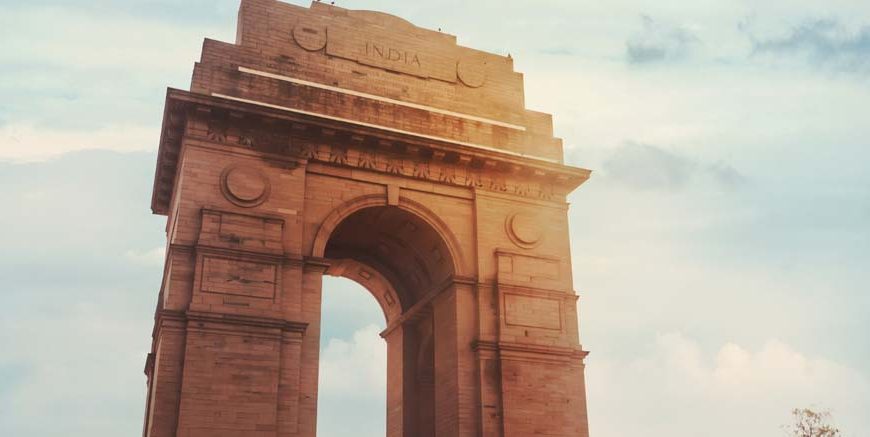
You try to find new ways to make homework interesting for your kids. History assignments usually end up being the most frustrating task of the week. Kids stare at blank notebook pages because old dates and distant wars feel completely disconnected from their daily lives. They struggle to find the right words to explain complex events. You need to show them that monuments are not just dead piles of rocks.
They represent real people who had families, fears, and dreams. Let us look at a specific example to help your child succeed. If you are searching for accurate India Gate information in English, you have found the exact right resource. We will walk through how to structure their essay so it actually makes sense to a young mind. You can pick the short pointers for a quick class test or use the detailed paragraphs for a major term paper.
The Homework Struggle with 10 Lines
Younger children learn best through very simple and direct logic. They do not respond well to complicated political history or long paragraphs. When a primary school teacher asks for exactly 10 lines on India Gate, you should focus entirely on clear facts. You can use these specific points to build a strong foundation for their homework.
- India Gate stands proudly in the very centre of New Delhi as a grand symbol of national pride.
- The famous British architect Sir Edwin Lutyens designed this magnificent stone archway many decades ago.
- The towering monument honours the brave soldiers of the undivided Indian Army who never returned home.
- These courageous men lost their lives fighting in foreign lands during the First World War.
- You can clearly see the names of thousands of soldiers carved directly into the hard stone walls.
- A very special flame called the Amar Jawan Jyoti burns continuously under the main arch.
- This bright eternal flame pays deep respect to the immortal soldiers of our country.
- The entire structure looks incredibly beautiful when fully lit up with lights at night.
- Families from all over the city love visiting the surrounding green lawns for evening picnics.
- Every single Republic Day parade passes right by this grand national monument to show respect.
Read More – Best Places to Visit in Delhi with Kids
Drafting a Solid Short Note
Middle school teachers often test a student’s ability to compress large facts into a small space. When your child has to write a short note on India Gate, they must get straight to the point. A few lines on India Gate should quickly capture both its physical beauty and its heavy emotional weight.
This towering 42-metre tall sandstone arch heavily dominates the Rajpath in New Delhi. The colonial British government originally built it to remember the 90,000 brave soldiers who died serving in the First World War and the Third Anglo-Afghan War. If you walk up close to the base, you can see over 13,000 individual names etched deeply into the pale stone surface. Today, it acts as a highly powerful reminder of raw courage. People from all over the country gather here every single evening to pay their respects and enjoy the beautiful surrounding green lawns. It perfectly blends serious national history with a very lively public space.
Exploring the Deep Historical Roots
High school teachers expect students to provide deep context in their essays. A simple timeline of dates will not fetch top marks. Understanding the complete India Gate history requires looking closely at the global politics of that specific era.
The physical story of this monument begins in 1921. The Duke of Connaught visited Delhi to lay the very first foundation stone in a grand public ceremony. The actual construction work took a full ten years to complete due to its massive scale. Sir Edwin Lutyens drew his main visual inspiration from the famous Arc de Triomphe in Paris. He purposely wanted to create a highly secular structure. He made sure the design looked powerful but remained completely free of any specific religious decorations. Workers used beautiful red and pale sandstone transported all the way from Bharatpur to build the sturdy arch.
The historical context carries a much heavier weight than just the architecture. The British Empire relied heavily on Indian troops during massive global conflicts. These men fought in terrible, freezing conditions across France, Flanders, and Mesopotamia. They left their small villages and travelled across massive oceans to fight a war that was not truly theirs.
For many decades, the monument stood as a quiet tribute to that specific colonial period. However, after India gained independence, the site took on a highly emotional new meaning for a newly free nation. In 1972, the Indian government added the Amar Jawan Jyoti right beneath the main arch. They did this specifically to honour the brave soldiers who died fighting in the Indo-Pakistani War of 1971.
Read More – Interesting Facts About India
Connecting the Past to the Present
Why does this massive stone structure still matter to a young child today? The true importance of India Gate lies in its unique ability to unite completely different people.
You can stand near the eternal flame on a busy Tuesday afternoon and feel a deep sense of shared respect. It absolutely does not matter which Indian state you come from or what local language you speak at home. The monument forces every single visitor to pause and think about the brutal cost of freedom. Teaching kids about this level of sacrifice builds strong personal character. They learn that national security requires immense bravery from ordinary families.
Schools carry a huge responsibility in explaining these mature concepts early on. A well-planned educational approach helps immensely. For instance, the Heureka curriculum actively encourages young minds to ask difficult questions about their rich heritage and national symbols.
When a child learns the human story behind the stone monument, their entire perspective shifts. They stop seeing it as just another weekend tourist spot for taking pictures. They start viewing it as a sacred memorial that demands silent respect. This exact shift in thinking turns a young student into a highly responsible and patriotic citizen of the country.
Read More – My Country Essay in English for Students
Conclusion
Stone and mortar eventually weather away under the hot sun, but the stories we attach to them last forever. This monument stands as a silent witness to the countless brave souls who put their country above their own lives. When you help your child write about this magnificent arch, you do a lot more than just help them finish their school homework. You actively pass down a crucial piece of national memory. You ensure that the ultimate sacrifices of the past remain respected in the modern era. Taking the time to understand our shared heritage builds a much stronger, more united future for the next generation. To discover more helpful study guides and parenting tips, you can read the EuroKids Blog or ask about EuroKids Preschool Admission for your child today.
FAQs
Who designed the monument in New Delhi?
Sir Edwin Lutyens designed the entire monument. He was a very prominent British architect who planned and designed much of modern New Delhi.
Why did the government build this specific arch?
The government built it originally to honour the thousands of soldiers of the Indian Army who died fighting in the First World War.
What exactly is the Amar Jawan Jyoti?
It is a bright eternal flame placed directly under the arch. It pays daily tribute to the immortal soldiers who laid down their lives defending the country.
Where can tourists find this historical site?
Tourists can find it sitting at the eastern end of the Rajpath in the very heart of New Delhi.