Children notice everything. They see the plastic wrapper floating in the park pond. They ask why the sky looks smoky during winter mornings. As a parent, you often find yourself stuck. You want to give them an honest answer, but you do not want to scare them. Explaining global warming to a first grader is a recipe for anxiety. You need a simpler approach.
When your child comes home with an assignment to write a pollution essay, it is actually a fantastic opportunity. It is a chance to teach them about responsibility. They learn that their actions have consequences. This guide is built exactly for that purpose. We are going to break down complex environmental concepts into bite-sized, easy pieces. Whether they need a ten-line list or a proper paragraph, you will find exactly what you need right here. We will focus on making the learning process engaging, factual, and deeply logical for a young mind.
The Simple Pollution Definition for Kids
Before your child can write, they must understand the core concept. Do not use textbook jargon. Use their daily life as an example.
Ask them to imagine their favourite glass of clean drinking water. Now, ask them what happens if someone drops a handful of dirt into that glass. The water becomes dirty, unsafe, and unusable. That is the perfect pollution definition for a child. It simply means making our clean Earth dirty. When we add harmful things to our air, water, or land, we are polluting our home. Teaching them this basic logic ensures that any environmental pollution essay they write comes from a place of genuine understanding, not just rote memorisation.
Read More – National Pollution Control Day
The Four Villains: Types of Pollution
To write a structured paragraph on pollution, a child in Class 2 or 3 needs to know the different types. Break them down into four easy characters.
1. Air Pollution (The Smoky Sky)
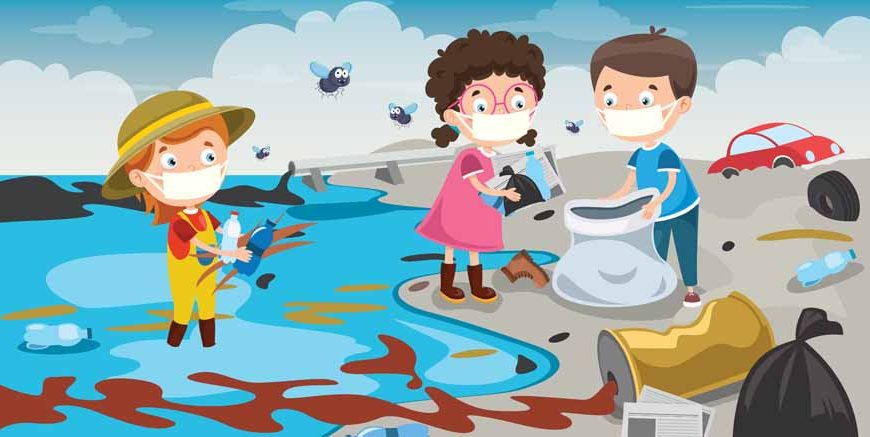
Explain that just like we breathe, the Earth needs to breathe. When cars, factories, and burning garbage release thick black smoke, the air gets sick. This makes us cough and hides the bright blue sky.
2. Water Pollution (The Dirty River)
Talk about their favourite sea animals. When people throw plastic bags, chemical waste, or old toys into rivers and oceans, the fish get very sick. The water becomes toxic.
3. Land Pollution (The Messy Park)
This is the easiest one for kids to grasp. Ask them how they feel when their playroom is completely trashed. Land pollution happens when we throw our sweet wrappers and plastic bottles on the grass instead of in the recycling bin.
4. Noise Pollution (The Loud Headache)
Children hate loud, sudden noises. Explain that constant honking in traffic or blasting loud music hurts not just our ears, but also scares away little birds and animals.
Read More – Noise Pollution Essay for Kids
Understanding the Impact
Kids are incredibly empathetic. If you want them to deliver a powerful speech on pollution at their school assembly, they need to feel the emotion behind the words.
Let us discuss the impact of pollution on the environment in kid-friendly terms. Tell them that because of pollution, the Earth is running a fever. The ice where the polar bears live is melting. The beautiful coral reefs are losing their colours. Little birds are finding it hard to breathe in the cities. By connecting the problem to animals and nature, you trigger their natural protective instincts. They stop seeing the essay as homework and start seeing it as a mission to save their animal friends.
10 Lines on Pollution for Classes 1 and 2
If you need a very basic, easy-to-learn structure for a test or a quick assignment, these ten lines are perfect. They are short, punchy, and logically ordered.
- Our Earth is a beautiful home filled with trees, animals, and water.
- Making our clean environment dirty is called pollution.
- There are four main types of pollution.
- These are air, water, land, and noise pollution.
- Smoke from cars and big factories causes air pollution.
- Throwing plastic waste into rivers causes water pollution.
- Pollution makes humans, plants, and animals very sick.
- We must always throw our rubbish in the correct bin.
- Planting more green trees helps to clean the air we breathe.
- We must all work together to keep our beautiful Earth clean and safe.
Read More – Essay on Global Warming
Short Paragraph on Pollution (150 Words) for Class 3
For a slightly older child, teachers usually expect a connected narrative. Here is a highly effective short essay on pollution in english that flows naturally.
Pollution is one of the biggest problems our planet faces today. It means making the Earth dirty and unsafe by adding harmful things to nature. We see air pollution when thick smoke from cars and factories fills the sky, making it hard for us to breathe. Water pollution happens when people throw plastic bags and chemicals into rivers, which hurts the fish and spoils our drinking water. When we litter in parks, we cause land pollution. All of this makes our planet sick and harms beautiful animals. However, we can fix this problem. We can stop pollution by planting more trees, using paper bags instead of plastic, and throwing our garbage in the dustbin. If every child takes care of nature, we can make the Earth green, clean, and happy again.
Turning Words into Action at Home
Writing a pollution essay in english 150 words is a great academic exercise. But education must leap off the page. You have to show them how to be the solution.
Start small. Have a “No Plastic Tuesday” at home. Teach them how to turn off the tap while brushing their teeth to save water. Give them a small pot and a seed. Let them water it every day. When they see a plant grow because of their care, they understand environmental protection on a deeply personal level. They realise that their small hands can actually make a big difference.
The EuroKids Philosophy and Your Next Step
At EuroKids, we do not just teach children about the environment from a textbook. We make them experience it. We believe that true learning happens through engagement and curiosity. This is exactly why we use the HEUREKA curriculum, which is inspired by Harvard University’s Project Zero. It makes a child’s thinking visible, teaching them to ask questions about the world around them rather than just accepting facts blindly.
If you want your child to learn in an environment that values deep thinking and practical knowledge, exploring the EuroKids Preschool Admission process is a brilliant choice. We invite you to visit a centre, speak to our educators, and see our child-first philosophy in action. You can also visit the EuroKids Blog for more resources on early childhood development and homework help.
As you focus heavily on setting the right educational foundation for your child, it is completely normal to think about your own future too. Raising a smart, responsible child takes resources and a stable career. If you are looking to accelerate your professional growth while managing your family life, looking into executive education options is a smart move. Programmes offered by TimesPro can give you the vital management skills and industry edge you need to secure your family’s future, ensuring you grow right alongside your little one.
Frequently Asked Questions (FAQs)
How do I explain the pollution definition to a 6-year-old?
Keep it visual. Take a glass of clean water and drop a pinch of dirt into it. Explain that pollution is exactly like that dirt. It ruins something clean and healthy, making it bad for us and the animals.
What should a speech on pollution include for a primary school student?
A good speech needs a strong opening, a simple explanation of the problem, and a positive ending. Start by greeting the teachers. Explain what pollution is using simple words like “smoke” and “plastic.” End the speech by telling the audience one thing they can do to help, like planting a tree.
Are there any fun ways to teach kids about the impact of pollution on the environment?
Yes. You can do a simple science experiment. Take two white flowers. Put one in clean water and one in water mixed with food colouring. Watch how the coloured water travels up the stem and changes the flower. Use this to explain how plants drink up pollution from the ground.
My child has to write a short essay on pollution in english. How can I help?
Do not write it for them. Ask them questions instead. Ask, “What happens when we throw plastic in the river?” Let them answer. Then, help them write their answer down as a complete sentence. This builds their own writing skills.
How does EuroKids tackle environmental awareness in the classroom?
We integrate nature into our daily activities. Through our specific learning framework, children participate in hands-on activities like sorting recycling, gardening, and nature walks. They learn to love the environment first, which makes them naturally want to protect it.