If you ask a five-year-old what they want to be when they grow up, the answers are usually brilliant. One day they might want to fly a rocket to the moon, and the next, they might be absolutely convinced that their destiny is to become a dinosaur trainer. This boundless imagination is one of the best parts of childhood.
However, as they grow and begin to explore their local neighbourhood, they start to notice the real-world heroes who keep our communities ticking along safely and happily. Teaching your little ones about the people around them is a wonderful way to build their vocabulary and their understanding of the world. Let us take a joyful stroll through the community and discover the wonderful people who make it all work.
Understanding an Occupation Name
When a child asks why mummy or daddy has to leave the house every morning, we usually say we are ‘going to work’. But what does that actually mean to a toddler? Explaining an occupation name simply means giving a proper title to the specific, helpful tasks adults do every single day.
An occupation is essentially a job. It is the special role someone plays in the community to earn a living and help others. Whether someone is driving a massive red bus, baking fresh crusty bread, or sweeping the streets to keep our parks tidy, having a specific word for what they do helps children categorise and make sense of their bustling environment.
Read More – What Is a Doctor?
Identifying a Workers Name
Think about a typical morning walk to the local park or the shops. You will likely pass dozens of people busy with their daily tasks. Teaching your child to spot these people and correctly identify a workers name completely changes how they see the street.
Instead of just seeing a noisy green lorry, they realise there is a refuse collector keeping their neighbourhood clean. Instead of just seeing letters magically appear on the doormat, they know a postie has walked miles to deliver them. By learning these words, children develop a deep sense of gratitude and respect for the people who serve their local area.
Exploring Exciting Professions in English
As children progress beyond the jobs they see on their street, we can start introducing more specialised roles. Learning various professions in English opens up an entire globe of possibilities. A profession name in English is often used for jobs that require lots of extra schooling or training, like someone who studies the stars or someone who designs towering skyscrapers.
When a child learns these words, they are not just memorising a dictionary; they are secretly trying on different hats to see what fits their own personality. They begin to realise that their love for drawing, their habit of caring for injured bugs, or their obsession with building massive block towers could actually become their grown-up adventure.
Read More – General Knowledge Questions for Kids
Fun Profession Examples for Curious Minds
To make this learning stick, we need to provide highly descriptive profession examples. If you tell a child about a chef, do not just say “they cook food”. Tell them a chef is a kitchen wizard who mixes flour, eggs, and sugar to bake the most magnificent, towering birthday cakes.
If you mention a veterinarian, explain that they are a special animal doctor who knows exactly how to make a poorly kitten purr again or fix a brave puppy’s sore paw. Painting a vivid picture makes the vocabulary unforgettable.
A Handy Job Professions List
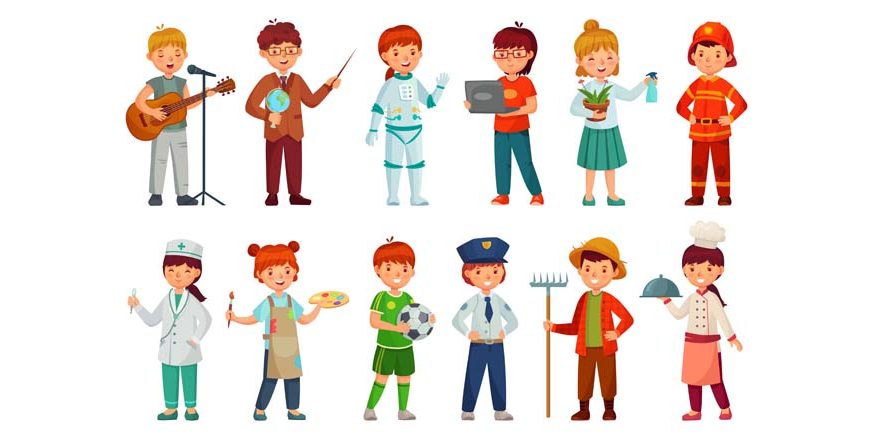
If you are looking for a brilliant starting point for your daily chats, here is a fantastic job professions list. We have put together a 10 occupation name guide that covers a wonderful mix of everyday heroes and exciting dream jobs:
- Teacher: The lovely person who helps you learn your ABCs, tells brilliant stories, and shows you how to count your fingers and toes.
- Doctor: A friendly superhero in a white coat who listens to your heartbeat and gives you medicine to make you feel much better when you are poor.
- Firefighter: A brave rescuer who drives a bright red engine with flashing blue lights to put out dangerous fires and keep families safe.
- Farmer: An outdoor worker who gets up before the sun to grow the crunchy carrots and sweet apples we eat, and to feed the mooing cows and clucking hens.
- Pilot: An explorer of the skies who flies massive aeroplanes high above the fluffy white clouds to take people on sunny holidays.
- Builder: A clever constructor who wears a hard yellow hat and uses heavy bricks and strong wood to build the cosy houses we sleep in.
- Dentist: A special mouth doctor who checks your teeth with tiny mirrors to make sure your smile is bright, shiny, and strong.
- Police Officer: A community helper in a smart uniform who makes sure everyone follows the rules and stays perfectly safe on the streets.
- Artist: A creative person who uses messy paints, colourful crayons, and sticky clay to make beautiful pictures and sculptures for us to look at.
- Vet: A kind-hearted animal expert who knows exactly how to bandage a rabbit’s ear or give a horse its daily check-up.
Read More – Roles of a Preschool Teacher
Conclusion
When we step back and look at a busy town, it is quite like watching a beautiful, complex puzzle coming together. The clever builder needs the farmer for food, the busy doctor needs the teacher to learn, and the pilot needs the builder for a safe home. Every single role, no matter how big or small, is incredibly valuable. When we teach our children these names, we should perhaps stop asking them, “What do you want to be when you grow up?” and instead ask, “What kind of problems do you want to solve?” That tiny shift in perspective turns a simple vocabulary lesson into a lifelong mission of purpose. To explore more wonderful ways to nurture your child’s early development and dreams, have a read of the EuroKids Blog and find out all the essential details regarding EuroKids Preschool Admission today.
FAQs
What is the easiest way to teach kids about different jobs?
The absolute best way is through observation. Point out the people you see while walking down the high street or visiting the local supermarket, and actively name what they are doing.
Why is learning these words important for toddlers?
It significantly expands their everyday vocabulary, helps them understand how a community functions together, and plants the very first seeds for their future aspirations.
How can role-play help in learning these words?
Setting up a pretend shop, a makeshift doctor’s clinic with their teddy bears, or a toy kitchen allows children to physically act out the roles, cementing the new vocabulary in a highly fun and memorable way.