Have you ever looked at a goldfish in a bowl or a dolphin leaping from the ocean and wondered how they stay underwater for so long without coming up for air? For many children and parents, the world beneath the waves feels like a different planet. Helping a child understand these creatures is a fantastic way to start an aquatic animals project or simply satisfy a curious mind. The logic of life underwater is fascinating because every fin, scale, and gill has a specific purpose. When we define aquatic animals, we are talking about a massive group of living things that have adapted to spend most or all of their lives in water. From the smallest shrimp to the massive blue whale, these underwater animals have mastered an environment where humans can only visit with heavy oxygen tanks.
Diving into the Deep: Aquatic Animals Meaning
To grasp the aquatic animals meaning, we must first look at their home. An aquatic habitat is any body of water, such as an ocean, a river, a lake, or even a small garden pond. Unlike us, aquatic habitat animals do not struggle to move or breathe in these wet spaces. Their bodies are built for it. Imagine trying to run through a swimming pool; it is much harder than running on grass because water is thicker than air. To solve this problem, most aquatic species have evolved streamlined shapes. This means they are pointed at the front and smooth along the sides, allowing them to slice through the water like a sharp knife through butter.
When we talk about the different types of aquatic animals, we usually split them into two main categories: those that live in saltwater (oceans and seas) and those that live in freshwater (rivers and lakes). This is an important distinction because the salt in the sea changes how an animal’s body works. Whether they are tiny fish water animals or giant mammals, every creature in these habitats plays a vital role in keeping our planet’s water clean and healthy.
Read More – List of Animals That Live On Land And Water
Built for the Water: Key Features of Aquatic Species
The most impressive feature of any sea animals fish or mammal is how they get oxygen. While we have lungs to breathe air, most aquatic animals for kids to study use gills. Gills are like magical filters located on the sides of a fish’s head. As water flows over the gills, they pull out the oxygen and send it into the bloodstream. It is a brilliant, continuous process that allows them to stay submerged forever. However, some marine animals meaning includes creatures like whales and dolphins. Even though they live in the ocean, they actually have lungs just like we do. They must swim to the surface to take a big gulp of air through a blowhole before diving back down.
Another key feature is how they move. Instead of legs, most types of sea animals use fins and tails. The tail usually provides the power, pushing the animal forward, while the fins act like the steering wheel of a car, helping them turn left, right, up, or down. Some creatures, like octopuses, use “jet propulsion” by squishing water out of their bodies to zoom away from danger. If you were making an aquatic habitat drawing, you would notice that almost every animal has a special tool for movement, whether it is the webbed feet of a duck or the powerful flippers of a sea turtle.
Exploring the Variety: Examples of Aquatic Animals
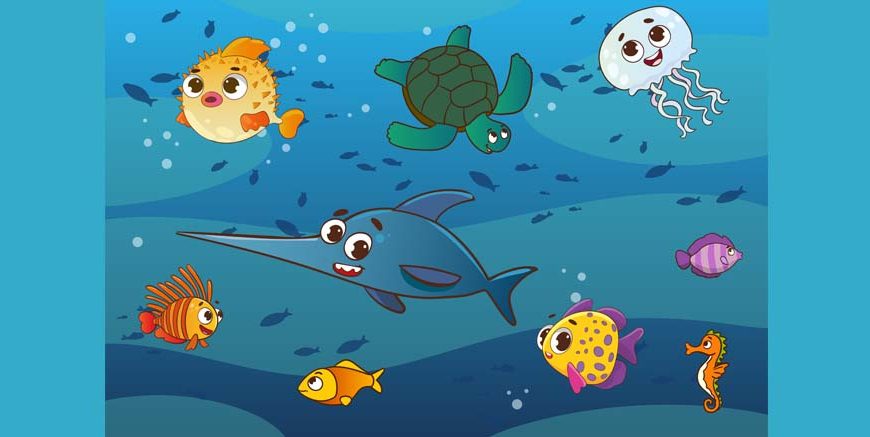
The variety of life in the water is truly mind-blowing. When looking for examples of aquatic animals, we can see everything from tiny seahorses to glowing jellyfish. Here are some of the most common groups:
- Fish: These are the most famous fish water animals. They have scales, fins, and gills. Examples include the colourful clownfish, the fast tuna, and the mighty shark.
- Mammals: These are warm-blooded animals that breathe air but live in the sea. This group includes dolphins, whales, and seals.
- Crustaceans: These animals usually have hard shells on the outside of their bodies, like a suit of armour. Crabs, lobsters, and shrimp are great examples.
- Molluscs: This group includes soft-bodied creatures like octopuses and squids, as well as animals with shells like snails and clams.
If you look at pics of water animals, you will see that they come in every colour of the rainbow. Some use these colours to hide from predators, while others use bright patterns to warn enemies to stay away. This diversity is what makes the study of aquatic species so exciting for students and nature lovers alike.
Read More – Ocean Layers and Sea Creatures
Learning Through Discovery: The EuroKids Approach
At EuroKids, we believe that the best way to learn about nature is to dive right in. We encourage children to ask “why” and “how” about the world around them. Our classrooms use the Heureka Curriculum, which focuses on hands-on exploration and scientific thinking. By learning about aquatic animals for kids through interactive stories and projects, children develop a deep respect for the environment and the amazing creatures that share our planet.
Frequently Asked Questions
1. Can aquatic animals drown?
While it sounds strange, some underwater animals can actually drown if they cannot get enough oxygen. For example, a dolphin or a whale must reach the surface to breathe air. If they get trapped underwater for too long, they can drown just like a human would.
2. Why do some fish have scales?
Scales act like a protective shield for sea animals fish. They protect the fish from sharp rocks, parasites, and predators. Scales also help reduce friction, making it easier for the fish to glide through the water.
3. Do all aquatic animals live in the ocean?
No, many aquatic habitat animals live in freshwater. This includes animals found in lakes, rivers, and ponds, such as trout, frogs, and beavers. Freshwater animals are often very different from those found in the salty sea.
4. How do aquatic animals stay warm?
Some marine animals like whales and seals have a thick layer of fat called blubber under their skin. This acts like a heavy winter coat, keeping their body heat inside even when the water is freezing cold.
5. Do fish sleep?
Yes, fish do sleep, but not quite like we do. Most fish do not have eyelids, so they cannot close their eyes. Instead, they become very still and “daydream” to rest their bodies while staying alert for danger.
6. Conclusion
From the smallest pond to the deepest ocean trench, the world of water is full of surprises. Understanding the key features of these animals helps us appreciate the delicate balance of our planet’s ecosystems. If you are interested in giving your child a head start in exploring these wonders, the EuroKids Preschool Admission process is open for parents who value a modern, enquiry-based education. We also invite you to explore the EuroKids Blog section for more.