Parents often face a tough challenge when expanding their children’s vocabulary. Teaching the alphabet begins easily enough with the first few letters. Children quickly grasp simple concepts and everyday objects. However, reaching the end of the alphabet introduces more complex sounds and less common letters. Finding good educational materials requires significant effort. This guide provides a complete solution for parents wanting to teach words that start with y. We will explore a comprehensive y words list, discover fun adjectives that start with y, understand the importance of visual learning with y for words with pictures, and review a handy y to y meaning list. Building a strong foundation in English starts with mastering every single letter.
Why Focus on the Letter Y?
You might wonder why we need a dedicated guide for this specific letter. The letter y holds a unique position in the English language. It acts as both a consonant and a vowel depending on the word. This dual nature often confuses young learners. Providing your child with a clear y words dictionary helps them distinguish between these different sounds. When you introduce y words for kids early on, you build their phonetic awareness. This awareness directly improves their reading fluency.
Children absorb information best when they can connect words to their daily lives. By focusing on specific y letter words, you give them the tools to describe their world accurately. A solid vocabulary boosts their confidence in communication and social interactions.
Read More – Words That Start With X
A Comprehensive List of Y Words
We have compiled a detailed y words list with meaning to help you teach your child. You can use this y word meaning list during your daily reading sessions or playtime.
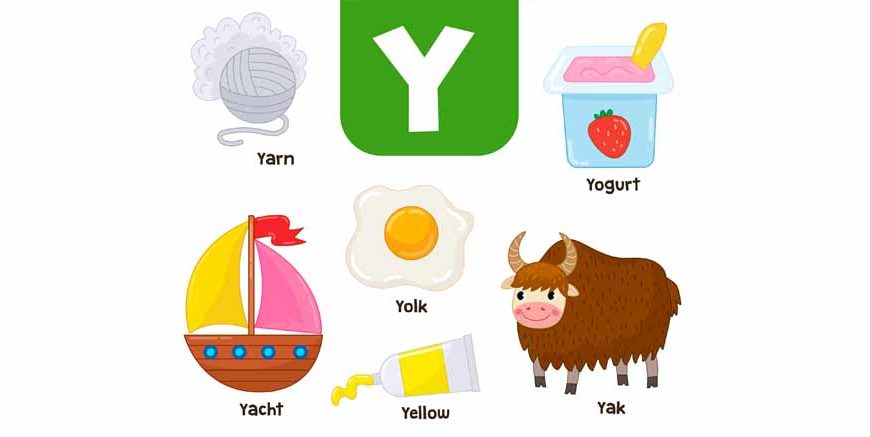
- Yacht: A medium-sized sailing boat people use for cruising or racing.
- Yak: A large domesticated wild ox with shaggy hair.
- Yam: A starchy edible root vegetable similar to a sweet potato.
- Yard: A piece of enclosed ground next to a building.
- Yarn: Spun thread crafters use for knitting or weaving.
- Yawn: Involuntarily opening the mouth wide and inhaling deeply due to tiredness.
- Year: The time the earth takes to make one revolution around the sun.
- Yellow: The colour between green and orange in the spectrum.
- Yelp: A short sharp cry of pain or alarm.
- Yes: A word people use to give an affirmative response.
- Yesterday: The day before today.
- Yield: To produce or provide a natural, agricultural, or industrial product.
- Yoghurt: A semi-solid sour food prepared from milk fermented by added bacteria.
- Yolk: The yellow internal part of a bird’s egg.
- Young: Having lived or existed for only a short time.
- Youth: The period between childhood and adult age.
- Yummy: Highly pleasant to the taste.
- Yell: A loud, sharp cry of pain, surprise, or delight.
- Yo-yo: A toy consisting of a pair of joined discs with a deep groove between them.
- Yonder: At some distance in the direction indicated.
- Yoga: A physical, mental, and spiritual discipline originating in ancient India.
- Yeast: A microscopic fungus capable of converting sugar into alcohol and carbon dioxide.
The Power of Visual Learning
Children rely heavily on their eyesight to comprehend new concepts. When you pair a new word with a relevant image, you significantly increase the chances of retention. This is where using y for words with pictures becomes highly effective. If you show your child a picture of a yellow yo-yo alongside the written word, their brain creates a strong association between the object and the spelling.
You can create your own flashcards at home. Print out colourful images of items from our y to y meaning list and write the corresponding words in large, clear letters underneath. Hang these pictures in their playroom or bedroom. Constant exposure to these y alphabet words will naturally reinforce their memory without the need for stressful memorisation sessions.
Read More – Child’s Unique Learning Style
Boosting Descriptive Skills with Adjectives
Expanding a child’s vocabulary involves more than just teaching them the names of objects. You also need to teach them how to describe those objects. Introducing adjectives that start with y helps children express their thoughts and feelings more accurately.
Start with simple concepts. When they eat a tasty meal, encourage them to describe it as “yummy”. When they see the sun shining, ask them to identify the “yellow” light. You can also teach them the concept of time and age by using the word “young”. Using these y words in English daily helps children build complex sentences. It transitions them from pointing and naming to engaging in meaningful conversations.
Making Spelling Practice Fun
Spelling often feels like a chore for young children. You need to turn it into an engaging activity. If you live in a bilingual household, your child might occasionally ask you for y se spelling practice, meaning they want to learn the spellings of words beginning with this specific letter. You can accommodate this by turning spelling into a game.
Use physical objects like letter blocks or magnetic fridge letters. Ask your child to spell out “yak” or “yarn” while you sound out the letters together. You can also use shaving cream on a baking tray and let them trace the letters with their fingers. Finding interactive ways to teach y words ensures your child stays interested and eager to learn more.
Read More – Spelling Games and Fun Activities for Kids
Conclusion
Building a strong vocabulary requires patience and consistency. By integrating these words that start with y into your daily routine, you set your child up for long-term academic success. Take the time to review the meanings, use visual aids, and practice spelling through fun activities.
The EuroKids Heureka Curriculum encourages children to explore, discover, and learn through hands-on experiences just like these, making vocabulary building a joyful journey. If you want to provide your child with a structured and engaging learning environment, consider exploring EuroKids Admission options for the upcoming academic year. You can also find more educational tips and resources in the EuroKids Blog section on our website.
Frequently Asked Questions
What are the easiest Y words to teach toddlers first?
Start with simple, everyday words that have strong visual associations. Words like yellow, yes, yo-yo, and yummy work perfectly because children encounter these concepts frequently in their daily lives.
How can I make learning the letter Y more engaging for my child?
Use multi-sensory approaches. Sing phonics songs, use brightly coloured flashcards with pictures, and engage in physical activities like playing with a yo-yo or eating some yoghurt while discussing the letter.
Why does the letter Y sometimes sound like a vowel?
The letter Y functions as a vowel when it appears at the end of a word or syllable, such as in the words “sky” or “baby”. You can explain this to your child by telling them that Y likes to help out the other vowels when they need a break.
Are there any fun games to practice these vocabulary words?
You can play a scavenger hunt game where your child has to find objects around the house that match the words on your list. You can also play a simple matching game using picture cards and word cards.
How many new words should I introduce to my child each week?
Keep the pace manageable. Introducing two to three new words per week allows your child enough time to fully comprehend the meaning, recognise the spelling, and start using the word in their own sentences.