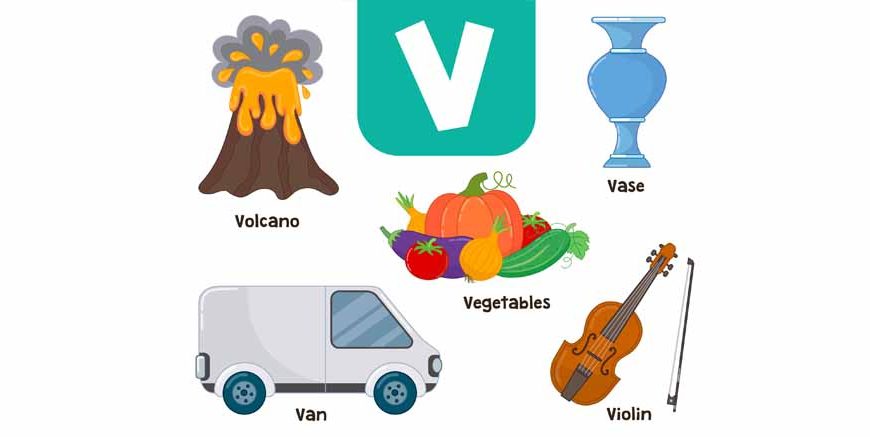
If you open a standard children’s dictionary, you will immediately notice something interesting. The section for the letter ‘C’ or ‘S’ goes on for pages and pages. But when you flip toward the back of the book, the section for the letter ‘V’ is surprisingly short. In fact, ‘V’ is one of the least frequently used letters in the English language.
Because it is relatively rare, children do not encounter v words as often in their early reading books. When they do finally spot one, it feels like uncovering a hidden treasure. The sounds are unique, the animals are exotic, and the objects are fascinating.
If you want to help your child expand their vocabulary beyond the basic everyday terms, focusing on words that start with v is a brilliant strategy. It introduces them to new concepts and sharpens their phonetic skills. To keep things fresh and engaging, we are stepping away from standard vocabulary drills. Instead, let us embark on an experiential journey through the ‘V’ alphabet, filled with sensory games, unique animal facts, and a brand-new set of activities designed to make learning unforgettable.
Starting the “V” Engine: A Sensory Phonics Lesson
Before we get into our v words list, we have to get the pronunciation right. The sound of this letter is incredibly tactile. It is not just spoken; it is felt.
To teach your child how to make this sound, tell them they are going to pretend to be a race car. Have them gently rest their top teeth on their bottom lip. Now, tell them to “start the engine” by blowing air and making their throat buzz at the same time: “Vvvvvrmmm!” Have them place their hand on their throat and their lips. They will feel a distinct tickle and vibration. This sensory feedback is crucial. Because the physical sensation is so strong and silly, children usually love practicing it. Once their “engine” is running smoothly, we can drive straight into our vocabulary treasury.
Read More – Simple Action Words for Kids
The ‘V’ Treasury: A World of Unique Vocabulary
To make these v letter words stick, we are organizing them into imaginative environments. When children associate a word with a specific “place” in their minds, they recall it much faster.
1. The Wild ‘V’ Safari (What Animal Starts With V?)
When kids ask, “what animal starts with v?”, you get to introduce them to some of nature’s most interesting and less-talked-about creatures.
- Vicuña
- Meaning: A beautiful, wild cousin of the llama that lives high up in the mountains of South America and has the softest wool in the world.
- Example: The golden vicuña climbed nimbly over the steep, rocky mountain.
- Vervet Monkey
- Meaning: A clever, fast-moving monkey from Africa known for its playful nature and dark face framed by white fur.
- Example: We laughed as the vervet monkey swung from the tall tree branch.
- Viper
- Meaning: A specific family of snakes that have specialized fangs; they are very quick and usually hide perfectly in their surroundings.
- Example: The patterned viper blended right into the dry autumn leaves.
- Vulture
- Meaning: A large, important bird that helps keep the environment clean by eating animals that have already passed away.
- Example: The wide-winged vulture soared gracefully on the warm wind.
2. The ‘V’ Kitchen and Garden
Let us bring the vocabulary right to your dining table and backyard. These v words for kids are perfect for culinary and sensory exploration.
- Vanilla
- Meaning: A sweet, wonderful-smelling flavouring that comes from the bean of a special orchid flower, used to make ice cream and cakes.
- Example: I chose two scoops of creamy vanilla ice cream for dessert.
- Vegetable
- Meaning: The edible parts of plants—like the roots, leaves, or stems—that give our bodies the vitamins we need to grow.
- Example: Spinach is a leafy green vegetable that makes your muscles strong.
- Vine
- Meaning: A long, flexible plant that climbs up walls, wraps around trees, or trails along the ground to grow.
- Example: The green vine climbed all the way up the brick wall of our house.
3. The ‘V’ Garage and Gadgets
These are the mechanical and everyday items your child might interact with or see in their community.
- Van
- Meaning: A large, boxy vehicle that is bigger than a car but smaller than a truck, used for carrying families or cargo.
- Example: The soccer team piled into the big silver van to go to the game.
- Vacuum
- Meaning: A loud, powerful machine that sucks up dust and dirt from rugs and floors to keep the house clean.
- Example: It is my chore to help push the heavy vacuum across the living room carpet.
- Violin
- Meaning: A beautiful wooden musical instrument with four strings, tucked under the chin and played with a long bow.
- Example: The concert started when the musician played a soft tune on her violin.
4. Words for Big Actions and Ideas
Verbs and abstract concepts are vital for expressive language. Here are a few essential additions to your child’s dictionary.
- Voice
- Meaning: The sound you make through your mouth when you are speaking, singing, or laughing.
- Example: She used a quiet, gentle voice so she wouldn’t wake the sleeping baby.
- Visit
- Meaning: To take a trip to see someone or go to a special place for a short amount of time.
- Example: Tomorrow, we are going to visit the penguins at the city zoo.
- View
- Meaning: Everything that you can see from a certain place, like looking out from the top of a hill or a tall building.
- Example: The view of the ocean from our hotel window was absolutely breathtaking.
Read More – Everyday Vocabulary for Kids
Sensory and Play-Based ‘V’ Activities
Ditch the flashcards. If you want your child to truly internalize these new words, you need to create experiences. Here is a fresh approach to phonics activities that focus heavily on the senses.
The Vanilla Blindfold Test
Since vanilla is a fantastic ‘V’ word, use it for a sensory experiment. Blindfold your child (or just ask them to close their eyes tight). Place a few items under their nose to smell: a slice of lemon, a piece of chocolate, and a cotton ball with a few drops of real vanilla extract. Ask them to identify the sweet scent of the vanilla just by using their nose.
The Velvet Touch Box
Introduce the word Velvet (meaning a very soft, plush fabric). Take an empty tissue box and put different textured items inside: a rough rock, a smooth spoon, a crinkly leaf, and a piece of soft velvet or a velvet ribbon. Have your child reach in without looking, feel the items, and pull out only the item that is velvet.
Voice Volume Control Game
This game teaches the word voice while also helping toddlers practice self-regulation. Create a “volume dial” out of cardboard, ranging from 1 (whisper) to 5 (loud roar). Point the dial to different numbers and have your child practice changing their voice to match the setting. It is a fantastic indoor game that ties a new vocabulary word directly to an emotional and behavioural skill.
Read More – Ways to Teach the Alphabet to Kids
The EuroKids Approach: Making Learning Visible
At EuroKids, we know that language acquisition is not a passive event. Children do not learn to speak and read by merely listening to an adult talk. They learn by investigating their environment.
We encourage them to articulate their observations, asking questions like, “Why do you think the vine needs to climb?” This transforms a simple vocabulary lesson into an exercise in logic, biology, and critical thinking. By immersing children in an environment where learning is highly active and inquiry-based, we build confident, articulate, and deeply curious minds.
FAQs:
1. Why do so few words start with the letter V?
The English language is a mix of many historical languages. The letter ‘V’ was not widely used as a distinct consonant in Old English (they often used ‘F’ for that sound). Most of our modern ‘V’ words actually came much later from Latin and French influences, making them a smaller, specialized group in our dictionary.
2. My child says “W” instead of “V” (e.g., “wase” instead of “vase”). Is that normal?
Yes, this is very common in early speech development! ‘W’ is a bilabial sound (made with two lips) and is physically much easier for a toddler to produce than the ‘V’ sound, which requires coordinating the teeth and the bottom lip. Gently model the correct pronunciation for them by emphasizing your bite on your lower lip, but don’t force them to drill it if they are still very young.
3. Are there any high-frequency “sight words” that start with V?
Because of its rarity, there are very few. The most important high-frequency sight word your child needs to learn that starts with this letter is Very. It is a fantastic word to practice writing and recognizing early on.
4. What is the benefit of teaching complex animal names like “Vicuña” or “Vervet Monkey”?
Young children have an incredible capacity for memorization when they are interested in a subject. Teaching them specific, scientifically accurate names rather than just saying “monkey” or “animal” respects their intelligence. It broadens their understanding of global biodiversity and proves to them that language is vast and exciting.